

 No. 1819, Renmin West Road, Cao'e Street, Shangyu District, Shaoxing City, Zhejiang Province, China

 English
 中文简体
中文简体 русский
 Español
 عربى
عربى
The 2ZX-230 two-row small low-fuel consumption hand-held transplanter is a high-performance machine ...

 2026.09.21
 Industry News
On a 13-hectare rice farm outside Nanchang, transplanting used to take eleven days and six pairs of hands. The same fields are now finished in four days by one operator on a six-row riding machine, and the difference did not come from the machine alone. It came from matching that machine to the seedling tray, the level of the field and the water depth the farm could actually hold.
Here is the short answer before the detail. There are five practical ways to move rice seedlings into a paddy: hand transplanting, handheld two-row transplanting, walking-type mechanical transplanting, riding high-speed transplanting, and seedling throwing. Direct seeding is a sixth route that competes with all five even though it is not transplanting at all.
The rule that saves the most money is blunt: choose the seedling format first, then the land preparation standard, then the machine. Farms that buy a machine first and rebuild their nursery around it usually spend a whole season fighting missing hills, floating seedling mats and uneven planting depth.
The table below uses ranges we see across smallholder plots, family farms and cooperatives. The labour figures include nursery handling, carrying seedlings and refilling the machine, not just the minutes spent planting.
| Method | Rows per pass | Field shape it suits | Typical labour per hectare | Main risk |
|---|---|---|---|---|
| Hand transplanting | No rows, spacing set by eye | Terraces, plots under 0.2 ha, seed multiplication blocks | 90 to 140 person-hours | Late establishment and uneven plant population |
| Handheld two-row machine | 2 | Narrow, soft or terraced plots under 1 ha | 20 to 30 person-hours | Operator fatigue and slow daily coverage |
| Walking-type machine | 4 to 8 | Flat blocks of 0.5 to 5 ha | 8 to 14 person-hours | Wheel slip in deep mud, missed hills at high speed |
| Riding high-speed machine | 4 to 10 | Levelled blocks above 5 ha | 3 to 6 person-hours | Purchase cost and dependence on good land preparation |
| Seedling throwing | No rows, stand established by throw | Small and medium plots with soft puddled soil | 15 to 25 person-hours | Uneven stand, wind drift and tray cost |
What the table cannot show is the cost of getting the field ready for each method. A machine that plants ten rows per pass also demands a field that is level to within a few centimetres, water held at a shallow even depth, and seedling mats strong enough to survive a fast pickup mechanism. Skip any one of those and the labour saving disappears into replanting.
Hand transplanting is the oldest method and the easiest to describe. Workers lift seedlings from a wet nursery bed, remove surplus soil from the roots, bundle the plants, carry them to the paddy and press two to four seedlings into the puddled soil at a depth of roughly 2 to 3 cm. Spacing is set by eye, commonly 25 cm by 25 cm or 30 cm by 15 cm depending on the variety and the tillering habit.
The advantage is control. On a terrace where the largest machine that fits is a two-wheel tractor, or on a breeder block where every single hill has to be traced back to a line of seed, hand planting remains the most precise tool available. It is also the standard way to patch gaps after a machine has passed, because a person can walk into a wet field without damaging it further.
The disadvantage is arithmetic. Ten workers at 0.05 to 0.1 hectare per person per day will cover one hectare in about a day and a half, and that pace only holds while the labour is available. Rice does not wait. Once the planting window closes, every extra day of delay reduces the tillering period and pushes grain filling into cooler weather, and the loss is usually larger than the cost of a machine season.
Everywhere else, hand transplanting is a fallback rather than a plan. The moment a farm grows past two or three hectares of continuous paddy, the labour bill and the timing risk both start to work against it.
A handheld two-row transplanter is the smallest powered option in the lineup. One operator carries or pushes the unit, a small gasoline engine drives the planting forks, and two rows of seedlings go into the soil in one pass. Row spacing on this class of machine is usually fixed between 20 and 30 cm, planting depth is adjustable through a lever or a screw, and total weight typically sits in the 20 to 35 kg range so one person can lift it onto a bund.
This is the method that changes life on fragmented land. A farmer with four separate plots of 0.2 hectare each does not need a riding machine and cannot justify one. A handheld unit is carried between plots, runs on a litre or two of fuel per day, and turns a job that normally takes a family four days into one long day of work. It also handles soft puddled soil where a heavier machine would sink and leave ruts that are difficult to level again.
The limits are honest and worth stating clearly. Daily coverage is usually 0.3 to 0.5 hectare, which means a 5-hectare farm still needs ten working days. The operator walks several kilometres per hectare, so fatigue shows up in spacing after about two hours and rotation between two operators is sensible. The machine also needs a seedling mat that is neither too wet nor too dry: mats that crumble feed the forks poorly, while mats that are soaked tend to stick together and drop in clumps.
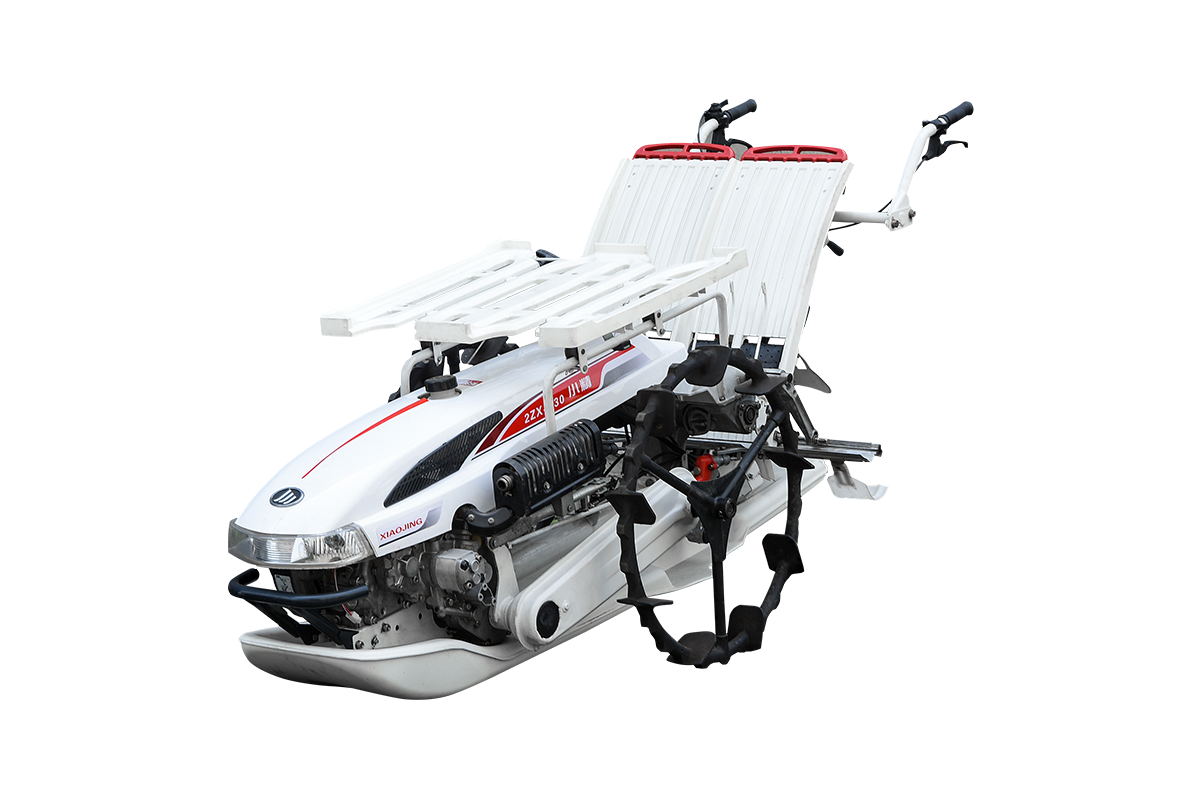 2ZX-230 Two-Row Small Hand-Held Rice TransplanterThe 2ZX-230 two-row small low-fuel consumption hand-held transplanter is a high-performance machine designed for farmland transplanting. As a small transplanter, it ha...View Product →
For terraces, vegetable-intercropped paddies and any farm where the largest continuous block is under half a hectare, a two-row handheld machine is often the only mechanical option that pays for itself within two seasons.
The walking-type, or walk-behind, transplanter is the workhorse of the middle ground. The operator walks behind a self-propelled chassis that carries four, six or eight rows of planting forks. Drive reaches the wheels and the planting mechanism either mechanically through shafts and gears or hydraulically through a pump and motor, and the planting frequency is set by the gear you choose rather than by how fast you push.
Machine-transplanting agronomy is built into this class. Hill spacing is normally selectable in steps such as 12, 14, 16, 18, 21 and 25 cm, seedlings per hill are adjusted by the pickup belt or fork setting, and planting depth is controlled by a float or a depth lever between roughly 1 and 3 cm. Row spacing is usually fixed at 30 cm for the standard configuration and 25 cm for narrow-row configurations used with short-duration varieties.
Coverage sits between 1 and 2 hectares per day with a four to six row machine, which is why this class fills the gap for farms between one and five hectares. It also handles soft fields better than most riding machines, because the operator's weight is not carried on the chassis and the total mass is lower.
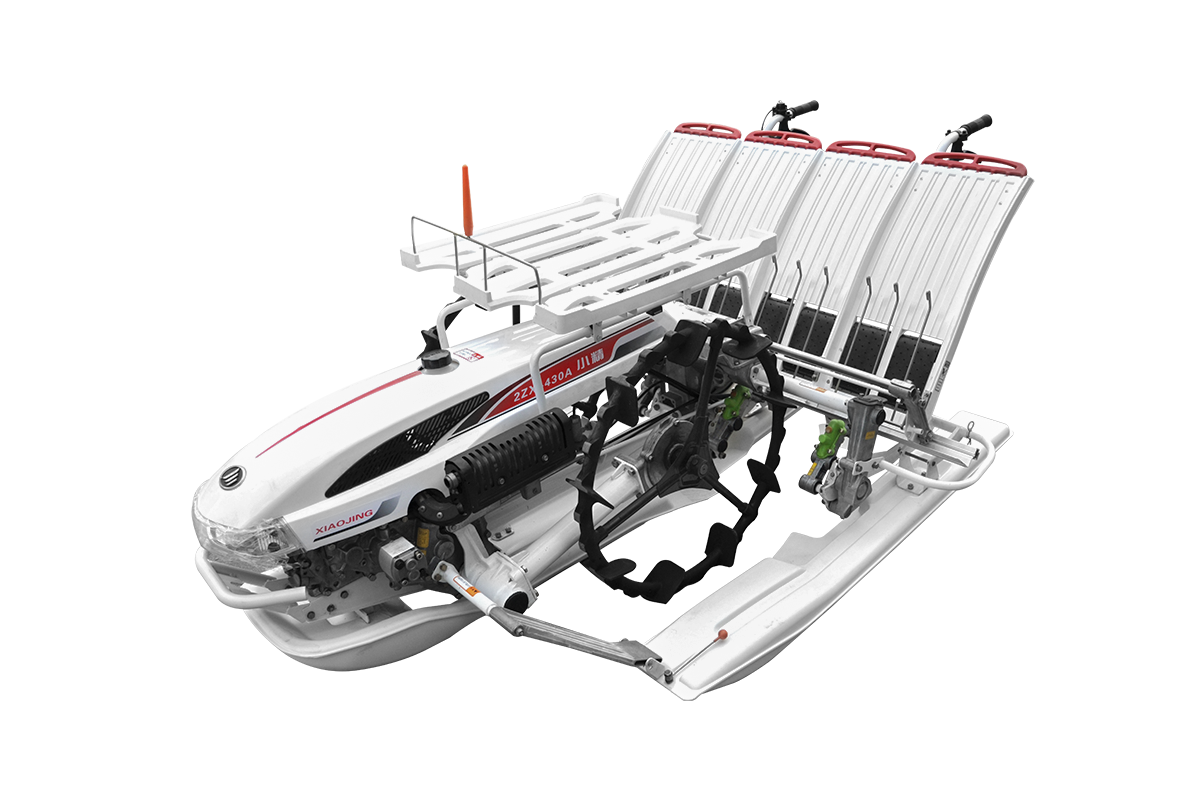 2ZX-430A Four-row Walking Rice Transplanter2ZX-430A is a modern agricultural machinery designed to meet the rice planting needs of farmers. Designed by a team of Japanese experts, this machine features advanced...View Product →
Two practical points decide whether a walking machine succeeds. First, the headland width: a machine that needs 2.5 metres to turn will leave a large unplanted strip on a plot that is only 20 metres wide. Second, the water depth at planting: 1 to 2 cm of standing water lets the forks slide and helps the seedling stand upright, while water above 5 cm hides missing hills and washes seedlings out of the furrow.
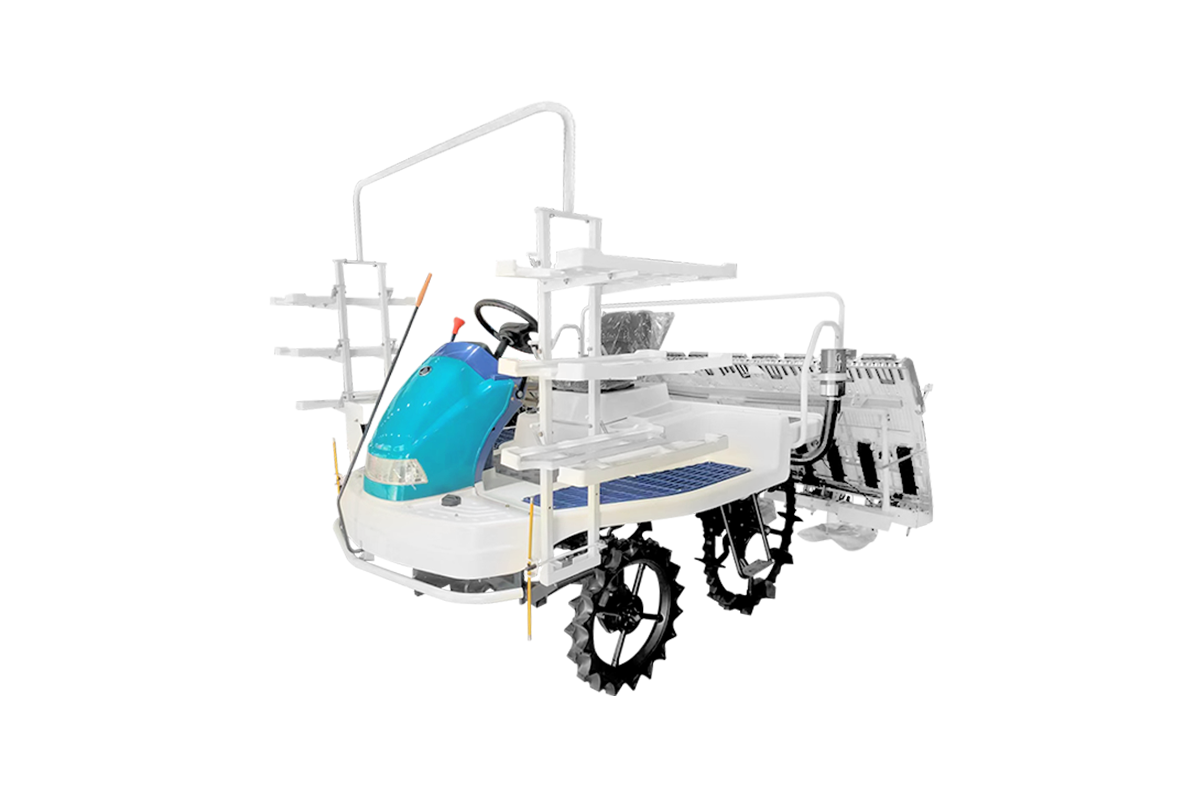
A riding high-speed transplanter carries the operator on the chassis and plants four to ten rows per pass. Hydraulic drive runs the planting mechanism and often the steering as well, so the machine keeps a constant planting frequency while the operator concentrates on the row line. Coverage of 3 to 6 hectares per day is realistic for a six to eight row machine on a well-prepared field, and larger ten-row units push higher on long, straight runs.
The reason large farms choose this method is not speed for its own sake. Planting density is what drives yield, and a riding machine holds hill spacing within a few centimetres across a whole field. That consistency is difficult to achieve with any handheld or hand method, and it matters most with short, high-tillering varieties where a 3 cm spacing error repeated across a hectare changes the effective plant population.
What a buyer should look at before price is field fit. Ground pressure, wheel or track configuration, turning radius and the depth-control system determine whether the machine works on your soil or merely looks impressive on a dealer's yard. On soft, deep mud, a machine with wide flotation wheels or rubber tracks leaves less of a rut, and less rutting means the field does not need re-levelling before the next operation.
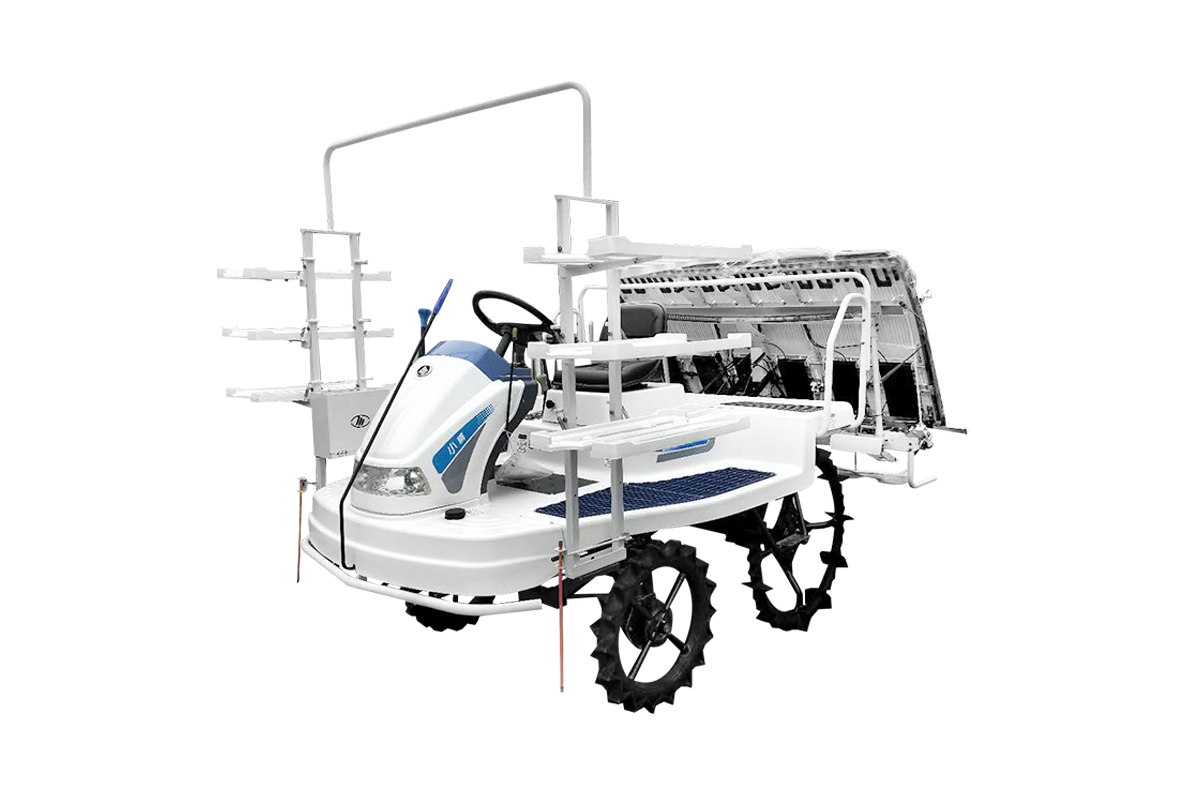 2ZG-630 Six-row Riding Type Rice TransplanterThe 2ZG-630 multi-application six-row high-efficiency riding rice transplanter has become the ideal equipment in the agricultural field with its good performance and s...View Product →
The economics are simple enough: a six-row riding machine that plants 3 hectares a day pays back fastest on farms above 20 hectares, or on machines used for custom work across neighbouring farms. Below that scale, a walking machine with the same planting quality often makes better financial sense.
Seedling throwing, widely used in southern China for both early and late rice, is a transplanting method without a planting mechanism. Seedlings are raised in trays or perforated seedling discs filled with nutrient soil, so each plant carries a soil ball around its roots. Workers throw the seedlings into puddled water, and the weight of the soil ball makes them land root-down and stand upright without being pressed in by hand.
The method removes two of the biggest costs in transplanting: the nursery is raised in trays rather than a wet bed, and there is no planting machine and no machine operator. Root damage is minimal because the roots never leave the soil ball, so the seedlings green up and tiller quickly. Typical coverage is 0.5 to 0.8 hectare per person per day, faster than hand transplanting and roughly comparable to a small handheld machine.
The weakness is uniformity. Spacing is set by the throw, so plant population varies across the field, and strong wind or deep water can move seedlings before they root. Throwing also needs skill: an experienced worker gets an even stand, an untrained worker creates patches. For fields that flood unpredictably or are exposed to strong wind, throwing is a riskier choice than a machine that places every hill into the soil.
The hybrid approach works well in practice: throw seedlings across the bulk of the field for speed, then use a handheld two-row machine or hand planting to fill the headlands and repair thin patches within a week, while the field is still soft enough to walk.
Direct seeding skips the nursery entirely. Pre-germinated or dry seed goes into the puddled field or into dry soil, either broadcast or placed in rows by a hill seeder that opens a furrow, drops a measured number of seeds and covers them. It is worth including in this comparison because it competes with every transplanting method on cost, and it wins that comparison on labour almost every time.
The trade-off is weed control. A transplanted field gives the crop a head start of roughly two to three weeks over germinating weeds, while a direct-seeded field gives the weeds the same start as the rice. That advantage is why direct seeding needs a solid pre-emergence herbicide programme and often one more pass of weed management than transplanting, and why the labour saved in planting is partly spent on the sprayer.
Other differences matter as well. Direct-seeded rice occupies the field longer, uses more seed per hectare, and produces plants with shallower roots, which raises lodging risk on fertile soils with heavy nitrogen. On the other side, it saves the entire nursery operation, avoids transplant shock, and uses less water during early establishment. If you are weighing the two routes for a specific farm, the practical comparison of cost, weed pressure and field occupancy is set out in this breakdown of whether direct seeding beats transplanting, which follows the same field numbers used here.
Before comparing machines, compare seedling mats. The pickup forks of a transplanter do not care how good the machine is; they care whether the mat holds together, whether the roots form a dense enough carpet, and whether the mat thickness matches the fork depth. Three formats dominate commercial practice.
Raised in trays roughly 58 by 28 cm on a 2.5 to 3 cm soil layer. The root mat must roll up without breaking and spring back when unrolled. Seedling age of 15 to 25 days and three to four leaves is the usual transplanting window. This is the format used by most walking and riding transplanters.
Each plant sits in its own soil cell, so roots suffer almost no damage at planting and the seedling recovers faster. The format suits seedling throwing and some precision transplanters, but tray cost per hectare is higher and the trays must be collected and stored.
Continuous seedling strips used by certain high-speed mechanisms to reduce reloading stops. They demand a precise seeding density and a uniform substrate, so they reward farms that already control their nursery well.
One mismatch costs a whole season. A tray that is 2 cm narrower than the machine's pickup width will drop seedlings on every pass, and a mat that is too dry will be torn apart by the forks. When you order a machine, order the tray specification at the same time and grow one test batch of seedlings before the main season.
Method selection fails most often because the farmer compares machines instead of comparing fields. The four situations below cover most of the decisions we see, and the right answer changes completely between them.
A handheld two-row machine is the ceiling. Anything larger cannot be carried between plots and cannot turn inside a narrow terrace. Keep hand planting as the fallback for the smallest terraces.
A four to six row walking transplanter gives the best balance of coverage, planting accuracy and price. Budget for levelling before you buy the machine, because a walking machine still needs a level field to keep depth constant.
A six to ten row riding machine changes the whole calendar. Planting finishes in days rather than weeks, which makes a second crop or a contract work season realistic on the same investment.
Seedling throwing and direct seeding handle situations where a heavy machine would sink or where the planting window has already narrowed. Both accept a shorter nursery lead time than conventional mat transplanting.
It is also worth knowing where the machine comes from and how it will be supported. The transplanters used for the field numbers in this article are built on our own production line in Shaoxing, which matters less for the brochure and more for the supply of forks, pickup belts, float plates and depth sensors three seasons from now.
Method choice sets the ceiling on yield; machine settings decide whether you reach it. The parameters below are the ones worth writing on a card and taping to the machine, because drifting outside these ranges is the most common cause of a disappointing transplanting season.
| Parameter | Typical working range | Symptom when it drifts |
|---|---|---|
| Hill spacing | 12 to 30 cm, matched to variety and tillering | Too wide leaves gaps that weeds fill; too narrow increases seedling cost per hectare |
| Row spacing | 25 to 30 cm for most inbred and hybrid varieties | Incorrect row width prevents later mechanical weeding and spraying passes |
| Planting depth | 1 to 3 cm, with 2 cm a safe default | Too shallow floats seedlings; too deep buries the growing point and delays greening |
| Seedlings per hill | 2 to 4, adjusted by variety and seed quality | Too few reduces panicle number; too many wastes seed and increases mutual shading |
| Water depth at planting | 1 to 2 cm of standing water | Dry soil drags on the float; deep water hides missing hills and moves seedlings |
| Seedling age | 15 to 25 days, three to four leaves | Older seedlings lose tillering potential; younger mats tear in the pickup forks |
| Field levelness | Variation within about 3 cm across the block | Uneven water depth causes patchy establishment and uneven maturity at harvest |
Machine prices are easy to compare and rarely decide the outcome. The numbers that decide are hours per hectare and hectares per day, because together they tell you how many seasons the investment needs before it pays for itself.
Relative labour input per hectare, hand transplanting set at 100
Labour includes nursery handling, carrying and refilling. Figures are field averages, not guaranteed values.
Daily coverage moves in the same direction but with a wider spread, because a riding machine loses far more output to a badly levelled field than a handheld unit does.
A rough break-even test works like this. A four-row walking machine planting 1.2 hectares a day replaces roughly twelve to fifteen hand labourers per day. If hand labour costs the equivalent of one day's wage per person per 0.05 hectare, the machine covers its price in two to three seasons at 10 hectares per year. A six-row riding machine needs around 20 to 30 hectares per season to show the same payback, but it also opens the door to custom planting work, which changes the calculation entirely.
Most disappointing purchases are not caused by a bad machine. They are caused by a machine that was correct for a different field, a different seedling format or a different labour structure. These checks take an afternoon and save a season.
Transplanting machines fail in predictable places, and the failure is usually cheap to prevent. Planting forks wear at the tip and change planting depth silently. Pickup belts stretch and start dropping every twentieth hill. Float plates bend on stones and then hold the machine too high. Chains and gearboxes are the last things to fail and the most expensive to replace.
For seedling throwing and direct seeding, the maintenance load moves to the nursery and the sprayer. Throwing trays need washing and stacking so they do not crack in the sun, and direct-seeded fields need their weed programme checked earlier, because a missed pre-emergence window cannot be recovered by any machine.
Yield differences come from planting density and timing far more than from the method itself. Under equal field conditions, machine transplanting with consistent hill spacing usually matches or slightly exceeds careful hand transplanting, because the plant population is uniform. Direct seeding can match transplanting yields on well-managed land but loses ground when weeds escape early.
Yes, if the land is fragmented or terraced. The alternative is hand transplanting at 90 to 140 person-hours per hectare, which is both slow and dependent on labour you may not be able to hire during the planting window. A handheld unit cuts that to roughly a quarter and can be carried between plots.
A four to six row walking machine handles 8 hectares in about a week of favourable weather, which is normally enough. A riding machine is faster but only justifies its price if you also plant for neighbours or intend to expand beyond 20 hectares.
Usually not without a change kit. Pickup forks are designed for a specific mat thickness and seedling spacing. Pot seedlings and pot-type formats generally need either a dedicated mechanism or a seedling throwing approach, so confirm the format compatibility before ordering.
Within five to seven days, while the field is still soft and the gap is easy to see. Later repair creates a field with two maturity groups, which complicates harvest timing and can reduce the average grain quality.
It can, but the field still needs a soft, level surface with shallow standing water for the forks to enter cleanly. Reduced tillage generally means a lighter machine or a walking unit, because a heavy riding machine needs a firm base under the wheels.
The most useful thing you can do this season is not to compare prices on a screen. Raise one tray of seedlings, borrow or hire one machine of the size you are considering, and plant two strips in your own field. Watch how the mat feeds, how deep the forks sit and how long the field takes. That single afternoon tells you more about which transplanting method fits your farm than any table, including the ones above.
When you are ready to move, match the machine order to the tray order, confirm the spare part lead time in writing, and keep the settings card on the machine. Transplanting is a short window in a long season, and the method that finishes on time is almost always the method that yields.


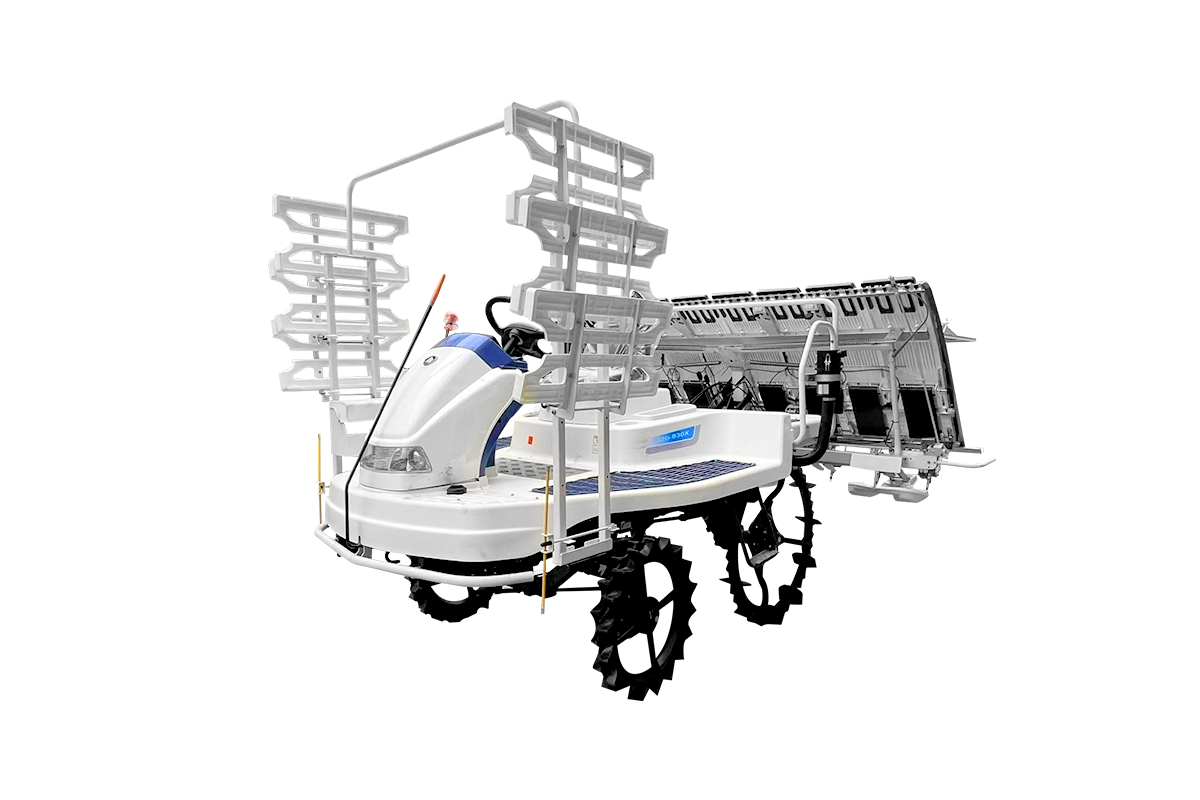
 Custom Agricultural Equipment Manufacturers