

 No. 1819, Renmin West Road, Cao'e Street, Shangyu District, Shaoxing City, Zhejiang Province, China

 English
 中文简体
中文简体 русский
 Español
 عربى
عربى
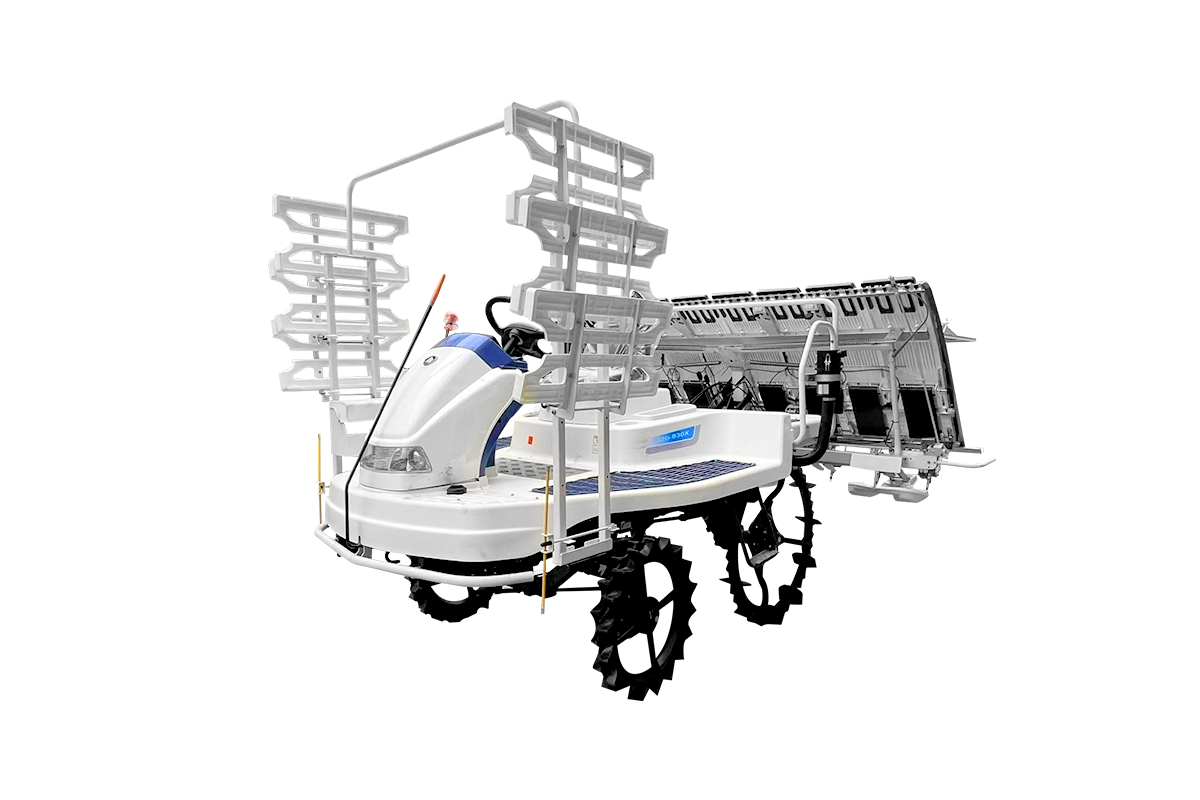
The 2ZX-230 two-row small low-fuel consumption hand-held transplanter is a high-performance machine ...

 2026.09.28
 Industry News
A grower with 1.5 hectares of terraced paddy in Zhejiang and a farm manager with 600 hectares of flat, gravity-irrigated land in Arkansas type the same phrase into a search bar: what is the best method of planting rice? If both of them act on the same answer, at least one of them will lose money. Planting method is not a universal best practice. It is a decision that falls out of water supply, labor cost, field geometry, soil type, weed pressure and the capital you are willing to tie up in machinery.
The short version: on irrigated land where labor or machinery is affordable, mechanical transplanting produces the most reliable yields and the cleanest weed control. Where water is scarce, labor is unavailable, or the season is short, direct seeding is the stronger economic choice. Manual transplanting still makes sense on small, fragmented or steep plots that no machine can enter. Everything below explains why those three sentences are true, and how to find out which one applies to your farm.
Two rules cover the majority of real farms.
Rule one: if you have reliable irrigation and can afford the labor or the machine, transplant. Transplanting gives the crop a head start of roughly three to four weeks over germinating weeds, and that head start is worth more than almost any other management decision you will make in the season. It also cuts seed use by half or more, because you are starting in a nursery rather than broadcasting across the whole field.
Rule two: if water or labor is the binding constraint, direct seed. Direct seeding removes the nursery, the seedling pulling, and the transplanting pass entirely. On a 50-hectare farm that can mean 300 to 500 fewer labor days per season. The trade-off is that you need far better water control, a stronger herbicide program, and a level field.
Everything else is calibration. Before you commit to a method, write down five numbers for your own farm:
Those five answers eliminate most options immediately. A farm with 0.2-hectare terraces and no road access is not choosing between a ten-row riding transplanter and a seeder. It is choosing between a two-row handheld machine and manual work.
Almost every rice crop in the world is established by one of five routes. They differ less in agronomy than in where the labor, water and money go.
Seedlings are raised in a nursery bed for 20 to 30 days, pulled by hand, and pressed into puddled soil at 2 to 4 seedlings per hill. Typical spacing is 20-30 cm between rows and 12-16 cm between hills. A skilled worker can transplant roughly 0.05 to 0.08 hectares per day, which works out to 12 to 20 labor days per hectare. The advantage is precision: you can place every hill exactly where you want it and remove weak seedlings as you go. The disadvantage is that this is the single most labor-hungry operation in rice production, and it is the first thing to break when wages rise or workers migrate to cities.
Mat-type seedlings grown in trays are lifted by a pick mechanism and planted in rows by machine. Walking-type machines handle 0.5 to 2 hectares per day depending on width and operator skill. Riding-type machines with six to ten rows cover 3 to 8 hectares per day on well-prepared fields. Seedling mats are uniform, planting depth is consistent within a few millimeters, and the machine can be adjusted for row spacing, hill spacing and planting depth. This is the method most commercial irrigated farms converge on, because it keeps the agronomic advantages of transplanting while removing the labor bottleneck.
Pre-germinated seed is broadcast onto flooded or mud-flat fields. It is fast and cheap per hectare, and it suits large flat blocks with dependable irrigation. The risks are serious: uneven stands from wind drift, poor anchorage, high seed rates of 80 to 120 kg per hectare, and lodging late in the season when the plants are shallowly rooted.
Seed is drilled or broadcast into dry or moist soil, then irrigated. It is the standard choice in water-limited systems and in rainfed lowlands where the monsoon arrives late. Root systems are deeper and more drought-tolerant than in transplanted rice. Weed pressure is the main enemy, and the crop needs a disciplined pre-emergence and post-emergence herbicide schedule plus a level seedbed.
Seedlings are raised normally and then tossed or scattered onto puddled soil rather than pushed in by hand. It saves 30 to 40 percent of the labor of manual transplanting, but the stand is uneven, spacing is uncontrolled, and the crop is harder to manage with mechanical weeders later. It works best as a stopgap when labor disappears unexpectedly mid-season.
| Method | Yield stability | Water demand | Labor per hectare | Seed rate | Strongest fit |
|---|---|---|---|---|---|
| Manual transplanting | High | High | 12-20 days | 25-40 kg | Very small or steep plots |
| Walking-type transplanter | High | High | 2-4 days | 25-40 kg | 0.3-3 ha, fragmented fields |
| Riding-type transplanter | Very high | High | 0.5-1.5 days | 25-40 kg | 3 ha and above, level fields |
| Water seeding | Medium | Very high | 0.3-1 day | 80-120 kg | Large flat blocks, reliable water |
| Dry direct seeding | Medium | Low to medium | 0.5-1.5 days | 60-90 kg | Water-limited and rainfed systems |
| Broadcast transplanting | Medium | High | 8-14 days | 25-40 kg | Emergency labor substitution |
Read the table by column, not by row. If water is your constraint, the water column decides everything else. If labor is your constraint, the labor column does. Only when both are comfortable does yield stability become the tiebreaker, and at that point transplanting wins almost every time.
The yield advantage of transplanting is not folklore. It comes from four mechanisms that are easy to verify in the field.
Weed competition. A transplanted field starts with seedlings 20 to 30 days old. Weeds germinate at the same time as the rice would have, but there is no rice germinating alongside them. The transplant canopy closes roughly two weeks earlier, and that earlier canopy shading suppresses late weed flushes. In heavily infested fields, the difference between transplanted and direct-seeded rice can be 15 to 30 percent of the harvest, which is usually more than the cost of the transplanting operation itself.
Plant population control. A transplanter places a fixed number of seedlings at a fixed spacing. You know your hills per square meter before the season starts. Broadcast or drilled rice gives you an average, not a guarantee, and gaps are permanent.
Seed cost. Transplanted rice uses 25 to 40 kg of seed per hectare. Direct-seeded rice uses 60 to 120 kg. On hybrid varieties that cost a meaningful amount per kilogram, that gap alone changes the economics.
Water management flexibility. Transplanted rice can be drained and re-flooded for herbicide application or for root aeration without threatening the stand. Direct-seeded rice at the two-leaf stage is fragile; a badly timed drain can cost you the field.
On a moderately weedy irrigated field, transplanting typically returns 6 to 10 tonnes of paddy per hectare, while a poorly managed direct-seeded crop on the same land returns 4.5 to 7 tonnes. The gap narrows to almost nothing when direct seeding is managed by someone with good water control and a disciplined herbicide schedule.
That last sentence is the honest version. Transplanting does not win because direct seeding is bad. It wins because direct seeding punishes mistakes harder.
There are four situations where direct seeding is not a compromise but the correct answer.
If you land in one of these categories, the practical question becomes which seeding method and which machine. A drill-type open-furrow seeder that places seed into a furrow and covers it will outperform broadcasting in almost every dry-seeding situation, because depth control directly determines germination uniformity.
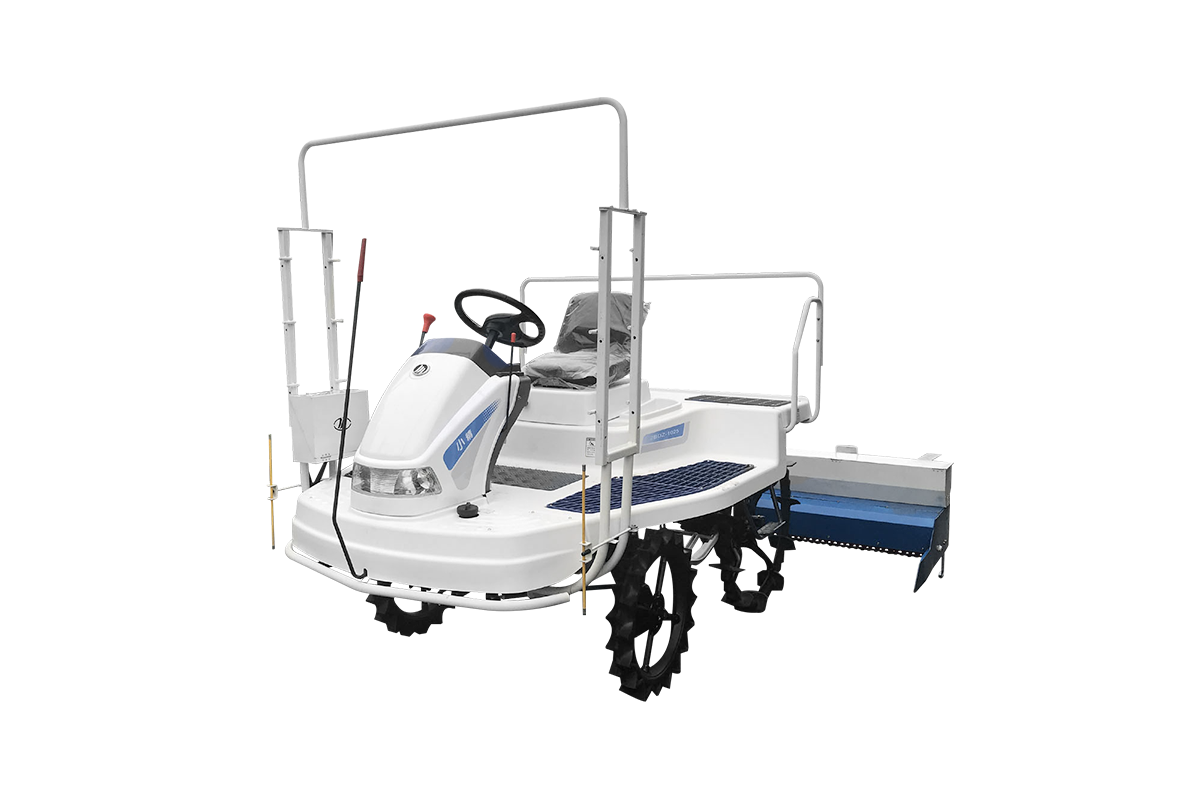 2BDZ-1025 Rice Open Furrow Hill-direct Seeder2BDZ-1025 self-propelled rice furrowing and hole direct seeding machine is an efficient and easy-to-operate product. It adopts a self-propelled design and only one per...View Product →
A hill-drop seeder that meters a precise number of seeds per position also reduces the seed rate dramatically compared with broadcasting, which matters most when you are planting hybrid varieties. The trade-off is that the field must be level and the soil must be dry enough to support the machine without smearing.
Field geometry eliminates more options than agronomy does. A machine that cannot turn at the end of a 12-meter terrace is not a machine you can use, no matter how good its specifications are.
Those figures assume well-prepared fields, a competent operator, and a working day of eight to ten hours including turning and loading. On soft, deeply puddled soil, expect 20 to 30 percent less.
Use a two-row small handheld machine or manual transplanting. A two-row handheld rice transplanter can be carried between plots, needs no headland turning space, and works on terraces where a walking machine would bog down. See the guide to choosing the most efficient rice planting machine for a fuller breakdown of machine-to-field matching.
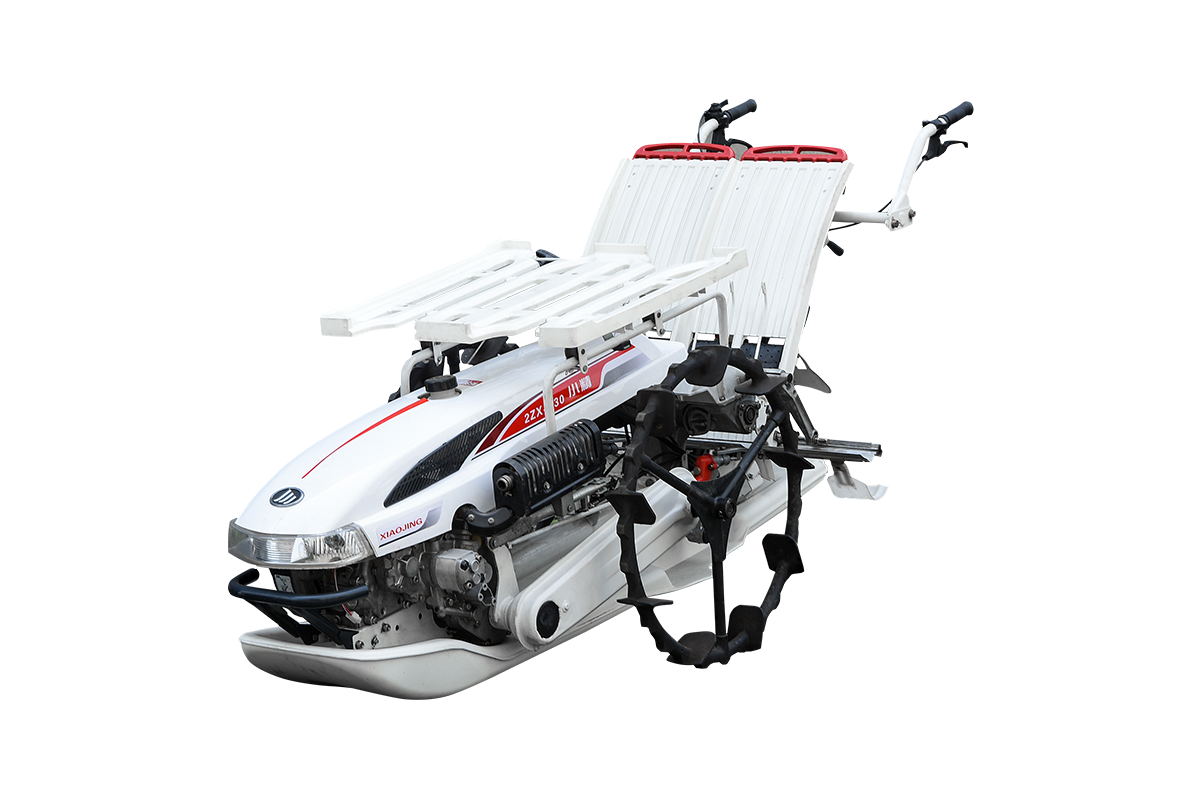 2ZX-230 Two-Row Small Hand-Held Rice TransplanterThe 2ZX-230 two-row small low-fuel consumption hand-held transplanter is a high-performance machine designed for farmland transplanting. As a small transplanter, it ha...View Product →
A four-row or six-row walking-type rice transplanter is the standard answer. It is light enough not to destroy the puddled layer, cheap enough to justify at this scale, and fast enough to finish planting inside the window. Walking machines also load seedlings more easily than riding machines, which reduces the number of people needed on the field.
Move to high-speed riding-type rice transplanters. A six-row riding model typically covers 3 to 4 hectares per day; an eight-row or ten-row machine covers 5 to 8. At this scale the labor savings pay back the capital cost within two to three seasons on most farms. The constraint switches from machine cost to field preparation quality — a riding machine is much less forgiving of an uneven seedbed than a walking machine.
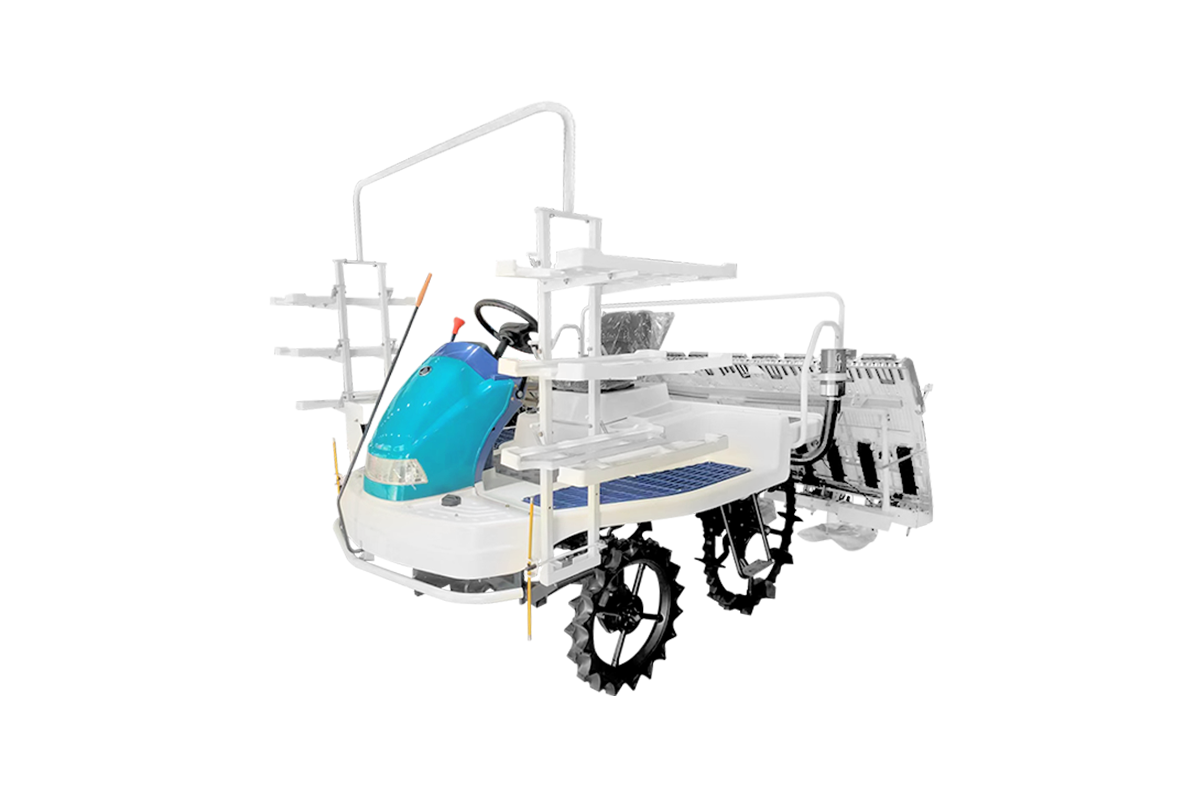
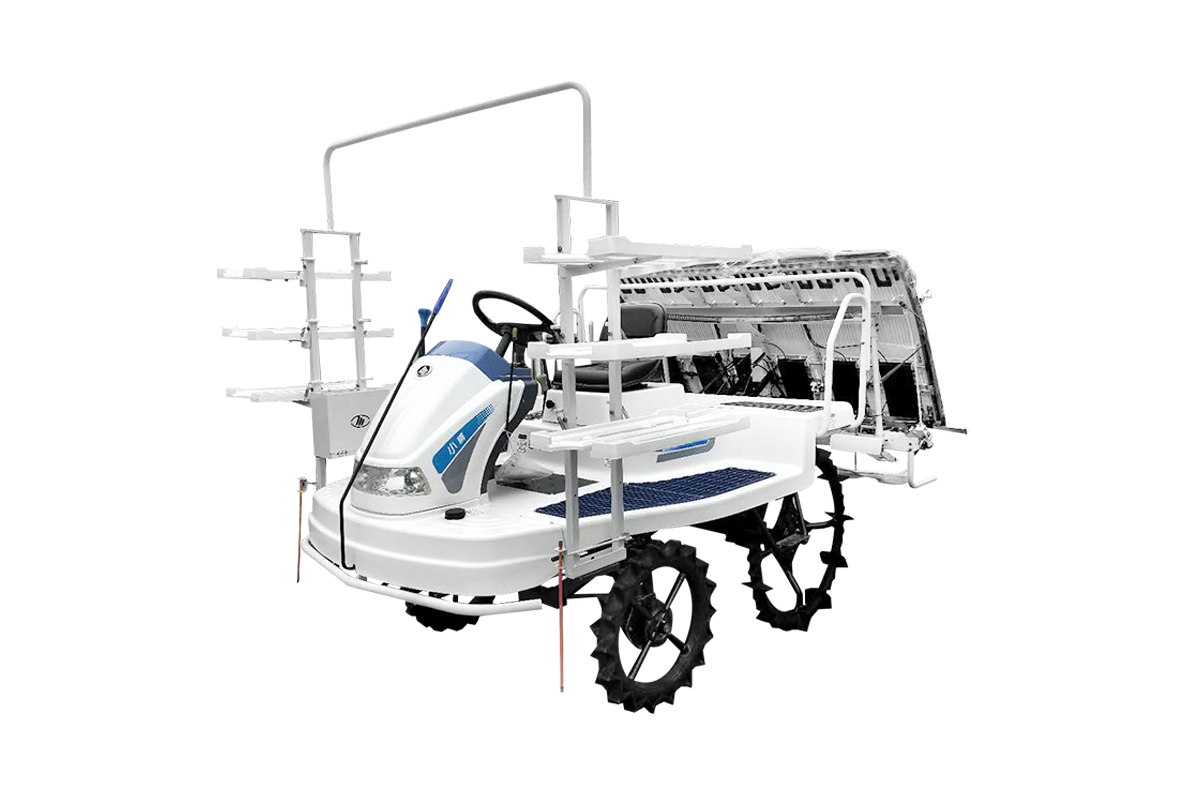 2ZG-630 Six-row Riding Type Rice TransplanterThe 2ZG-630 multi-application six-row high-efficiency riding rice transplanter has become the ideal equipment in the agricultural field with its good performance and s...View Product →
Machine count matters more than machine type. Running three six-row riding machines will usually beat running one ten-row machine on the same area, because a single machine becomes a single point of failure and a single bottleneck at loading time. Plan for one transplanter per 15 to 25 hectares of intended daily coverage, plus spare seedling trays and a tray-washing station.
Farmers rarely switch methods because of agronomy alone. They switch because the arithmetic stops working. Here is how the arithmetic usually breaks down on a one-hectare basis for irrigated lowland rice.
Manual transplanting costs almost nothing in capital and a great deal in labor. Where a labor day costs the equivalent of 15 to 25 kilograms of paddy, that is 200 to 400 kilograms of paddy per hectare spent on the planting operation alone, before the nursery is counted.
A walking-type rice transplanter typically pays for itself within one to two seasons on farms above 2 hectares, purely on labor saved. The hidden costs are seedling trays, a nursery area near the field, and the labor to prepare mat-type seedlings, which is roughly 30 to 50 percent of the labor saved. Net saving is still substantial.
A riding-type rice transplanter has a much higher capital cost and becomes economic somewhere between 10 and 20 hectares of annual rice area, depending on local labor rates. Below that threshold, hiring a contractor or sharing a machine between neighboring farms is usually cheaper than owning one.
Direct seeding equipment costs less than transplanting equipment for the same area, and removes the nursery cost entirely. What it adds is herbicide cost, a higher seed rate, and a greater sensitivity to field levelness. On farms where the water table is managed well, the total per-hectare cost of direct seeding can be 15 to 25 percent lower than transplanting.
The one number growers consistently underestimate is the cost of a delayed planting window. Transplanting that runs two weeks late can cost 10 to 20 percent of yield regardless of how well the rest of the season is managed. If your labor supply cannot finish the window, the machine is not an expense — it is insurance.
The mistake most growers make is choosing the method they already understand rather than the one their constraints point to. A farm that has always transplanted will keep transplanting past the point where labor has gone, and a farm that has always direct-seeded will keep seeding on land that would return more under a transplanter. Both decisions feel safe and both cost money.
No. Under good water control and disciplined weed management, direct-seeded rice can match transplanted rice within 5 percent. The difference appears when weed pressure is high, water control is poor, or the field is uneven. In those conditions transplanting can lead by 20 percent or more.
For mechanical transplanting, plan 25 to 40 kg of seed per hectare of field, which translates to roughly 50 to 60 kg for the nursery area if you account for losses. For direct seeding, plan 60 to 90 kg for drilled planting and 80 to 120 kg for broadcasting.
Most modern varieties perform well at 30 cm by 14 to 18 cm, giving 18 to 24 hills per square meter with 2 to 4 seedlings per hill. Closer spacing of 25 cm by 12 cm suits short-duration varieties and cooler climates. Wider spacing of 30 cm by 20 cm helps in very fertile soils where lodging is a risk.
No. Direct seeding changes your herbicide program, your water management schedule, your seed rate and your variety choice. Varieties with strong early vigor and good lodging resistance are essential. Expect a two-season learning curve before the system performs at its best.
A walking-type machine can realistically cover 30 to 60 hectares in a planting season. A riding-type machine can cover 100 to 250 hectares, assuming adequate seedling supply and field preparation. The limiting factor is almost always seedling production capacity, not the machine itself.
Puddling to a depth of 12 to 18 cm, levelling to within 3 cm, and a settling period of 12 to 24 hours so the soil firms up enough to hold seedlings upright. Planting into freshly puddled, soupy soil is the most common cause of poor establishment with any transplanter.
It can, because the root system develops closer to the surface and the plants are not anchored by transplanting. Choosing a semi-dwarf variety, avoiding excess nitrogen, and applying potassium in split doses reduces the risk substantially.
Yes, if your plots are too small or too steep for a walking machine. A two-row handheld rice transplanter removes the back-breaking part of the work, handles terraces, and can be carried by two people between fields. On farms under 0.5 hectares it is often the only practical mechanization step available.

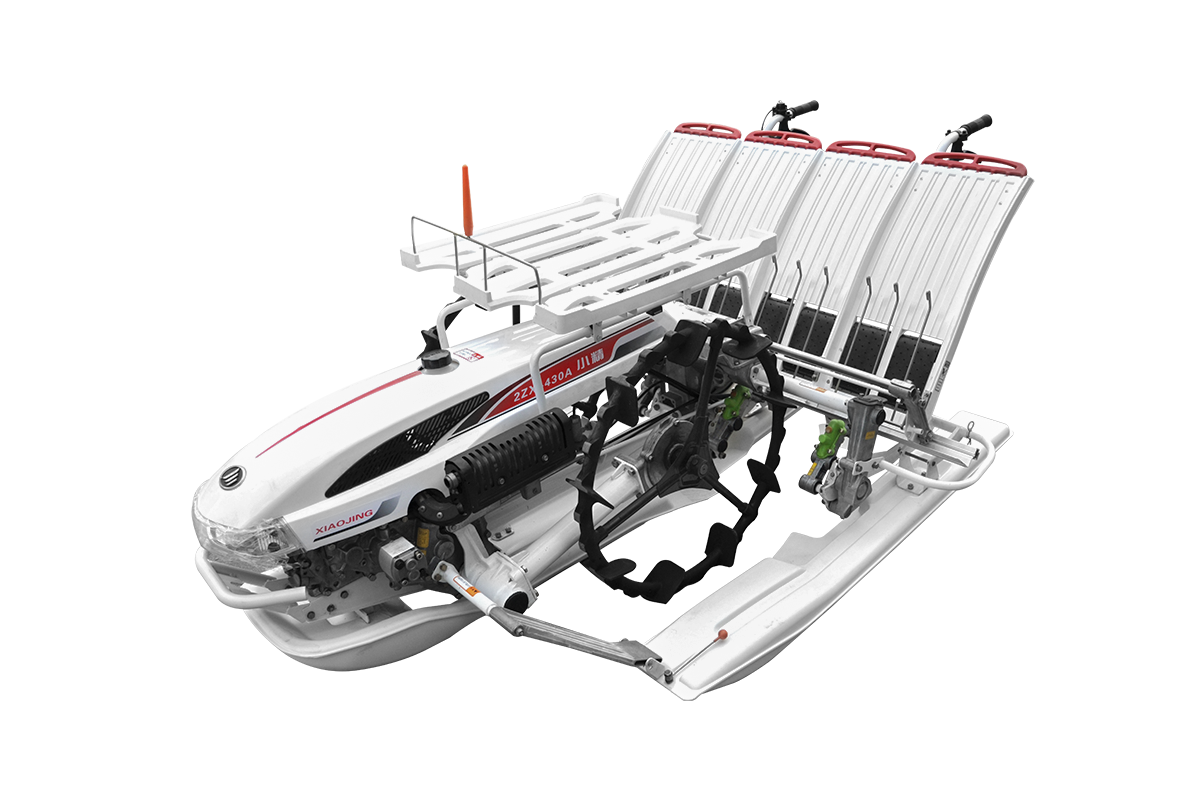
 Custom Agricultural Equipment Manufacturers