

 No. 1819, Renmin West Road, Cao'e Street, Shangyu District, Shaoxing City, Zhejiang Province, China

 English
 中文简体
中文简体 русский
 Español
 عربى
عربى
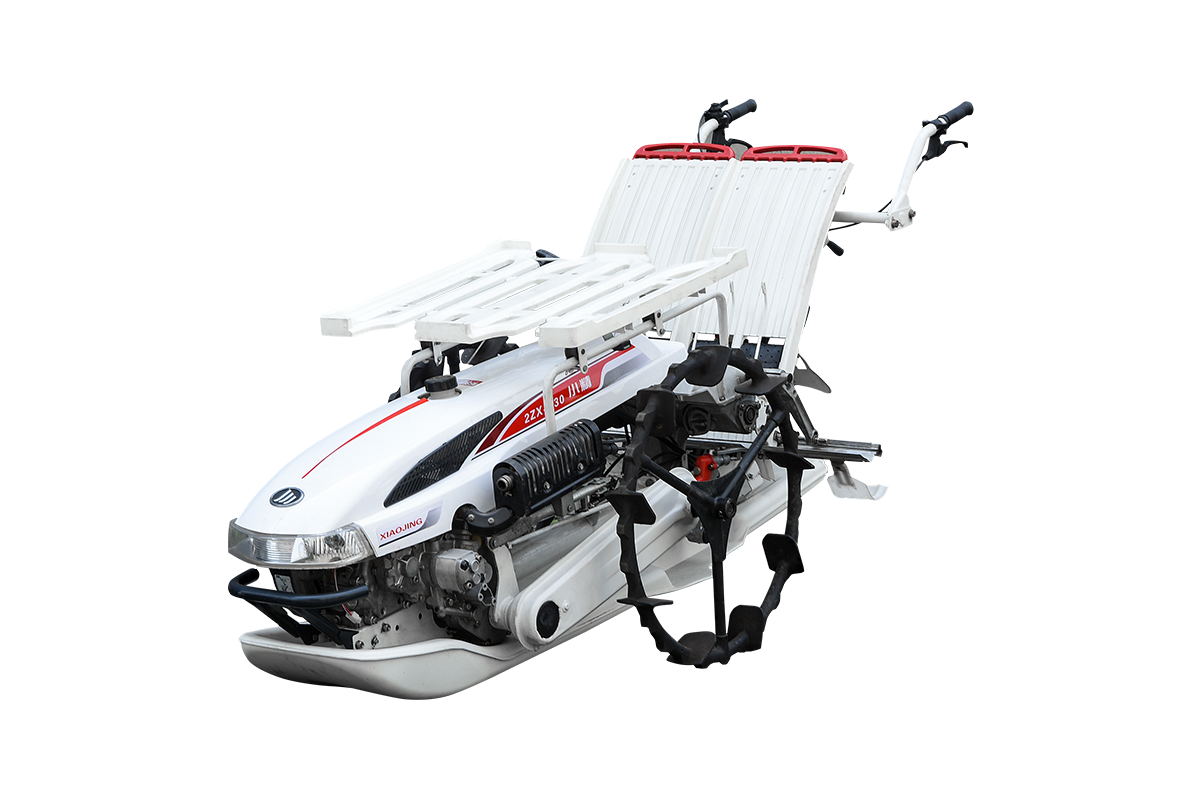
The 2ZX-230 two-row small low-fuel consumption hand-held transplanter is a high-performance machine ...

 2026.02.09
 Industry News
Direct seeding skips the traditional greenhouse seedling nursing and manual transplanting process, with seeds placed directly into the field by a Rice Seeder. While this saves labor, it faces significant agronomic challenges:
In traditional transplanting, a standing water layer effectively suppresses weed germination. After using a Rice Seeder, rice seeds and weeds grow simultaneously in dry or moist environments without a water cover, leading to:
Because seeds are placed at a shallow depth, the root distribution of direct-seeded rice differs fundamentally from transplanted rice:
Seeds are highly vulnerable to external interference before they take root:
| Parameter | Direct Seeding (Rice Seeder) | Traditional Transplanting (TPR) |
| Seed Rate (kg/ha) | 40 - 100 | 15 - 30 |
| Average Root Depth (cm) | 5 - 12 (Shallow) | 15 - 25 (Deep) |
| Emergence/Establishment Rate | 70% - 85% | Over 95% |
| Potential Yield Loss (Weeds) | 15% - 100% | 10% - 15% |
| Methane (CH4) Emissions | Reduced by 10% - 90% | Higher baseline |
| Growth Duration | Shortened by 7 - 10 days | Longer (includes recovery) |
The Rice Seeder faces physical and mechanical bottlenecks in actual field operations:
A Rice Seeder typically performs shallow furrowing or surface seeding, unlike transplanters that can reach deeper soil.
| Metric | Pneumatic Rice Seeder | Mechanical Roller Seeder | UAV Spreading |
| Uniformity Deviation (CV) | Less than or equal to 5% | 8% - 15% | Greater than or equal to 25% |
| Seed Damage Rate | Less than or equal to 0.5% | 1.5% - 3.0% | Approx. 0.1% |
| Row Control | Highly Precise | Fairly Precise | No Rows |
| Efficiency (ha/h) | 0.4 - 0.6 | 0.3 - 0.5 | 3.0 - 5.0 |
Direct seeding requires frequent "moist irrigation" rather than one-time deep flooding. This increases management labor and requires a Rice Seeder to be paired with highly responsive drainage systems to prevent seed rot during early stages.
Because the Rice Seeder method relies heavily on herbicides for weed control, chemical usage is typically 20% - 40% higher than in transplanted fields, increasing the risk of pesticide runoff into water systems.
While methane emissions decrease, the alternating wet/dry soil triggers a sharp increase in nitrous oxide (N2O) emissions, which has a global warming potential nearly 300 times that of CO2.
| Defect Dimension | Manual Seeder | Tractor-Mounted | Pneumatic Seeder |
| Missing Rate | 10% - 15% | 3% - 8% | 2% - 5% |
| Double Seeding Rate | 12% - 20% | 5% - 10% | 1% - 3% |
| Depth Deviation | +/- 1.5 cm | +/- 1.0 cm | +/- 0.5 cm |
Q: Why is the seedling emergence rate low after using a Rice Seeder?
A: This is often due to poor field levelness causing water to pool in low spots, which suffocates the seeds. Additionally, lack of proper seed coating makes the seeds vulnerable to pathogens in the soil.
Q: Why does rice sown by a Rice Seeder fall over (lodge) more easily?
A: The Rice Seeder places seeds at the surface, leading to horizontal root growth. Without the deep vertical roots found in transplanted rice, the plants lack the "anchoring" needed to withstand wind.
Q: Does using a Rice Seeder require more seeds?
A: Yes. Because mechanical seeding has a lower survival rate (70% - 85%), you must increase the seed volume by 100% - 200% to ensure a sufficient stand.
Q: Can a pneumatic Rice Seeder handle wet seeds?
A: No. Wet or sprouted seeds are sticky and fragile; the air pressure can break the sprouts and clog the metering holes, drastically reducing accuracy.
 Custom Agricultural Equipment Manufacturers