

 No. 1819, Renmin West Road, Cao'e Street, Shangyu District, Shaoxing City, Zhejiang Province, China

 English
 中文简体
中文简体 русский
 Español
 عربى
عربى
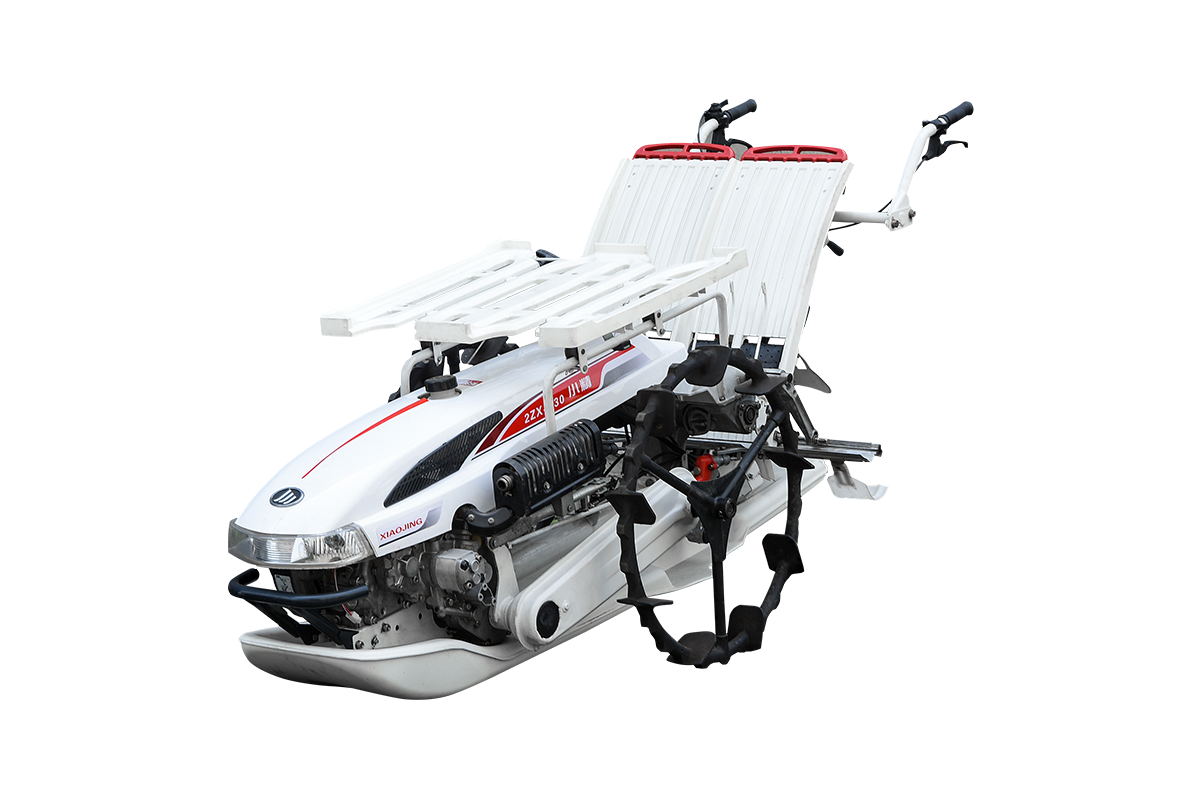
The 2ZX-230 two-row small low-fuel consumption hand-held transplanter is a high-performance machine ...

 2026.02.02
 Industry News
A Rice Seeder is a specialized agricultural machine designed to sow pre-germinated or dry rice seeds directly into the field or onto nursery trays. Its primary role is to implement the Direct Seeded Rice (DSR) technique, which eliminates the traditional, labor-intensive stages of raising seedlings in a nursery and then transplanting them by hand.
Process Transformation: It transitions rice farming from "transplanting" to "direct sowing," significantly reducing the growth pause known as "transplanting shock."
Precision Distribution: The machine controls the seed rate and spacing, ensuring that each plant has optimal access to sunlight, water, and soil nutrients.
Labor Efficiency: By automating the sowing process, a rice seeder can reduce manual labor requirements by over 70% compared to traditional methods.
Rice seeders are categorized based on their power source, sowing logic, and the specific field conditions they are designed for.
Constructed from lightweight, UV-resistant plastic or aluminum, these are pulled by a single operator. The seeds are housed in drums with adjustable holes that release seeds as the drum rotates.
These are self-propelled units powered by gasoline or diesel engines. They are often equipped with specialized "lug wheels" or iron wheels to navigate the soft, muddy terrain of wet paddies without sinking.
The most advanced tier of Rice Seeder technology, using air pressure (vacuum) to pick up individual seeds. This prevents mechanical damage to the seeds and ensures near-perfect spacing.
| Performance Metric | Manual Drum Seeder | Motorized Direct Seeder | Pneumatic Seeder | Drone/UAV Seeder |
| Power Source | Manual Labor | 5-8 HP Engine | Tractor PTO | Lithium Battery |
| Efficiency (Ha/Hr) | 0.1 - 0.2 | 0.6 - 1.2 | 1.0 - 2.0 | 5.0 - 10.0 |
| Weight (kg) | 10 - 25 | 150 - 400 | 500 - 900 | 30 - 60 |
| Sowing Depth (mm) | 0 - 10 (Surface) | 5 - 30 (Adjustable) | 10 - 40 (Precise) | 0 (Surface) |
| Row Spacing (cm) | Fixed (20 or 25) | Adjustable (20-30) | Highly Adjustable | N/A |
| Seed Damage Rate | Less than 0.5% | Less than 1.0% | Less than 0.1% | 0% |
Understanding the internal mechanics of a Rice Seeder is essential for optimizing crop yield.
The hopper is the storage tank for the rice seeds. High-quality seeders feature a tapered design to ensure a constant gravity feed to the metering unit. Some models include an internal agitator to prevent "bridging," where moist seeds stick together and block the flow.
This component dictates the seed rate. The Fluted Roller uses rotating grooves to carry seeds out of the hopper, while Plate Metering uses a disc with holes sized for specific rice varieties. Vacuum Suction sucks a single seed into a hole on a rotating disc, releasing it precisely into the seed tube.
The opener cuts a small trench in the mud or soil. The seed tube then guides the seed into this trench. Finally, a closer or a drag bar covers the seed with a thin layer of soil to protect it from birds and prevent it from floating away if the field is flooded.
A Rice Seeder performs best when the field environment is prepared according to specific agronomic standards.
The field must be exceptionally level. In direct seeding, a height difference of more than 3 cm can lead to "drowning" of seeds in low spots or "desiccation" (drying out) in high spots.
For wet-seeding, the soil should be puddled and then allowed to settle for 24 to 48 hours. The goal is "creamy" mud that is firm enough to support the seed at the correct depth but soft enough for the machine to move through.
Seeds are usually soaked for 24 hours and incubated for another 24 hours until the radical (the "white bud") just emerges. If the bud grows too long, it may be snapped off by the Rice Seeder's internal gears.
Q: Can a rice seeder be used for both dry and wet fields?
A: Most machines are specialized. A "Wet Seeder" has wide wheels to prevent sinking in mud, while a "Dry Seeder" (often called a Seed Drill) has heavy-duty openers to penetrate hard, dry soil.
Q: How do I adjust the seed rate for different rice varieties?
A: You can adjust the seed rate by changing the speed of the metering roller or by swapping the metering plates. Hybrid rice usually requires a lower seed rate than conventional rice because it tillers more aggressively.
Q: Does using a rice seeder increase weed growth?
A: Because seeds are sown directly into the soil alongside weed seeds, weeds can emerge at the same time as the rice. However, the straight rows created by the Rice Seeder allow for the use of mechanical weeders, which is impossible with random hand-broadcasting.
Q: What is the ideal driving speed for a motorized rice seeder?
A: The ideal speed is typically between 0.5 and 0.8 meters per second. Driving too fast can cause the metering device to skip, leading to gaps in the rows.
Q: Why are some seeds left on the surface?
A: This usually happens if the soil is too hard for the furrow openers to penetrate or if the machine's downward pressure is set too low.
Post-Operation Cleaning: Rice seeds contain starch and moisture. If left in the machine, they will ferment or harden, seizing the mechanical parts. Always flush the hopper and metering units after use.
Corrosion Protection: Since these machines work in water, they are prone to rust. Wash the frame with fresh water and apply grease to all moving joints daily.
Component Calibration: Regularly check the furrow openers for wear. If the metal is worn down, the sowing depth will become shallower, leading to poor root development.
 Custom Agricultural Equipment Manufacturers