
 No. 1819, Renmin West Road, Cao'e Street, Shangyu District, Shaoxing City, Zhejiang Province, China

 English
 中文简体
中文简体 русский
 Español
 عربى
عربى



Planting rice by hand is one of the most physically demanding jobs in farming. You spend hours bent over muddy water, pulling apart mats of seedlings and pushing each small clump into the soil, one clump at a time. A rice transplanter exists to replace that repetitive labor with a clean mechanical process. In simple terms, it is a machine that carries nursery-grown seedlings, feeds them into a planting mechanism, and places them into paddy soil at a uniform depth and spacing.
Beyond saving your back, the machine protects your planting schedule and reduces the number of workers needed at the busiest time of the season. This article explains what a rice transplanter does, how its main components work, how walking and riding models differ, and what to consider before buying one.
What Exactly Does a Rice Transplanter Do?
A rice transplanter does not simply push seedlings into the ground. It runs a complete sequence that mimics a skilled worker's hands, but in a continuous loop:
- Loads seedling mats: pre-grown nursery seedlings sit on a tray platform at the back of the machine.
- Shifts the tray: a tray shifter moves the seedling mat forward a small, controlled distance before each planting cycle, so the pickup forks always find a fresh section.
- Splits the seedlings: pickup forks separate the mat into individual plants or small clumps, just as a worker divides a bundle by hand.
- Plants them: a planting arm inserts each clump into flooded soil at a set depth and spacing.
- Levels the mud: a float slides over the surface, smoothing the bed and preventing the machine from sinking too deep.
- Moves forward: the unit travels across the field, guided by a walking operator or driven from a riding seat.
In short, the machine replaces three manual jobs—lifting the seedling, separating it, and pushing it into the mud—with one continuous mechanical action.
Walking vs. Riding: The Two Main Types and Their Functions
Walking-Type Rice Transplanters
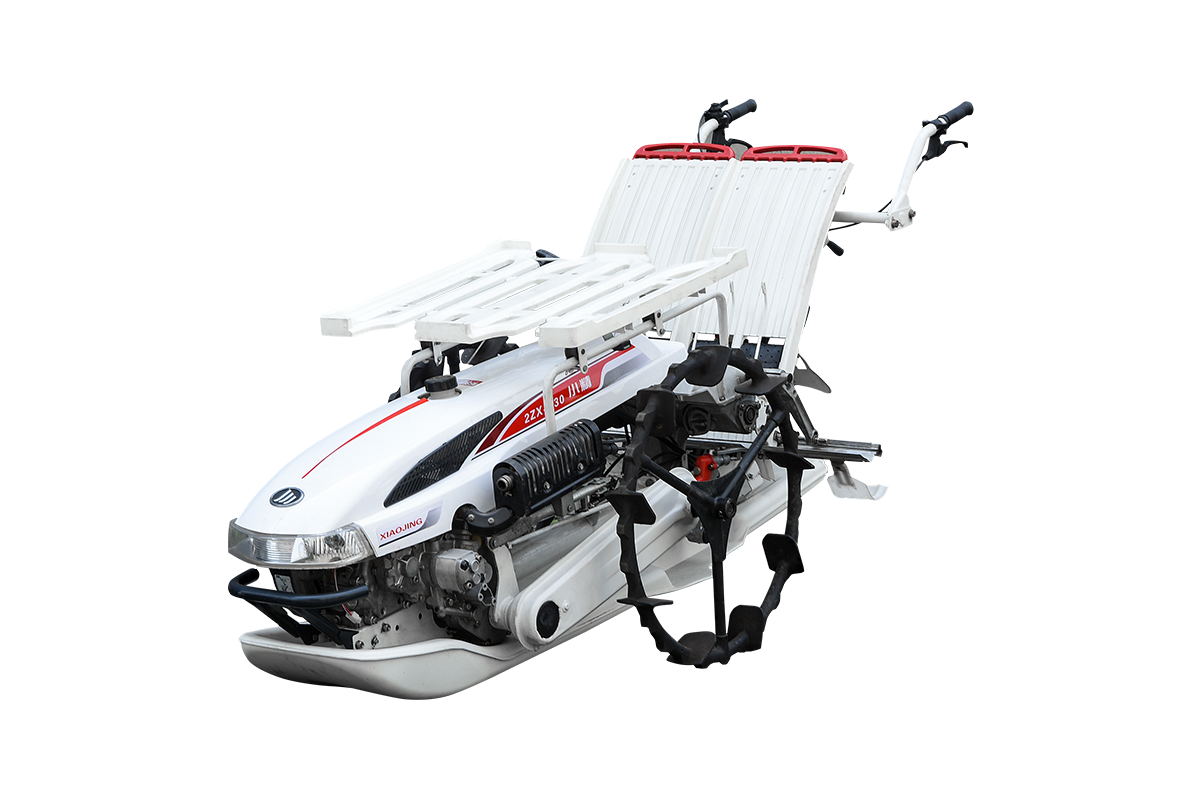
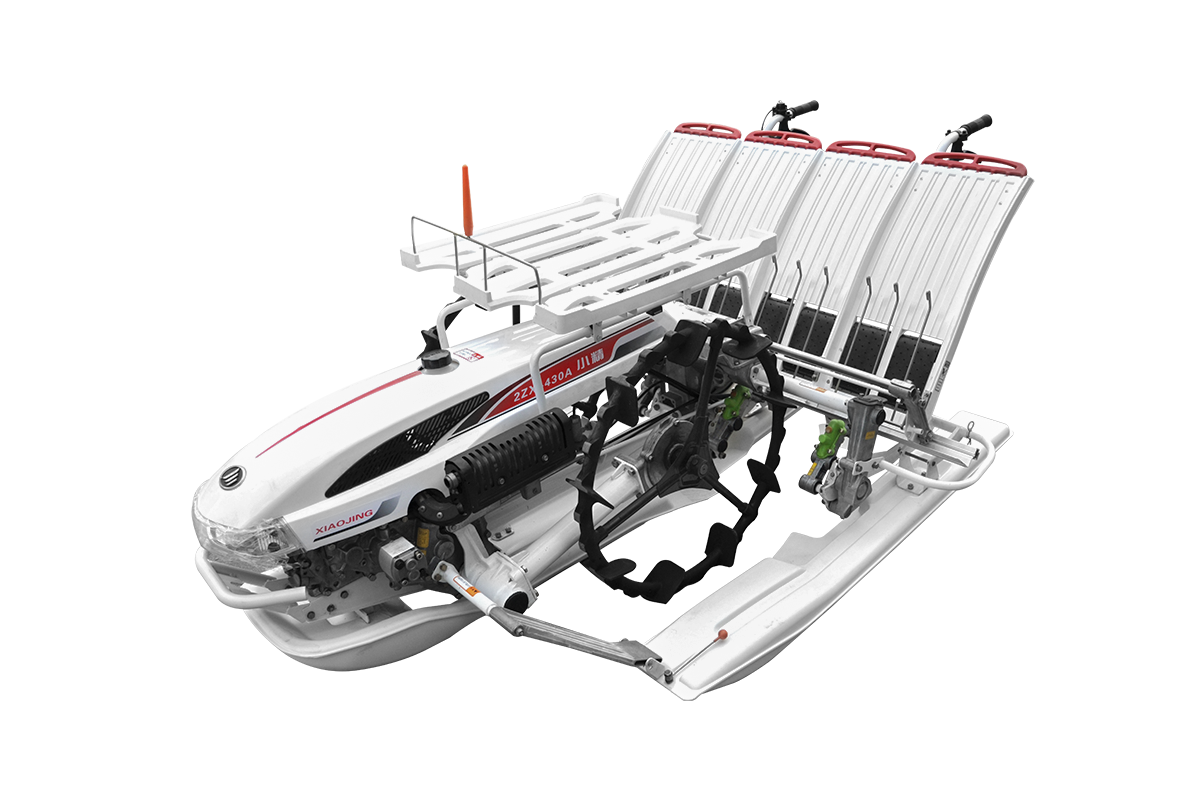
A walking-type rice transplanter is pushed or lightly powered, with the operator walking behind and guiding the handle. Because these machines are compact and relatively light, they perform well on small fields, terraces, and irregular plots where a large vehicle cannot turn easily.
Walking models typically plant two to six rows per pass. Xiaojing Agricultural Machinery builds a complete range of walking-type rice transplanters, from two-row handheld units to eight-row machines, so smallholders can step up from hand labor without buying oversized equipment. A six-row walking rice transplanter, for example, suits a medium-sized family farm that still wants a simple, affordable machine with low maintenance needs.
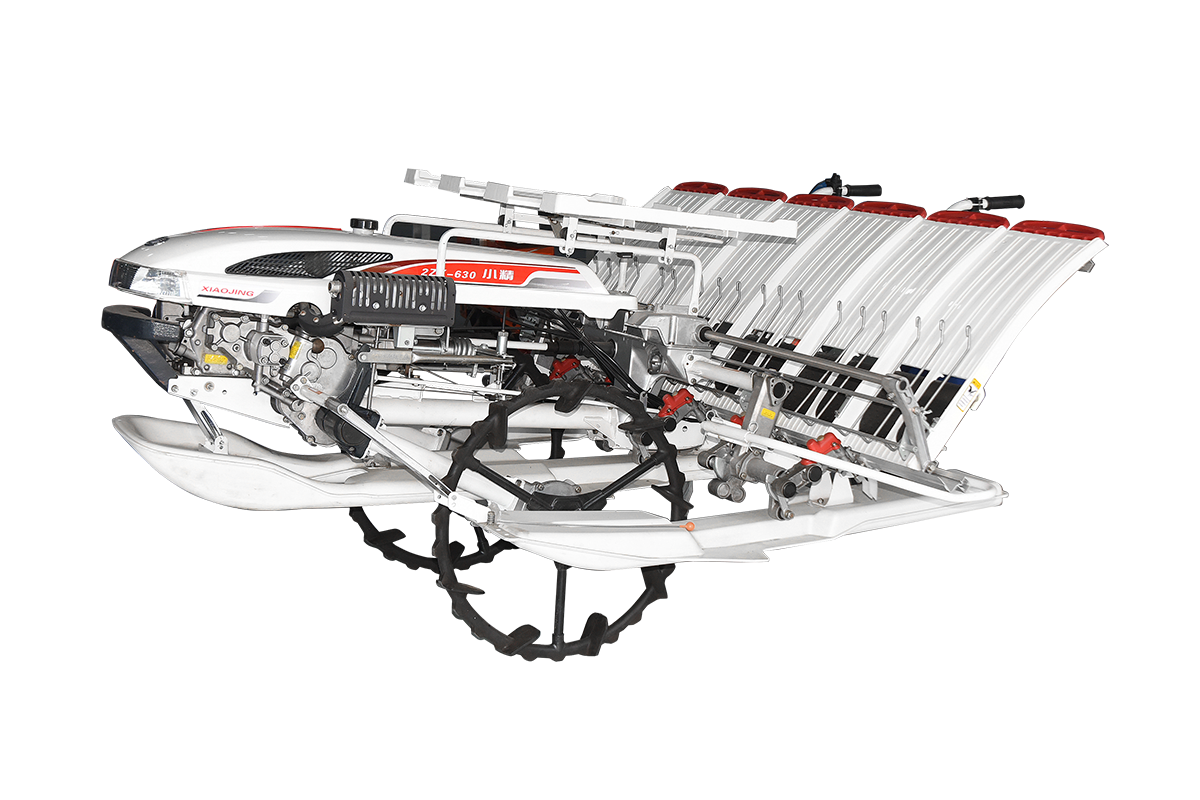 Custom 2ZX-630 Six-row Walking Rice Transplanter Suppliers, OEM/ODM Factory - ZhZhejiang Xiaojing Agricultural Machnery Manufacturing Co., Ltd is China 2ZX-630 Six-row Walking Rice Transplanter Suppliers and OEM Facto...View Product →
Riding-Type Rice Transplanters
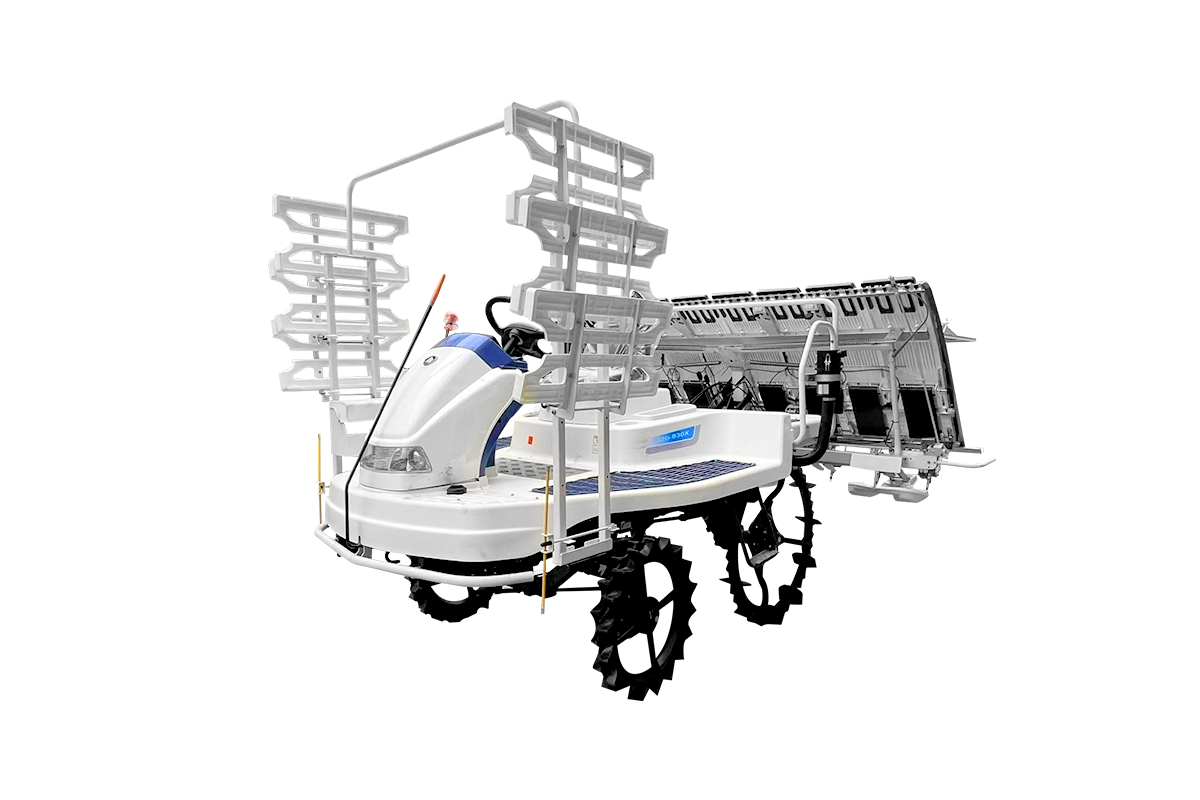
Riding-type rice transplanters, often called high-speed models, are self-propelled machines with a seat for the operator. They plant six, eight, or ten rows per pass and rely on hydraulic systems to keep the planting unit level in soft paddy mud. The result is faster coverage, fewer stops, and far less physical fatigue during a long planting day.
These machines are the standard choice for cooperatives, large farms, and custom planting services. A six-row riding-type rice transplanter is a popular entry point for farms that have outgrown walking machines. Xiaojing also offers riding-type high-speed rice transplanters with higher row counts for bigger operations.
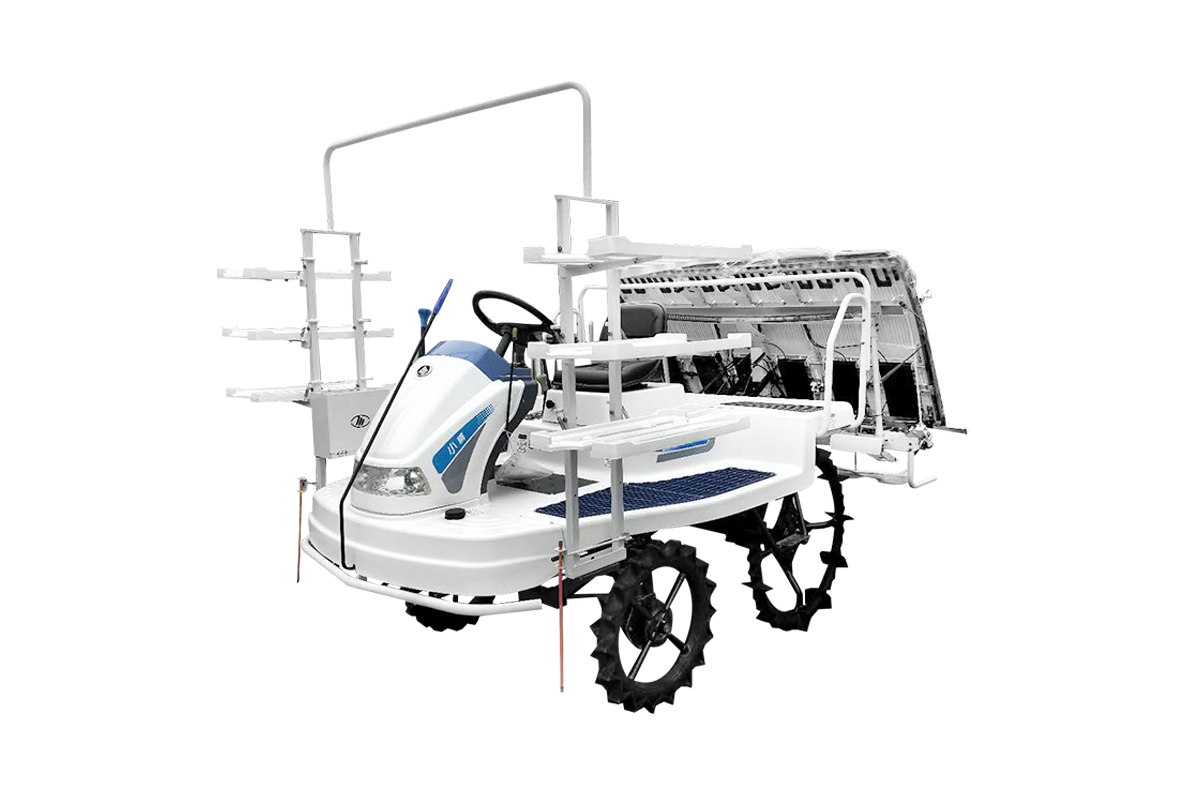 Custom 2ZG-630 Six-row Riding Type Rice Transplanter Suppliers, OEM/ODM FactoryZhejiang Xiaojing Agricultural Machnery Manufacturing Co., Ltd is China 2ZG-630 Six-row Riding Type Rice Transplanter Suppliers and OEM ...View Product →
| Point of Comparison | Walking Type | Riding Type |
|---|---|---|
| Operator position | Walks behind and guides the machine | Sits on the machine and drives |
| Typical rows per pass | 2–6 rows, up to 8 on some models | 6–10 rows |
| Best field shape | Small, scattered, or terraced | Large, flat, and continuous |
| Daily coverage | Moderate | High |
| Purchase and maintenance cost | Lower | Higher |
How Does a Rice Transplanter Improve Farming Efficiency?
The most widely cited comparison comes from data on hand labor referenced on Wikipedia: a worker planting by hand covers roughly 700 square meters per day, while one worker with a transplanter can cover about 10,000 square meters per day. That is roughly a 14-fold increase in daily coverage with the same number of people.
Machine planting also shortens the planting window. Rice seedlings need to go into the field at the right time; if planting drags on for weeks, early and late batches grow unevenly. A transplanter compresses that work into a few days, which protects crop uniformity and frees workers for other tasks.
On the labor side, one machine replaces several manual workers, depending on the model and field conditions. That matters most in regions where the planting season creates a sudden spike in labor demand, especially in South Asia and other rice-growing areas where hired help is scarce and costly.
Does machine planting affect yield? The honest answer is that transplanters do not turn weak seedlings into strong plants. What they do is remove the variation that hand planting creates—uneven depth, uneven spacing, and missed spots. When combined with healthy nursery trays and proper water management, machine-planted fields typically develop a more uniform stand, which means fewer gaps and steadier growth.
| Metric | Hand Planting | Rice Transplanter |
|---|---|---|
| Typical daily coverage per worker | About 700 m² | About 10,000 m² |
| Labor needed per field | High | Low |
| Planting depth consistency | Depends on worker skill | Set by the machine |
| Time window to finish planting | Long | Short |
Key Components That Make Transplanting Possible
Every rice transplanter, regardless of brand, relies on the same family of components. Understanding them helps you judge a machine and explain it to your crew:
- Seedling tray: a flat platform that carries the pre-grown mat and feeds it toward the pickup area.
- Tray shifter: moves the mat forward in small steps, like a typewriter carriage advancing paper, so each cycle gets a fresh batch of seedlings.
- Pickup forks: enter the mat, pull out a small clump of seedlings, and pass them to the planting mechanism.
- Planting arm: swings the clump down and tucks it into the mud at the correct depth.
- Float: a smooth, ski-like plate under the machine that levels the mud and stops the planter from digging too deep.
- Drive unit: moves the machine forward. On walking models, the operator pushes or guides the unit; on riding models, an engine powers the wheels and the hydraulic lift.
How to Choose a Rice Transplanter Based on Your Needs
The right model depends on three factors: field size, labor availability, and budget.
- Small, irregular, or terraced fields: choose a two-row or four-row walking model. It is light, easy to transport, and affordable.
- Small to medium flat fields: a six-row walking machine gives a clear productivity jump without stepping into ride-on pricing.
- Large, flat, or consolidated fields: a riding model with eight to ten rows covers the most acreage per day and reduces operator fatigue.
- Custom planting service or cooperative: a high-speed riding model pays for itself by allowing you to finish many clients' fields in a short season.
For very large operations, a ten-row riding-type rice transplanter represents the top end of the range and keeps planting time low even on the biggest fields.
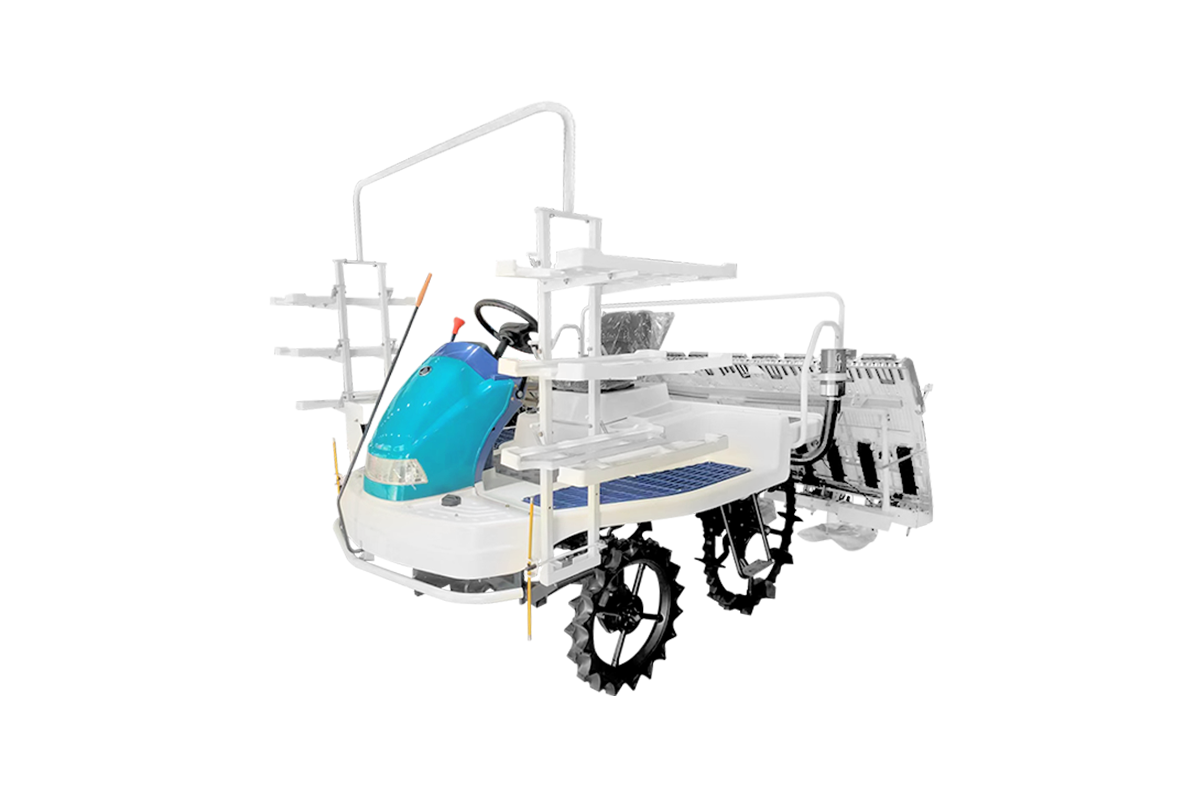 Custom 2ZG-1020 Ten Rows Riding Type Rice Transplanter Suppliers, OEM/ODM FactoZhejiang Xiaojing Agricultural Machnery Manufacturing Co., Ltd is China 2ZG-1020 Ten Rows Riding Type Rice Transplanter Suppliers and OE...View Product →
Budget also plays a role. Xiaojing states that its transplanter line is included in China's national agricultural machinery purchase subsidy catalog, so eligible buyers may recover part of the purchase cost. Check with your local agricultural machinery office for current subsidy rules before you commit.
Finally, ask for a live demonstration. A field test shows you how the machine handles wet soil, how easy it is to adjust planting depth, and what daily maintenance looks like. If you want a more complete decision checklist, read our guide on how to choose the right rice transplanter.
Conclusion
Rice transplanters have earned their place in paddy farming because they solve a practical problem: too much work, too little time, and fewer hands to do it. The core function is straightforward—carry seedlings from a tray and plant them evenly in the soil—yet the effect on daily coverage, labor needs, and crop uniformity is substantial.
Choosing between a walking model and a riding model is a matter of scale. If your fields are small and scattered, a two-row or six-row walking machine will save you days of heavy work at a price within reach of a family farm. If you manage large fields or run a custom planting service, a six-row or ten-row riding machine turns planting day into a comfortable drive across the field.
Whatever path you choose, the goal stays the same: get the seedlings in the ground quickly, evenly, and at the right depth. A rice transplanter does exactly that—and lets you stay upright while the machine does the bending.