

 No. 1819, Renmin West Road, Cao'e Street, Shangyu District, Shaoxing City, Zhejiang Province, China

 English
 中文简体
中文简体 русский
 Español
 عربى
عربى
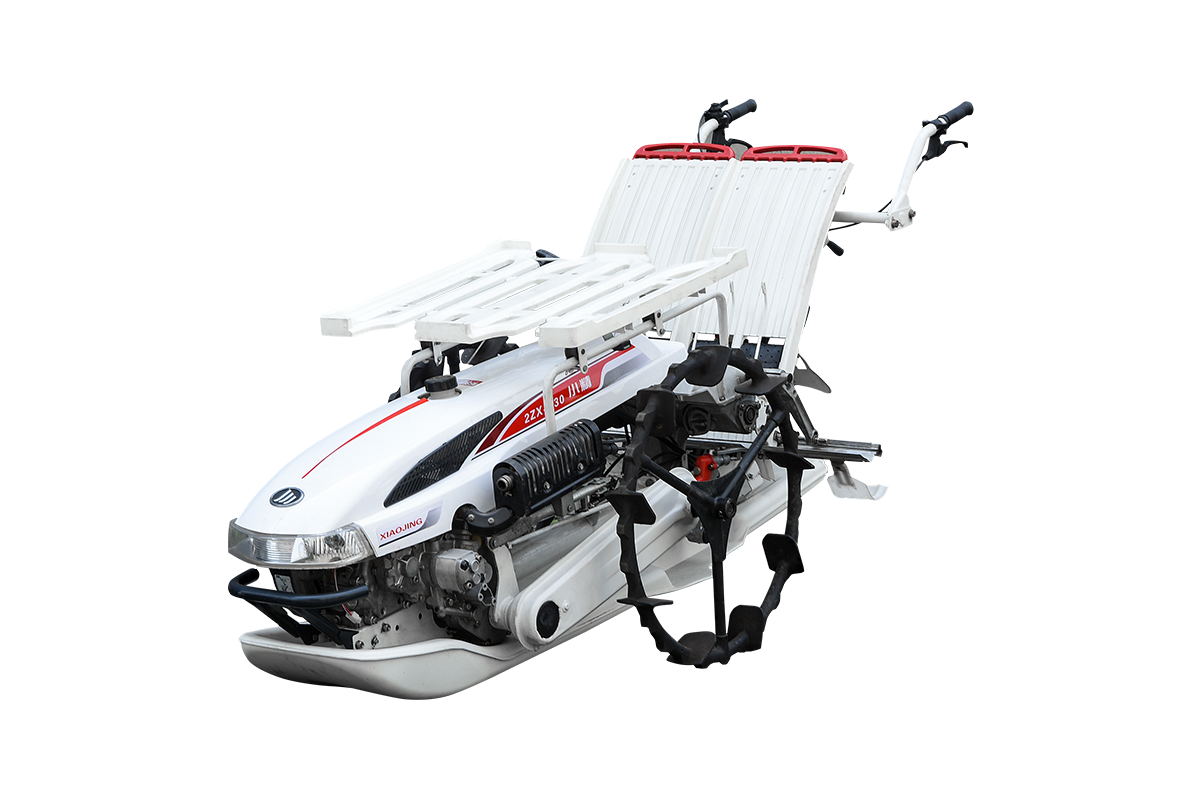
The 2ZX-230 two-row small low-fuel consumption hand-held transplanter is a high-performance machine ...

 2026.08.24
 Industry News
The commercial tea industry is undergoing a fundamental shift. Rising wage inflation, a declining rural workforce, and the need for consistent quality have made the tea leaf picking machine an essential asset for estates of every scale. Whether you manage a boutique organic garden or a sprawling commodity plantation, the selection of the appropriate tea picker machine directly impacts operational costs, harvest timeliness, and final product grade. Among all harvesting solutions, the electric tea picking machine represents the most significant technological leap in recent decades, offering a clean, quiet, and precision-driven alternative to traditional internal combustion engine harvesters. This professional guide provides an exhaustive technical breakdown of tea picking machine systems, from cutting mechanics to battery management, ensuring you have the data needed for an informed procurement decision.
Absolutely. The deployment of the tea leaf picking machine is not just feasible—it is the industry standard for over 65% of global tea production. A single tea picker machine operated by two workers can harvest 80 to 150 kilograms of fresh leaf per hour, a volume that would require 8 to 12 manual pluckers working simultaneously. This productivity gain translates into a 50% to 70% reduction in per-kilogram harvesting costs. However, the successful integration of a tea picking machine into your workflow depends on three critical agronomic prerequisites: cultivar selection (clonal varieties with uniform bud break), field topography (slopes under 15 degrees are ideal for wheeled units), and canopy management (maintaining a flat, even plucking table at 60–90 cm height). When these conditions are met, an electric tea picking machine can achieve bud-leaf integrity rates exceeding 88%, rivaling the quality of manual plucking for most tea grades.
The term tea picking machine encompasses a wide array of equipment, each designed for specific operational scenarios. Understanding these categories is the first step toward selecting the optimal tea leaf picking machine for your plantation.
The electric tea picking machine is rapidly becoming the preferred choice for forward-thinking tea producers. Its architecture is defined by four primary subsystems that work in concert to deliver efficient, high-quality harvests.
1. Energy Storage and Management: The heart of the electric tea picking machine is its battery pack. Modern units utilize lithium-ion (Li-ion) or lithium iron phosphate (LiFePO4) cells. LiFePO4 batteries are increasingly favored for their longer cycle life (over 2000 cycles) and superior thermal stability. An integrated Battery Management System (BMS) monitors cell voltage, temperature, and state-of-charge (SOC) to prevent over-discharge and optimize runtime. For a 24V 12Ah pack, the stored energy is approximately 288 Wh, sufficient for 4-6 hours of continuous operation under moderate load.
2. Motor and Drive Train: High-performance electric tea picking machine units employ sensorless or hall-sensor-based BLDC motors. These motors deliver rated power from 50W to 500W, with peak torque occurring at 1500 to 3000 RPM. The motor directly drives an eccentric cam or a gear-reduction mechanism that converts rotational motion into the linear reciprocating motion required for the cutting blades. BLDC motors offer 40% higher efficiency than universal motors, resulting in extended battery life and reduced heat generation.
3. Cutting Head and Blade Assembly: The cutting head comprises a fixed lower blade and a reciprocating upper blade. Blade pitch (tooth spacing) is critical; finer pitches (22 mm) produce cleaner cuts on tender shoots, while coarser pitches (25-28 mm) are better suited for mature, woody stems. The cutting force required for a tea stem is approximately 2.5 to 4.5 Newtons, and the electric tea picking machine must deliver consistent cutting speed (0.8 m/s to 1.2 m/s) to prevent stem crushing.
4. Collection and Conveyance: Most tea leaf picking machine models feature a fabric collection bag or a rigid plastic tray. Premium electric variants include an axial-flow blower that creates negative pressure to pneumatically convey cut leaves into the bag, reducing leaf spillage and improving field efficiency by up to 15%.
| Parameter | Compact Handheld Electric | Standard Handheld Electric | High-Capacity Backpack Electric |
| Cutting Width (mm) | 285 – 300 | 310 – 330 | 500 – 600 |
| Motor Type | Brushless DC (BLDC) | Brushless DC (BLDC) | Sensorless BLDC |
| Rated Power (W) | 50 – 150 | 200 – 300 | 400 – 500 |
| Battery Chemistry | Li-ion 10S1P | LiFePO4 8S2P | LiFePO4 10S3P |
| Battery Voltage (V) / Capacity (Ah) | 24 / 10 | 24 / 12 | 36 / 20 |
| Total Machine Weight (kg) | 1.4 – 3.5 | 1.6 – 4.2 | 4.5 – 7.0 |
| Continuous Runtime (hours) | 4 – 5 | 5 – 8 | 8 – 10 |
| Blade Speed (strokes/min) | 1500 – 2800 | 2000 – 6300 | 1800 – 2450 |
| Cutting Force (N) | 3.2 – 4.5 | 2.8 – 3.8 | 3.0 – 4.0 |
| Typical Harvest Output (kg/h) | 16 – 25 | 20 – 30 | 30 – 42 |
Values represent aggregated data from field tests and factory specifications. Actual performance may vary based on crop density and operating technique.
Factory Engineering Note: The electric tea picking machine offers superior operator retention rates due to its low vibration and noise profile. For tea gardens in peri-urban areas or those pursuing organic certification, the electric tea picker machine is often the only mechanized option that aligns with environmental compliance standards.
Selecting the right tea leaf picking machine requires an objective comparison of key operational metrics across different power classes. The table below provides a comprehensive benchmark of petrol vs. electric platforms.
| Performance Indicator | Petrol Single-Person | Electric Single-Person | Two-Person Petrol | Self-Propelled Diesel |
| Cutting Width (mm) | 300 – 520 | 285 – 330 | 1000 – 1600 | 1500 – 1700 |
| Power Output (kW / hp) | 0.75 – 1.03 kW | 0.05 – 0.30 kW | 2.2 – 2.9 kW | 45 – 60 kW |
| Machine Weight (kg) | 4.3 – 9.6 | 1.4 – 4.2 | 11.9 – 24.0 | 800 – 1200 |
| Bud-Leaf Integrity Rate (%) | 78 – 94 | 81 – 90 | 78 – 88 | 82 – 86 |
| Leakage Rate (%) | 0.8 – 1.0 | 0.9 – 1.5 | 0.9 – 1.0 | 1.2 – 1.8 |
| Field Efficiency (ha/h) | 0.02 – 0.04 | 0.015 – 0.03 | 0.08 – 0.12 | 0.14 – 0.22 |
| Operating Noise (dB) | 92 – 98 | 65 – 72 | 95 – 105 | 85 – 90 |
| CO₂ Emissions (g/h) | ~680 | 0 | ~1450 | ~4500 |
| Lubrication Requirement | Oil mix / gear oil | Food-grade grease only | Oil mix / gear oil | Engine oil / hydraulic |
For the tea processor, the output quality of the tea leaf picking machine is more important than its sheer throughput. The following Key Performance Indicators (KPIs) are used globally to assess tea picker machine performance, and they are directly influenced by blade geometry, cutting speed, and forward velocity.
Field research conducted on reciprocating tea leaf picking machine platforms has identified the sweet spot for operational parameters. To maximize integrity and minimize leakage, the following settings are recommended:
When these parameters are applied to an electric tea picking machine equipped with bionic-edge blades, the BLIR can reach 92.7%, a 13.2% improvement over conventional straight blades, with a corresponding 6.4% reduction in leakage.
Operating a tea leaf picking machine efficiently requires a standardized procedure that minimizes human error and prolongs equipment life. Follow this step-by-step protocol for consistent results.
Operator Safety: Always wear cut-resistant gloves and eye protection when operating any tea leaf picking machine. The electric tea picking machine produces significantly less hand-arm vibration (HAV) than petrol models, reducing the risk of long-term musculoskeletal disorders.
Selecting the optimal tea leaf picking machine involves a multi-factor decision matrix. Here is a structured approach to align the machine type with your specific operational parameters.
Purchasing a tea leaf picking machine is a capital investment. Understanding the Total Cost of Ownership (TCO) and Return on Investment (ROI) is crucial for budget planning. Below is a simplified economic model comparing a standard petrol two-person tea picker machine and an equivalent electric tea picking machine over a 5-year period.
| Cost Factor | Petrol Two-Person Unit | Electric Two-Person Unit |
| Initial Purchase Cost | USD 1,200 | USD 1,950 |
| Energy Cost (per hour) | USD 3.20 (fuel + oil) | USD 0.65 (electricity, grid rate) |
| Annual Energy Cost (800 hrs) | USD 2,560 | USD 520 |
| Annual Maintenance (parts) | USD 280 | USD 150 |
| 5-Year Operating Cost | USD 14,200 | USD 3,350 |
| 5-Year Total Investment | USD 15,400 | USD 5,300 |
| Break-even Point | N/A (baseline) | Within 18 months (savings of ~USD 1,500/year) |
Calculations based on average US grid electricity rates and global petrol prices as of Q2 2026. Labor costs are excluded as both machines use the same crew size.
The data clearly indicates that while the electric tea picking machine carries a premium purchase price, its lower operating expenses result in a significantly lower TCO, making it the more economical choice for plantations with reliable charging infrastructure.
Regardless of the power source, rigorous maintenance is non-negotiable for any tea leaf picking machine. A well-maintained tea picker machine retains its cutting efficiency, reduces breakdowns, and preserves resale value. Here is the factory-recommended maintenance schedule.
Most electric tea picking machine models are rated IPX4 (splash-proof) or IPX5 (water-resistant). While they can withstand light drizzle, harvesting in heavy rain is not recommended. Wet leaves have higher friction, increasing cutting resistance by up to 40%, which can overload the motor and drastically reduce battery runtime. Additionally, wet leaf material accelerates blade corrosion.
The lifespan depends on the chemistry and usage. A high-quality LiFePO4 battery in a premium electric tea picking machine can endure 1500 to 2000 full charge-discharge cycles. With typical daily use (5 hours/day, 150 days/year), this translates to 6 to 8 years of service life before capacity drops below 70%.
When operated correctly, a tea leaf picking machine does not damage the bush. The key is maintaining the correct cutting height. Cutting too low (below the previous mark) damages the woody frame and delays regrowth. Cutting too high leaves unwanted stems. Regular pruning of the canopy and proper machine adjustment prevent bush decline. The electric tea picking machine offers the advantage of consistent RPM, ensuring uniform cuts that heal quickly.
Manual plucking achieves 95-98% integrity on the finest shoots. A top-tier electric tea picking machine achieves 87-93% integrity. The 5-8% difference is acceptable for most commercial teas. For ultra-premium tea, estates often use a combination: manual plucking for the first flush (high price point) and tea picker machine harvesting for subsequent flushes where the price differential is narrower.
For an electric tea picking machine, look for an automatic cut-off switch that activates when the operator releases the handle. A blade guard or cover is essential to prevent accidental contact with the reciprocating knives. Overcurrent protection in the BMS prevents motor burnout. For petrol models, look for vibration-dampening mounts and spark arrestors.
 Custom Agricultural Equipment Manufacturers