

 No. 1819, Renmin West Road, Cao'e Street, Shangyu District, Shaoxing City, Zhejiang Province, China


 English
 中文简体
 русский
 Español
 عربى

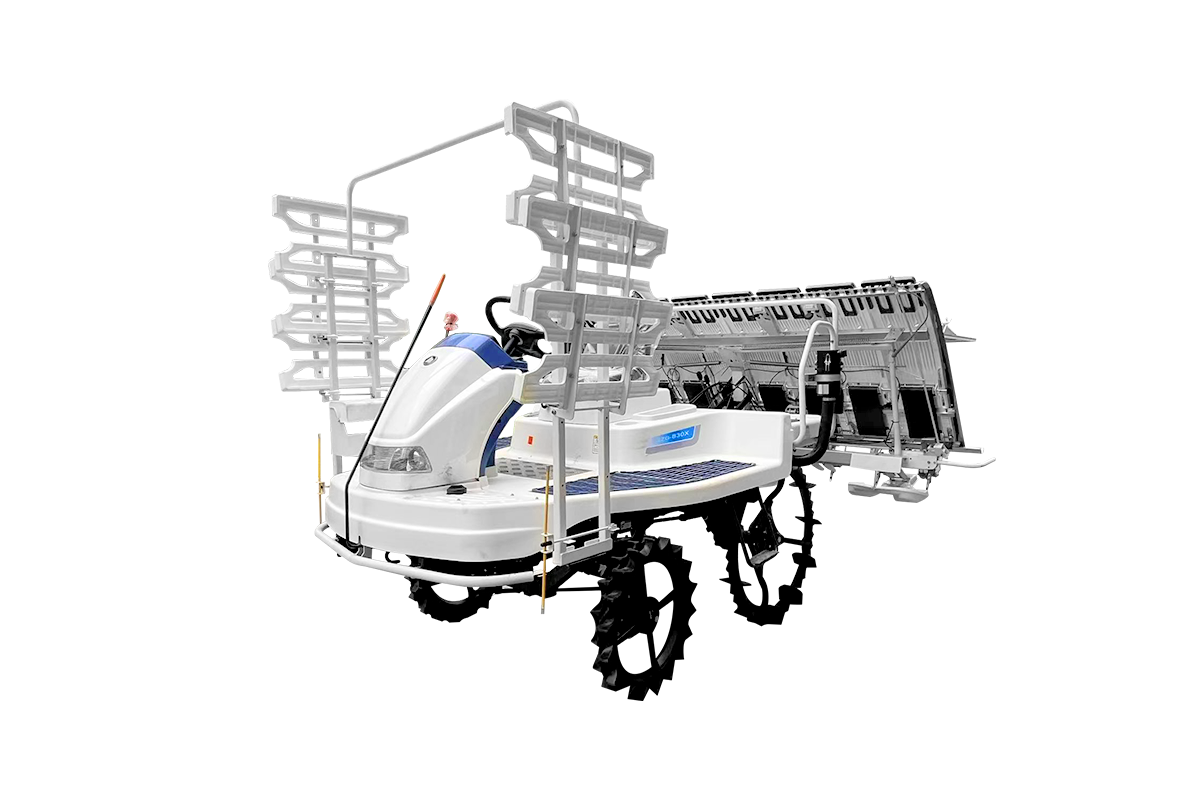
The 2ZX-230 two-row small low-fuel consumption hand-held transplanter is a high-performance machine ...

 2026.11.02
 Industry News
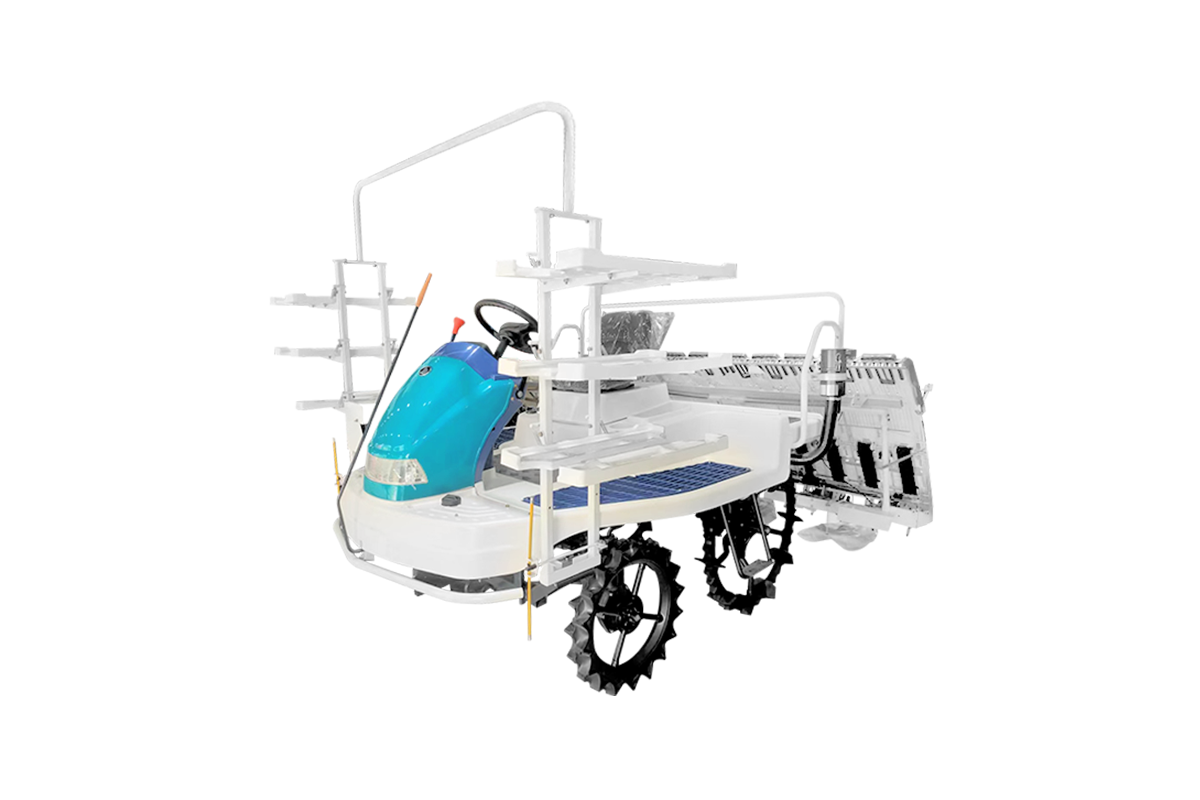 2ZG-1020 Ten-Row Riding Rice TransplanterA ten-row high-speed rider with diesel engine, four-wheel drive and hydraulic steering, suited to large, level fields where continuous planting justifies the machine.View Product →
A high-speed riding type transplanter is the right purchase when fields are large enough to keep the machine moving, level enough to support a riding chassis, and planted on a schedule that cannot absorb the labor risk of hand transplanting. It is the wrong purchase when fields are fragmented, when the soil cannot carry the machine after puddling, or when the planting window is so short that transport time between plots dominates the workday. The machine earns its cost through continuous planting, not through a single fast pass.
The practical decision is therefore not “riding versus walking” in isolation. It is a question of field geometry, soil bearing strength, seedling quality, operator skill, and the number of hectares that must be planted inside a narrow weather window. A ten-row machine can look impressive on a specification sheet, but it only creates value when the headlands are wide enough, the roads are suitable for transport, and the transplanting crew can supply fresh seedling mats without stopping the machine.
Contiguous plots, reliable water control, prepared soil that carries a riding chassis, a planting window under pressure, and a team that can keep seedling trays flowing to the field.
Narrow terraces, soft spots after heavy rain, frequent plot-to-plot movement, uneven ponding, or a seedling supply that arrives in small batches rather than planned lots.
Row count, turning radius, transport width, hydraulic lift response, planting depth control, and the availability of wear parts matter more than a single top-speed figure.
For a grower moving from hand planting or a walking machine, the first gain isusually labor continuity. The second gain is spacing consistency. The third gain is the ability to reallocate labor to seedling preparation, water management, and field scouting. Those gains appear only when the machine is matched to the field, because a high-capacity transplanter that is constantly blocked by narrow headlands or wet patches will not deliver its theoretical output.
 2ZG-825Q Eight-Row Riding Rice TransplanterAn eight-row gasoline rider with four-wheel drive and hydraulic steering, aimed at rectangular fields with enough headland to turn and raise output per pass.View Product →
Row count is the first buying decision because it changes both productivity and field access. A four-row riding machine suits smaller, irregular plots and short headlands. A six-row machine is a practical middle choice where fields are moderate in size but the operator still needs reasonable maneuverability. An eight-row machine raises output per pass and becomes attractive when fields are rectangular and the headland is wide enough to turn without repeated reversing. A ten-row machine can be efficient on large, level fields, but it demands disciplined logistics: more seedling mats per pass, more attention to transport width, and a headland layout that does not convert every turn into a delay.
The common buying mistake is to compare row count without comparing the number of turns per hectare. A wide machine that makes ten clean turns can outperform a narrower machine that makes twenty awkward turns, but a wide machine on a small plot can lose its advantage before it reaches the second pass. The calculation should use the actual field map, not an average field size taken from a regional statistic.
| Machine class | Typical best field situation | Headland and transport demand | Main trade-off |
|---|---|---|---|
| Four-row riding | Small to medium plots, irregular edges, frequent plot changes | Lower transport width and easier turning | More passes per hectare and higher labor time per area |
| Six-row riding | Moderate field size, mixed plot shapes, balanced fleet use | Moderate headland width and standard farm access | Good compromise, but not the highest output on large blocks |
| Eight-row riding | Rectangular fields, reliable water control, organized seedling supply | Wider headlands and careful road transport planning | Higher output per pass, less tolerance for narrow turns |
| Ten-row riding | Large, level, contiguous fields with strong logistics | Widest turning and transport requirements | Maximum pass capacity, highest penalty when field layout is poor |
Headland width is not a cosmetic detail. The machine needs space to lift the planting unit, turn, align with the next pass, and lower into the soil without dragging or missing hills. If the headland is too narrow, the operator will either reverse more often or plant the headland by hand later, which erodes the labor savings that justified the purchase. Before ordering, measure the actual headland, gate widths, bridge access, and the route between plots. A high-speed riding type transplanter is a field machine, but it is also a transport machine during the planting season.
For a closer look at the riding-machine range and how row count changes field organization, review the high-speed rice transplanter lineup against the field map rather than against a brochure alone. The right answer is the widest machine that can still turn, transport, and be supplied without interruption.
The planting unit is where forward speed becomes plant spacing. Seedling mats are lifted from the tray, separated into individual seedlings or small clumps, guided into the furrow, and pressed into place while the machine moves forward. The quality of that sequence depends on the synchronization between ground speed, the seedling pick-up mechanism, the planting fork, and the depth-control system. If one element is out of phase, the result is not a dramatic failure but a pattern of small defects: missing hills, floating seedlings, variable depth, or leaning plants that recover slowly.
In a well-matched machine, the operator can change planting spacing within a useful range without turning the field into a test plot. The key is to make adjustments in small steps and check the result in the actual soil condition. A spacing that looks correct on a dry headland may change once the machine enters softer puddled soil, because the chassis sinks slightly and the effective working depth changes. This is why depth control and hydraulic response should be checked in the field, not only at delivery.
The planting mechanism also determines how tolerant the machine is to seedling mat quality. A mat that is too thin or too wet may tear during pick-up. A mat that is too dry may shed seedlings before they reach the furrow. A mat with uneven root binding may feed in bursts, creating clusters of hills followed by gaps. The machine can compensate within a limited range, but it cannot repair poor seedling preparation. For a component-level explanation of the process, see how a rice transplanter works.
Check that seedlings are separated cleanly and that the mat does not slip, tear, or double-feed during the pass.
Confirm that the planting fork reaches the intended soil layer in both firm and soft spots, without burying or exposing seedlings.
Measure hill spacing over several meters after each adjustment rather than judging by eye from the operator seat.
When a defect appears, diagnose it in the order of seedling supply, planting depth, forward speed, and mechanism synchronization. Replacing parts before checking the mat and soil condition often adds cost without solving the problem. A simple field notebook with date, plot, seedling batch, spacing setting, and observed defects will reveal patterns faster than memory.
Top speed is a weak indicator of daily output. Daily output is the product of working width, actual forward speed, field efficiency, and the share of the day spent on turns, refilling, transport, and breakdowns. A machine that runs quickly but stops often can lose to a slower machine that keeps planting. The useful planning figure is therefore effective hectares per hour, not kilometers per hour.
As an illustrative example, assume a field operation with a fixed row count and a working speed that remains stable. If field efficiency falls from 75 percent to 55 percent because of narrow headlands and frequent seedling refills, the effective output falls by roughly one quarter even though the machine’s top speed has not changed. That is why the purchase decision should include the seedling logistics plan, the headland layout, and the operator’s ability to keep the machine aligned.
The chart is a planning illustration, not a guarantee. Its purpose is to show where output is lost. In many fields, the largest loss is not the planting pass itself but the time between passes: waiting for seedlings, moving between plots, clearing a blocked planting unit, or turning in soft soil. A high-speed riding type transplanter should be evaluated with those losses visible, because a machine that is fast only in a straight line will not reduce the total planting window as much as expected.
A practical test is to plant a measured block under real conditions and record the time for each activity: filling trays, turning, adjusting depth, clearing blockages, and moving to the next plot. Compare that record with the same block planted by the current method. The difference in total labor hours and completion date is more useful than a comparison of maximum speed.
Transplanting quality begins before the machine enters the field. The soil must be worked to a condition that supports the chassis, holds water evenly, and allows the planting fork to place seedlings at a consistent depth. If the field is too soft, the machine sinks and the planting depth changes. If it is too firm, the fork may fail to penetrate cleanly and seedlings may lean or remain partly exposed. If the water level is uneven, the operator will chase depth adjustments across the plot.
| Check | What to verify | Why it matters |
|---|---|---|
| Soil settling | Puddled soil has enough time to settle before planting | Prevents excessive sinking, deep planting, and uneven machine flotation |
| Water depth | Shallow, even water across the plot | Supports seedling establishment and makes depth control easier to judge |
| Surface leveling | No high spots that expose seedlings or low spots that bury them | Reduces missed hills and floating seedlings |
| Trash and residue | No long straw, roots, or stones that can block the planting unit | Lowers blockage risk and keeps spacing consistent |
| Headland condition | Firm enough to turn, wide enough to align the next pass | Protects the planting unit and reduces turning time |
The most common preparation error is planting too soon after puddling. The field looks ready because the surface is smooth, but the soil has not settled enough to carry the machine. The result is a pass that starts well and ends with excessive depth, mud buildup, and missed hills. A simple settling check with a marked rod or a short test pass can prevent a full day of rework. Another common error is leaving residue in the headland, where the machine turns under load and the planting unit is most vulnerable.
Water management also affects the operator’s ability to see the planting line. In very shallow water, the furrow may be visible but the seedlings can dry at the base. In deep water, the line disappears and depth control becomes a matter of feel rather than sight. The aim is not a single perfect depth for every field, but a stable depth that remains within an acceptable range across the pass.
A riding transplanter is only as consistent as the mats fed into it. Seedling mats should be uniform in thickness, well rooted, and moist enough to hold together without being heavy with free water. A mat that is too thin may tear at pick-up. A mat that is too wet may stick to the tray and feed unevenly. A mat that has been stacked too long may develop weak roots or mold, and the machine will reveal those defects as missing hills rather than as a tray problem.
The practical target is a mat that can be lifted by a corner without breaking apart and can be separated into seedlings without excessive force. Root binding matters because the pick-up mechanism needs a stable mass to grip. If the roots are loose, the mechanism may pull several seedlings together or leave part of the mat behind. If the roots are too tightly bound, the planting fork may tear the mat instead of separating it cleanly.
Uniform thickness keeps pick-up resistance steady and reduces the need for repeated mechanism adjustment.
Moist but not dripping; free water adds weight and can cause trays to slip or mats to clump.
Roots should hold the mat together while still allowing clean separation at the planting fork.
Warped or damaged trays change mat position and can cause feeding errors that look like machine faults.
Seedling age and height also influence the setting. Younger, shorter seedlings may need a different depth or pick-up setting than taller seedlings. If the crop is raised in more than one batch, record the settings used for each batch and check the first pass in the field before committing to a full plot. This is especially important when the planting season includes several varieties with different growth habits.
The logistics of mat supply should be planned with the same care as the machine schedule. A ten-row machine can consume mats quickly, and a crew that is not ready with the next batch will stop the machine at the headland. The goal is a steady flow of fresh, uniform mats to the field, not a large stack that dries out or heats up while waiting.
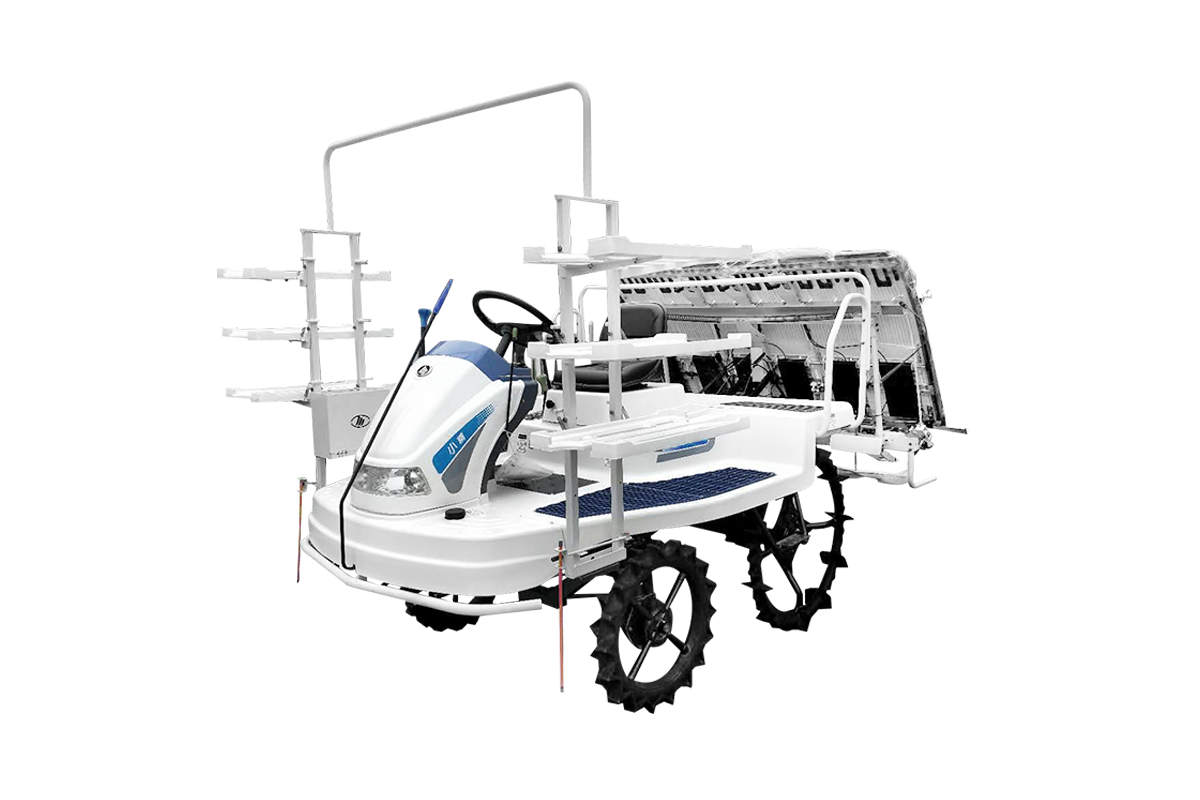 2ZG-630 Six-Row Riding Rice TransplanterA six-row gasoline rider with hydraulic assist steering and integrated gear controls, offering a middle-capacity option for moderate fields that still need maneuverability.View Product →
A riding chassis reduces physical fatigue, but it does not remove the need for trained control. The operator must coordinate steering, forward speed, planting clutch, depth adjustment, and implement lift while watching the planting line and the seedling supply. Good control layout reduces the number of times the operator looks away from the work. Poor layout increases small errors, and small errors become visible in the field as uneven depth and missed hills.
On a six-row riding machine, the narrower working width can make alignment easier on smaller plots and mixed field shapes. That is why row count and control comfort should be evaluated together. A larger machine may offer higher output, but if the operator cannot place it accurately at the headland, the extra width is wasted. During a demonstration, ask the operator to perform a full turn, a seedling refill, and a depth adjustment without leaving the seat. Those transitions reveal more about daily usability than a straight pass on a prepared strip.
Training should cover more than forward movement. The operator needs to recognize the sound and feel of a blocked planting unit, understand how soil moisture changes depth, and know when to stop instead of forcing the machine through a soft spot. A short daily briefing before the first pass can prevent the most common problems: planting with the wrong spacing setting, lowering the unit while the machine is still turning, or continuing after a tray has fed incorrectly.
Visibility is another practical factor. The operator should be able to see the edge of the planted strip, the seedling tray, and the headland without excessive body movement. Mirrors, clear reference marks, and a consistent line-following technique help, but they do not replace a clean field edge. If the field has irregular boundaries, mark the first pass and the headland boundary before the machine starts, so the operator is not making alignment decisions while also managing speed and depth.
Maintenance should be organized around the planting season, not around a generic service interval copied from another machine. Daily checks protect the next pass. Mid-season checks protect the next plot. End-of-season checks protect the following year. The most expensive failures are often small problems that were visible at the end of the day: a loose chain, a worn planting fork, a hydraulic leak, or mud packed around a moving part.
| Timing | Checks | Owner action |
|---|---|---|
| Before each shift | Engine oil, hydraulic oil level, tire or track condition, planting unit, safety guards | Clean, tighten, and record any abnormal noise or leak |
| During the day | Mud buildup, seedling feed, chain tension, depth consistency | Stop and clear blockages before they damage the mechanism |
| After each day | Wash mud from the planting unit, inspect forks and guides, check fasteners | Remove wet residue and dry the machine before storage |
| Seasonal service | Hydraulic hoses, bearings, drive chains, electrical connections, battery | Replace worn parts and test the machine before the next planting window |
| End of season | Long-term storage protection, oiling, covers, pest control | Store in a dry, ventilated place and follow the storage checklist |
Wear parts deserve a simple stock plan. Planting forks, guides, chains, belts, and seals are small items that can stop a field day if they are not available. A spare set kept with the machine is not an unnecessary expense; it is a way to protect the planting window. The same logic applies to hydraulic hoses and filters. If a part is difficult to source during the season, the risk should be resolved before the first pass, not after a failure.
Cleaning is part of maintenance, not a separate task. Mud left on the planting unit can harden overnight and change the movement of guides and forks. Water left in the wrong place can accelerate corrosion. A short wash and dry at the end of the day is more effective than a deep cleaning after several weeks, because it prevents residue from building up in the areas that are difficult to inspect.
A high-speed riding type transplanter must be moved between plots, and that movement carries its own risks. The machine should be secured at the designated points, with the planting unit raised and locked, and with loose trays, tools, and seedling frames removed or tied down. Transport width and height should be checked against gates, bridges, and road clearances before the season begins. A route that works for a walking machine may not work for a wide riding chassis.
Storage conditions matter more than many owners expect. A dry, ventilated shed reduces corrosion and protects hydraulic components. If the machine must be stored under a simple cover, keep the cover open enough to allow air movement. Trapped moisture under a tight cover can damage electrical connections and promote mold on residual plant material. Before storage, clean the machine, drain or stabilize fuel according to the engine manual, protect exposed metal, and disconnect or maintain the battery as recommended.
The seasonal restart should be treated as a commissioning process. Check fluid levels, inspect hoses and belts, test the planting unit through a dry cycle, and confirm that the safety switches and lift controls respond correctly. Then run a short test pass in a small area before committing to the main field. This test pass reveals problems that a static inspection cannot: a sticky depth control, a misaligned tray, a hydraulic response delay, or a chain that jumps under load.
Keep a simple record of the settings used at the end of the previous season. Spacing, depth, tray position, and hydraulic adjustments may all change with crop and soil, but the previous season’s baseline is a useful starting point. The record also helps when more than one operator uses the machine, because it reduces the chance of a setting being changed without being noticed.
Rice systems differ in seedling age, plant height, row spacing, and water management. A machine that performs well in one system may need different settings in another. Conventional transplanted rice, hybrid rice, and systems using younger seedlings all place different demands on the pick-up and planting mechanism. The operator should expect to adjust spacing, depth, and tray feed, and should test those adjustments on a small block before planting a large area.
| Situation | What changes | Practical response |
|---|---|---|
| Large contiguous fields | Long passes, fewer turns, higher daily area | Use a wider machine and organize seedling supply at the headland |
| Small or irregular plots | Frequent turns and transport between plots | Favor a narrower riding machine or a walking machine if access is tight |
| Young seedlings | Delicate mats and different root binding | Reduce aggressive pick-up settings and check depth frequently |
| Hybrid varieties | Different seedling vigor and spacing needs | Confirm the required hill spacing and test before a full pass |
| Soft or uneven soil | Variable chassis flotation and depth | Improve settling and leveling; reduce speed in weak spots |
The variety itself is not the only issue. Seedling tray preparation, sowing density, and nursery management determine whether the mats feed properly. A variety that produces strong, uniform seedlings is easier to transplant than one with uneven emergence. If the nursery produces mats with mixed root strength, the machine will show it as uneven feeding. In that case, sorting trays or adjusting nursery practice may be more effective than changing the machine setting.
For fields that combine rice with vegetables or other crops, the transplanter should be evaluated as part of a rotation plan. The same labor team may need to move from rice transplanting to vegetable transplanting, and the training and maintenance routines should be coordinated. A machine that is simple to adjust and easy to clean between crops will fit that rotation better than a highly specialized unit that demands a separate service routine.
A transplanter purchase should be verified against the field, the seedling system, and the service plan. The most useful checks are practical and measurable: can the machine enter the field, can it turn without reversing, can the seedling crew keep pace, and can wear parts be replaced without losing a day? These questions are more valuable than a comparison of catalog photographs.
| Verification item | Why it matters | Evidence to request |
|---|---|---|
| Field access | Transport width and gate clearance determine whether the machine can reach every plot | Measured route, gate widths, bridge limits, and turning areas |
| Row count fit | Too wide a machine loses time on turns; too narrow a machine needs more passes | Field map with headland widths and a pass-and-turn plan |
| Seedling supply | Mat quality and refill speed set the practical planting rate | Sample mats, tray condition, and a refill routine |
| Depth control | Consistent depth protects establishment and reduces rework | Demonstration in wet and firm soil, with depth checks |
| Wear parts | Availability protects the planting window | Part list, stock position, and replacement guidance |
| Operator training | Controls and adjustments must be understood before the season starts | Training plan, field commissioning, and a settings record |
Ask for a demonstration under conditions close to the real field. A smooth demonstration on a dry, level strip does not show how the machine behaves in soft puddled soil or at a narrow headland. The demonstration should include a turn, a seedling refill, a depth adjustment, and a short stop-and-restart sequence. If possible, plant a small block and inspect the hills after the water has cleared. The goal is not to find a perfect machine, but to understand where it will lose time and how the operator can manage that loss.
Payment, delivery, and commissioning should also be tied to field readiness. The machine should not arrive before the operator, seedling supply, and maintenance plan are ready. A short commissioning visit, a settings record, and a clear parts list are practical deliverables. They reduce the risk that the first planting day becomes a troubleshooting day.
Choose the widest machine that can still turn, transport, and be supplied efficiently in the actual fields. A six-row or eight-row machine is a practical starting point for many mixed operations, while a ten-row machine makes more sense on large, level blocks with wide headlands and organized seedling logistics.
It can work in soft soil, but flotation and depth control become more sensitive. The field should be settled enough to carry the chassis without excessive sinking. If the machine leaves deep ruts or the planting depth changes constantly, wait for better settling or improve field preparation before continuing.
Missing hills usually come from seedling mat problems, a blocked planting unit, incorrect depth, or forward speed that is too high for the soil condition. Check the mat first, then the planting fork and guides, then the depth setting. Record the pattern of missing hills because a regular pattern points to mechanism timing, while a random pattern points to mat feed or blockage.
Clean the planting unit at the end of each working day and clear mud or residue whenever it begins to affect movement. During the day, stop and inspect if the machine starts to pull, jam, or plant unevenly. Waiting until the end of the week allows mud and plant residue to harden in the guides and forks.
No. A ten-row machine has high pass capacity, but it also needs wider headlands, more seedling mats per pass, and more careful transport planning. On small or irregular plots, a narrower machine can finish more area per day because it spends less time turning and repositioning.
Check field settling, water depth, gate and road access, seedling mat quality, planting depth, spacing settings, hydraulic response, safety guards, and the spare parts kit. Run a short test pass and inspect the planted hills before committing the machine to the main field.
 Custom Agricultural Equipment Manufacturers