

 No. 1819, Renmin West Road, Cao'e Street, Shangyu District, Shaoxing City, Zhejiang Province, China


 English
 中文简体
 русский
 Español
 عربى

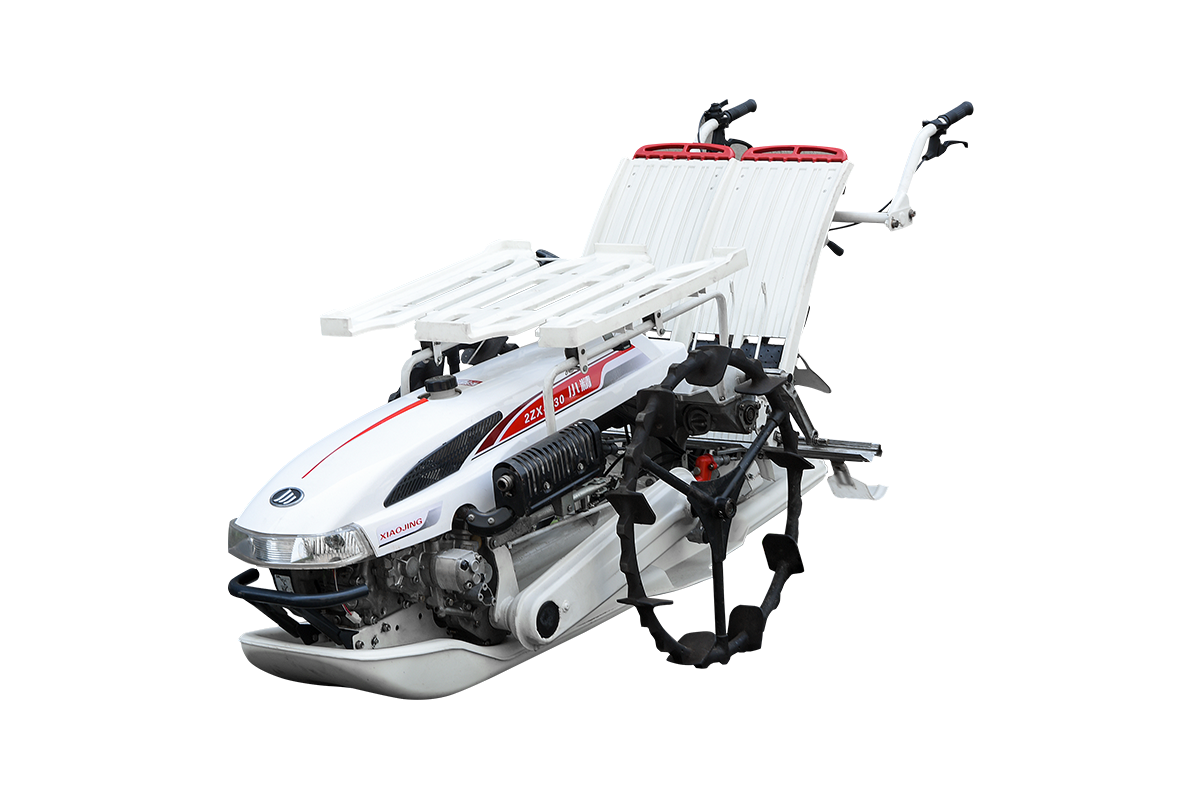
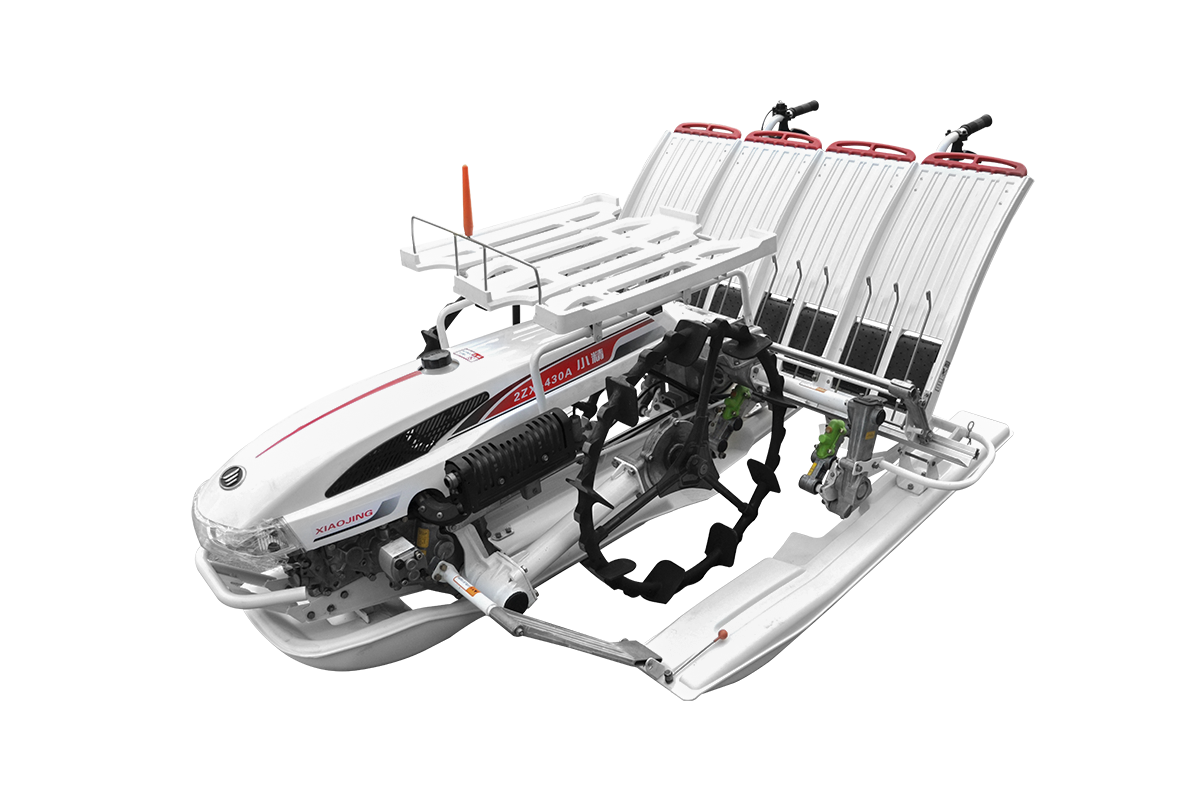
The 2ZX-230 two-row small low-fuel consumption hand-held transplanter is a high-performance machine ...

 2026.10.19
 Industry News
For an operation that plants more than 20 hectares per season, transplanting speed is not a luxury. It decides whether the whole crop lands inside the optimal seedling-age window or drifts into yield loss. The high-speed riding type transplanter is the machine category that moves planting from a manual bottleneck to an industrial throughput. Instead of walking behind a machine at 0.6 meters per second, the operator sits on a chassis that carries six, eight, or even ten rows across the field in a single pass. The result is a completely different labor plan, a tighter scheduling window, and a measurable improvement in planting consistency.
This article explains what defines this type of rice transplanter, how it differs from walk-behind models, which technical characteristics matter most in real field conditions, and how to match row count, power, and adjustment options to your own land, budget, and available operators. It also covers routine maintenance, common faults, and the questions that farm owners usually ask before they settle on a high-speed riding machine.
Any transplanter with a seat, an engine, and a planting mechanism can be called a riding machine. The high-speed designation, however, depends on how fast the machine can plant without sacrificing depth consistency or spacing accuracy. In practical terms, a high-speed riding type transplanter is defined by three performance targets:
The speed advantage does not come from simply adding more horsepower to a walking frame. High-speed riding transplanters use a heavier chassis, a larger float body, and a hydraulic system that raises and lowers the planting unit. The engine drives both the wheels and the planting mechanism through a transmission designed for continuous, heavy field load. Because the operator is seated, the machine can be wider and longer without creating the same safety and fatigue problems found in walk-behind operation.
A useful way to judge this category is to look at throughput. A six-row walking transplanter may cover 0.3 to 0.5 ha per hour under good conditions. A six-row riding type transplanter, running at a moderate 1.2 m/s, can often cover 0.6 to 0.9 ha per hour. An eight-row or ten-row machine goes further. That difference matters when you have a week of good weather and one hundred hectares to plant.
The decision between a walking and a riding transplanter is not just about the number of rows. The two machine types serve different farm scales and different labor situations. A walk-behind unit is easier to transport, less expensive to buy, and simpler to maintain. But it is limited by the speed and stamina of the person behind it. A high-speed riding model changes the physics of the job.
| Characteristic | Walk-behind Transplanter | High-speed Riding Type |
|---|---|---|
| Typical row count | 2, 4, 6 rows | 6, 8, 10 rows |
| Operating speed | 0.4–0.9 m/s | 1.0–1.6 m/s |
| Practical field capacity | 0.2–0.5 ha/h | 0.6–1.4 ha/h |
| Operator fatigue | High, especially during 8-hour shifts | Low, since the operator sits |
| Stability on soft soil | Moderate, depends on float width | Better with large floats and lower center of gravity |
| Road transport | Generally lighter, easier to trailer | Heavier, requires larger trailer and careful loading |
| Initial cost | Lower | Higher, but lower labor cost per hectare |
| Maintenance complexity | Simpler mechanical system | More hydraulic and transmission components |
When farm size is below five hectares and fields are scattered, a walking machine is often the rational choice. Once the planted area rises and labor costs become a problem, the riding type starts paying for itself through lower wages per hectare, shorter working days, and less dependency on skilled walkers who can maintain the correct pace.
Not all riding transplanters are built the same way. Before you compare brochures, make sure you examine the following components because they determine how the machine behaves in wet, uneven fields.
The engine size for a six-row riding transplanter is generally in the range of 7 to 12 horsepower; eight-row and ten-row models use 12 to 18 horsepower. The key is not peak power but the torque curve. A high-speed transplanter needs sustained torque at low to medium rpm, not just high rpm power. Good units use a mechanical or hydrostatic transmission that allows the operator to adjust forward speed without changing planting depth consistency. Hydraulic drive is more expensive but gives smoother speed transition and easier maneuvering at row ends.
At the end of every row, the operator has to lift the planting unit, turn, and lower it again. On a high-speed machine, this is done hydraulically. The quality of the hydraulic system shows in how quickly the unit responds, how well it holds height during transport, and whether it can be adjusted while the machine is moving. Look for a system with separate valves for lift/lower and for float control, because that gives better depth control on uneven ground.
Most riding transplanters use a rotating pick-up arm that takes seedlings from a tray and inserts them into the soil. The spacing is changed by replacing gears or adjusting a feed dial. What separates a good machine from a poor one is how gently the mechanism handles seedlings. If the tines are too aggressive, they cause root damage and missing hills. Check the number of planting rows, the adjustable hill spacing range (usually 12, 14, 16, 18, 21, 24 cm), and the available row spacing options (commonly 25 or 30 cm).
The front part of the machine, called the float, keeps the planting unit at a constant height in relation to the soil. A wider float spreads the machine weight and prevents sinking on very soft paddy fields. Many high-speed models also have individual floats between the planting rows. These smaller floats follow micro-relief better than one large board. If your fields have uneven leveling, this detail matters more than extra horsepower.
Because the machine is wider, turning at row ends can cost time if the steering radius is too large. Good high-speed transplanters have a gear ratio designed for a short turning radius, and some models include an assisted steering option. A machine that is easy to turn at the end of a 100-meter row can save several minutes per hectare, which adds up over a whole season.
Manufacturers typically offer the same core technology in several row counts. The row count choice is not about speed alone; it must match your field sizes, headland shape, soil bearing capacity, and the trailer you use for transport.
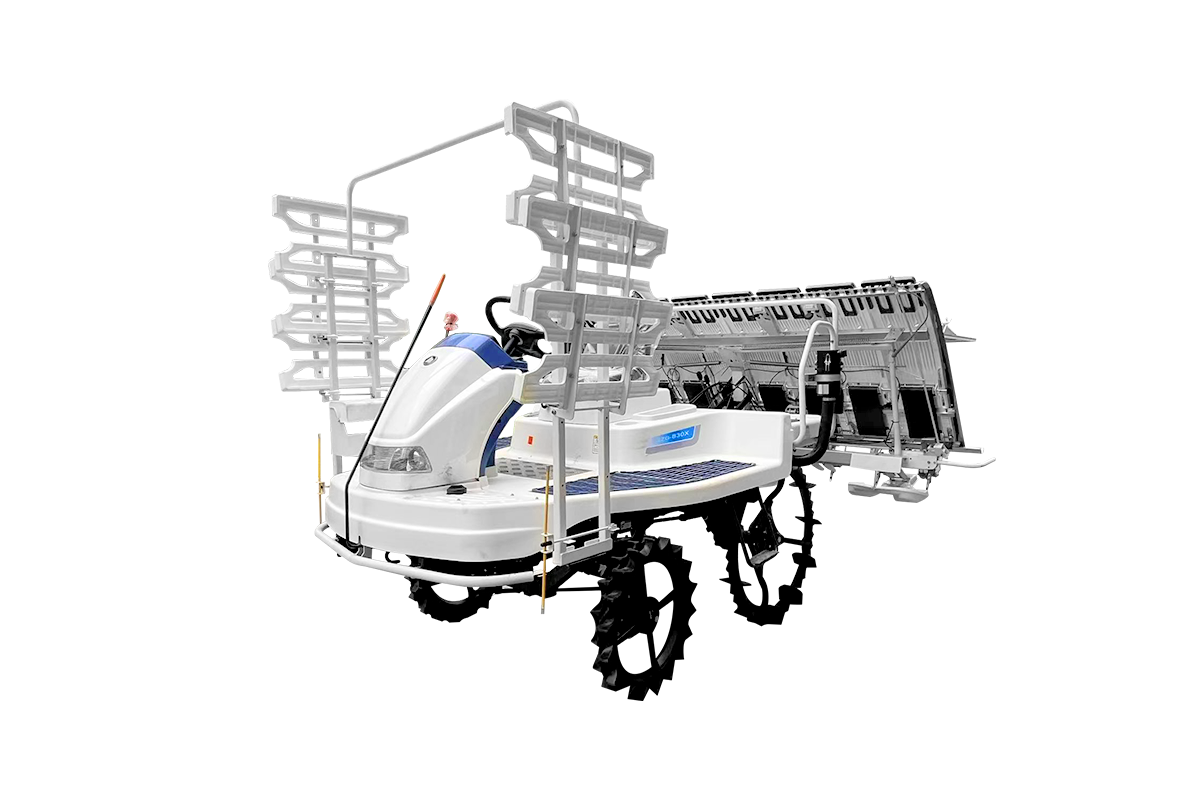
A six-row riding machine is the easiest to enter in the high-speed category. It fits into smaller paddy fields, handles moderate road transport better, and is simpler to maintain than larger units. It is best suited for farms of 15 to 60 hectares, especially where fields are divided by narrow levees. The 2ZG-630 six-row riding transplanter is a typical example, with a compact frame that still delivers the speed advantage of a ride-on machine.
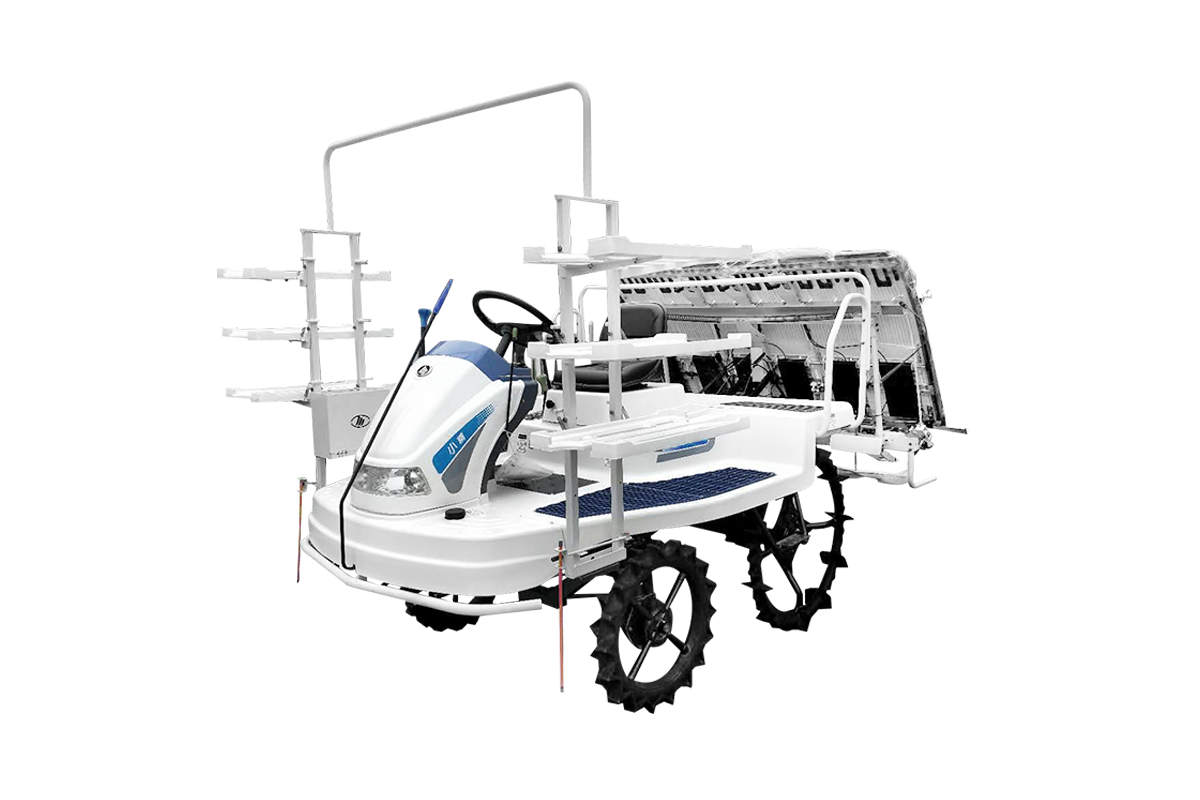 2ZG-630 Six-row Riding Transplanter for Compact FieldsThis ride-on six-row model balances speed and maneuverability, ideal for farms of 15-60 hectares with narrow levees. Its compact frame and stable steering suit moderate transport and custom planting.View Product →
Compared with a walking six-row unit, this type reduces labor per hectare by roughly 30 to 40%. It is also a practical choice for custom planting services because it can move between small blocks without being too heavy for a trailer.
For operations planting 60 to 150 hectares, an eight-row machine offers a better work rate without requiring the widest transport equipment. The 2ZG-820 eight-row riding type transplanter is designed for farms where high output and maneuverability must be balanced. It is also a common option for cooperatives that serve multiple members. The extra two rows add approximately 25% more planted area per pass compared with a six-row machine, but the operator still uses the same turning and reloading routine.
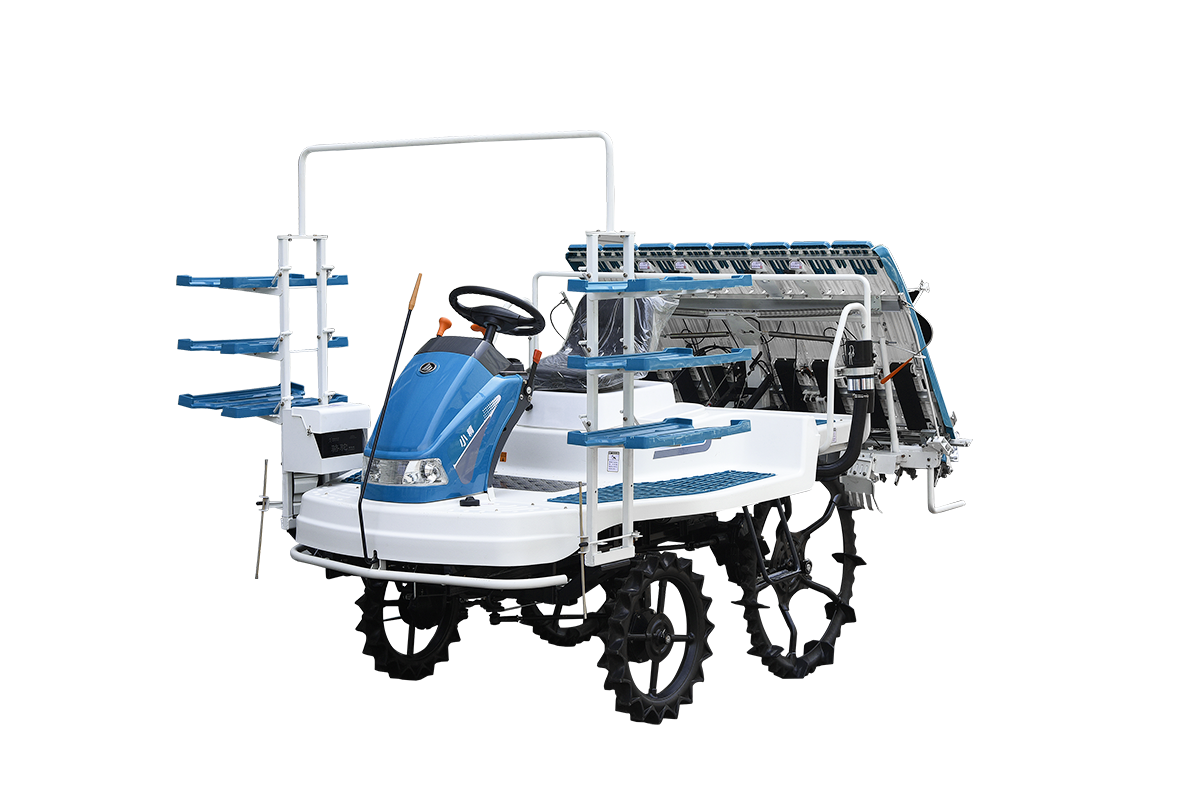 2ZG-820 Eight-row Riding Transplanter for Increased OutputAdding two rows over a six-row unit, this model boosts planted area per pass by about 25%. Designed for 60-150 hectare operations and cooperative use, it pairs high work rate with practical maneuverability.View Product →
An eight-row machine works best when the field length is above 80 meters. On short fields, the advantage of extra rows can be reduced by the time spent turning and lifting the planting unit.
If you are planting more than 150 hectares in a single season, a ten-row machine is the appropriate scale. The 2ZG-1020 ten-row riding type transplanter provides the highest planted-area throughput in the company range. It is intended for large flat fields, strong headlands, and farms that accept the need for a wider implement carrier. Ten-row machines require more careful soil preparation because they push a wider footprint through wet mud. They also have a higher initial cost and require a more experienced operator.
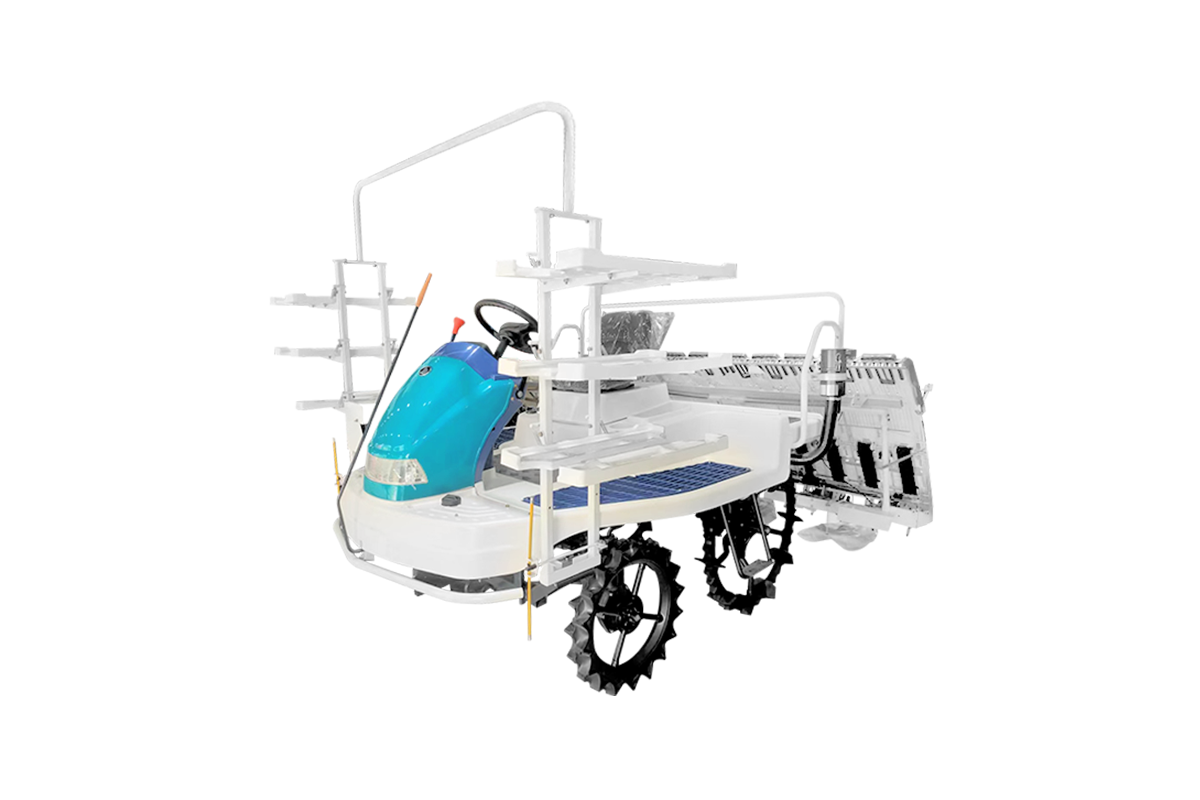 2ZG-1020 Ten-row Transplanter for Large-scale OperationsWith ten rows and diesel power, this machine maximizes daily coverage for farms exceeding 150 hectares. It suits large flat fields, offering high throughput but requiring careful soil prep and skilled operators.View Product →
The real advantage of a ten-row machine is that it lets one operator cover as much area in one day as three good walking transplanter teams. For custom planting businesses, that means more contract acres in a shorter calendar window.
Choosing the right model goes beyond row count. The following factors should be checked against your specific conditions before you compare price lists.
Longer fields benefit from wider machines. If your longest field is only 60 meters, a ten-row machine will spend too much time turning at the headland. In such cases, an eight-row or even six-row riding unit can be more productive in practice. Measure the actual field lengths you work every week, not just the total area.
Heavy riding transplanters sink into muddy soil that has been puddled for rice planting. The machine’s float width and ground pressure matter. Many models allow you to add wider floats or change the wheels for tall field lugs. If your fields are notorious for deep, soft mud, choose a machine with a wide float option and avoid full-width ten-row units unless the soil has good bearing capacity after puddling.
Some farms have fields in small terraces that require moving the machine between levels. In that case, a 6-row unit with a narrower overall width is easier to load and haul. You can still get the speed advantage, but you avoid the logistics problem of a machine that is too wide for your road. For those situations, check the transport dimensions of each model. High-speed riding transplanters usually have foldable parts or a removable seedling stand to reduce width.
Riding transplanters are easier on the body than walking units, but they are harder to manage when something goes wrong. The operator needs to understand hydraulic settings, row-end turns, and transplanting depth adjustments. If you hire new workers every season, budget time for a training day. A machine with clearly marked controls and a simple depth adjustment mechanism will reduce training time.
The reason to buy a high-speed transplanter is not only speed. The planting quality of a well-adjusted riding machine affects the final harvest more than most growers expect. Uniform row spacing, steady planting depth, and low missing-seedling rates are direct contributors to yield.
Research and field experience show that an optimal rice transplanting depth is 2 to 3 cm. Too shallow causes seedlings to float; too deep delays tillering. A high-speed riding transplanter with a hydraulic depth control system can hold that depth much more consistently than a person walking on uneven ground. This consistency reduces seedling stress and gives a more uniform crop stand.
Another critical number is the missing hill rate. A good high-speed riding transplanter should keep the missing hill rate below 3 to 5% during normal operation. Higher missing hill rates create gaps that never fully compensate with tillers, especially at wider spacings. When you inspect a machine, ask about the transplanting tine design and whether it can handle slightly uneven seedlings without skipping.
Plant spacing also affects yield. Many riding models allow hill spacing from 12 to 24 cm. In high-density planting systems, 14 cm spacing can produce more panicles per square meter, while a 20 cm spacing may be preferred for tillering-heavy varieties. The ability to adjust spacing without changing gears is a useful feature because it lets you tune the plant population to your local variety and fertilizer program.
The economic case for a high-speed riding transplanter is built on three numbers: planted hectares per day, labor hours per hectare, and fuel consumption per hectare. Let’s look at each one.
A six-row riding transplanter can realistically cover 5 to 7 hectares in a ten-hour working day, including seedling refill and row-end turning. An eight-row machine can reach 7 to 9 hectares, and a ten-row machine can go above 10 hectares in ideal conditions. These figures assume a trained operator and good field preparation. In comparison, a four-row walking machine usually stays at 1.5 to 2.5 hectares per day.
With a riding machine, one operator and two people handling seedling trays can keep a six-row unit running all day. That is roughly 0.5 to 0.7 labor hours per hectare. With a walking transplanter, you need one operator plus helpers to feed trays, and the operator is not able to maintain speed all day. Labor hours per hectare are typically 1.2 to 2.0. If labor is scarce, the riding machine removes a serious bottleneck.
Diesels engines on riding transplanters consume roughly 1.5 to 3.5 liters per hour at working load, depending on row count and soil condition. That translates to about 0.3 to 0.6 liters per hectare for a 2-meter-wide machine. The cost is low compared with the labor savings. Maintenance is more complex than a walking machine, but the main running costs are still basic items: engine oil, hydraulic oil, gear oil, tray chain grease, and replacement tines. A well-maintained machine should pass eight to ten seasons before major repairs.
A high-speed riding transplanter is a precision machine. Following a daily checklist prevents most of the problems that cause unplanned downtime during the planting window.
The most common adjustment is planting depth. If the tines are planting too deep, raise the float setting by one hole and test again. If seedling hills are missing, check the tray conveyor speed and the gap between the pick-up tines and the tray. On six-row and eight-row machines, you must also check that all rows have the same depth. An uneven depth across rows usually means the main float frame is twisted or the lift rods need adjustment.
When the season ends, do not leave the machine dirty in a shed. Drain fuel or add stabilizer, change the engine oil, remove and clean the planting tines, cover the hydraulic cylinders with grease, and cut off the battery or fit a maintenance charger. Lift the running gear off the ground and support the planting unit on blocks so there is no long-term pressure on the hydraulic hoses. A clean, stored machine will be much easier to start next season.
A six-row riding type transplanter usually plants 0.6 to 0.9 hectares per hour under normal field conditions. An eight-row model can reach 0.8 to 1.1 hectares per hour, and a ten-row model can exceed 1.2 hectares per hour when fields are properly prepared and the operator is experienced.
Pricing depends on row count, brand, and included accessories. In general, a six-row riding type rice transplanter is less expensive than an eight-row or ten-row machine, but costs vary widely by market. Imported and domestic models differ not only in initial price but also in the availability of spare parts and after-sales training. For a manufacturer-direct comparison, it is worth asking for a quote that includes a training day and a spare parts kit.
Yes, but only if the machine can move between fields efficiently. A six-row riding type transplanter is small enough for many Asian field layouts where the average plot is less than one hectare. Eight-row and ten-row units are better for landscapes with long, regular fields. Before buying, measure your gate width and trailer ramp capacity.
Common first-season problems include uneven planting depth caused by incorrect float adjustment, missed hills due to a tray conveyor speed that is too fast, and hydraulic oil foaming if the machine runs at high speed on the road. Most of these are solved by following the manual and spending a day testing the machine under real field conditions before the main planting rush.
Direct seeding saves the step of raising seedlings and transplanting, but it is more sensitive to water management and bird damage. A high-speed riding transplanter still gives better control over plant population and a stronger start for the crop. If your region’s climate is unpredictable at sowing time, transplanting with a high-speed machine remains the more reliable option.
That depends on field length and labor availability. For scattered 1-hectare fields, a six-row machine is easier to move and transport. For large, rectangular fields of 2 hectares or more, an eight-row machine gives a better work rate. If you want a more detailed comparison, see our article on riding-type vs walking-type rice transplanter selection.
With proper storage and regular servicing, a six-row or eight-row high-speed riding transplanter can remain productive for 8 to 12 planting seasons. The engine can last longer, but the planting tines, chains, and hydraulic seals will need replacement or maintenance over time. It is a long-term asset, not a single-season tool.
Selecting the right high-speed riding type transplanter means looking at your own fields, labor, and return on investment. The machine is not simply a larger version of a walking transplanter; it is a different workflow. Once the operator sits above the row units and the hydraulic lift handles the row ends, the whole planting operation becomes easier to plan and faster to execute. A good 6, 8, or 10-row model can remove the traditional labor bottleneck in rice transplanting and give the crop a more precise start. When you compare models, keep the technical details inspected in this article in mind, and use the field tests and adjustment steps to verify performance before full-scale use. For more information on machine selection and planting strategies, you can always return to the main product resources or ask the manufacturer for a direct spec sheet.
 Custom Agricultural Equipment Manufacturers