

 No. 1819, Renmin West Road, Cao'e Street, Shangyu District, Shaoxing City, Zhejiang Province, China

 English
 中文简体
中文简体 русский
 Español
 عربى
عربى
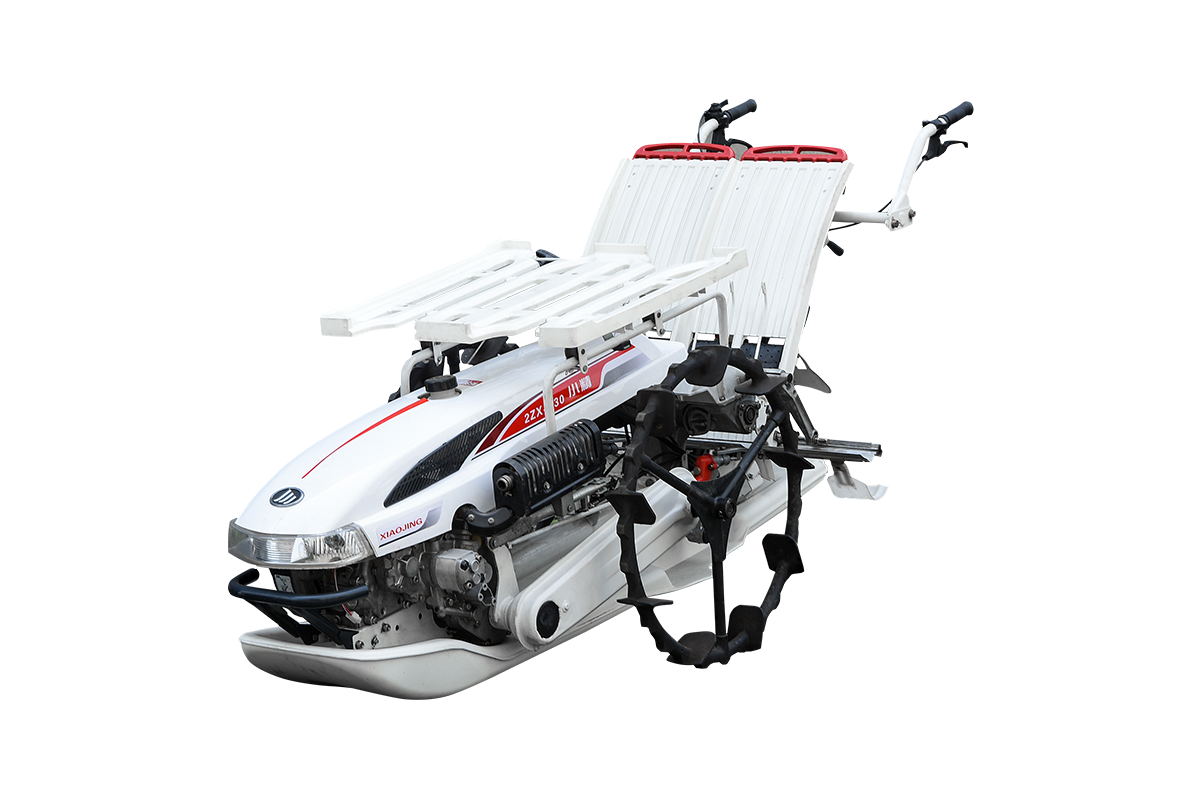
The 2ZX-230 two-row small low-fuel consumption hand-held transplanter is a high-performance machine ...

 2026.03.16
 Industry News
The operational performance of a vegetable transplanter machine depends heavily on the design and reliability of its seedling pickup mechanism. As the most technically demanding component in the entire transplanting system, the pickup mechanism is responsible for extracting seedlings from plug trays or seedbeds and transferring them accurately to the planting unit. Understanding the key types of pickup mechanisms — and their respective strengths and limitations — is essential for making informed equipment decisions in commercial vegetable production.
The needle-type pickup mechanism uses a set of metal pins that penetrate the growing substrate of the plug seedling. The pins grip the root ball through a combination of friction and mechanical penetration, lifting the seedling out of the tray cell. This is one of the earliest pickup designs used in semi-automatic vegetable transplanter machines, valued for its simple structure and low manufacturing cost.
However, needle-type mechanisms are highly sensitive to substrate moisture content and compaction. When the growing medium is too dry, the pins fail to generate sufficient holding force, causing the root ball to crumble or fall during transfer. When the medium is overly wet, withdrawal resistance increases, potentially tearing root tissue. These constraints require growers to carefully manage pre-transplant irrigation schedules to maintain an optimal substrate condition.
Needle-type pickup units remain in use on small-scale vegetable transplanters, particularly for fibrous-rooted crops such as lettuce and celery, where root ball cohesion is naturally strong.
The clamp-type pickup mechanism employs one or more pairs of gripping fingers driven by cam-linkage assemblies, pneumatic actuators, or servo motors. The fingers close laterally around the plug seedling — either at the stem base or around the root ball itself — to extract it from the tray cell.
Stem-clamping variants require a high degree of seedling uniformity, as grip position is fixed relative to the tray geometry. Root ball clamping is more forgiving of variations in seedling morphology but demands precise control of clamping force to prevent substrate fragmentation. Excessive grip pressure compresses the root zone and restricts post-transplant establishment; insufficient pressure results in seedling drop during the transfer arc.
Clamp-type mechanisms are currently the most widely adopted pickup design in fully automatic vegetable transplanter machines. They integrate well with automated tray-feeding systems and robotic transfer arms, making them suitable for high-throughput transplanting of fruiting vegetables such as tomato, pepper, and eggplant.
The ejector-type mechanism operates by pushing the plug seedling upward from below the tray. An array of ejector pins — positioned beneath the tray and aligned with individual cells — is driven by a pneumatic cylinder or cam follower. As each pin advances through the drainage hole at the cell base, the root ball is displaced upward and received by a secondary transfer device.
This mechanism is rarely used in isolation. In most fully automatic vegetable transplanter machines, the ejector unit operates in conjunction with a clamp or guide-tube system, forming a compound pickup assembly. The critical engineering challenge is synchronizing ejector stroke with tray indexing accuracy. Insufficient stroke leaves the root ball partially seated in the cell; excessive stroke causes the seedling to topple after ejection, leading to misalignment in the transfer chain.
High-performance ejector systems are increasingly integrated with machine vision modules that provide real-time tray position correction, enabling pickup success rates to exceed 95% under standard operating conditions.
The suction-type pickup mechanism applies negative air pressure to hold the plug seedling during extraction and transfer. A vacuum cup or nozzle is positioned over the root ball surface, and the generated suction force immobilizes the seedling without direct mechanical contact. This non-invasive approach minimizes physical damage to fragile stems and delicate foliage.
Suction-type mechanisms perform best with substrates that have low air permeability and well-consolidated structure. Highly porous growing media allow air to bypass the root ball, preventing adequate vacuum buildup and reducing holding force to ineffective levels. For this reason, pure suction-based pickup is relatively uncommon as a standalone solution in commercial vegetable transplanter machines. It is more frequently used as a supplementary holding element within hybrid pickup assemblies.
Crops with particularly fragile shoots — such as cauliflower seedlings and head cabbage transplants — are the primary target applications for suction-assisted mechanisms.
The cup-type pickup mechanism uses a semicircular or arc-shaped metal scoop mounted on a rotating arm. As the arm sweeps to the tray position, the cup opens to receive the plug seedling, closes to secure the root ball, and rotates to the drop-off point where the seedling is released into the planting chute. The motion profile of cup-type mechanisms is mechanically deterministic, resulting in smooth and repeatable transfer trajectories.
Cup-type units are commonly found on chain-clip semi-automatic vegetable transplanter machines and their derivatives. The primary limitation is dimensional specificity: each cup geometry is optimized for a narrow range of plug tray cell sizes. Switching to a different tray format typically requires replacing the cup components, reducing operational flexibility in production environments that handle multiple crop species simultaneously.
Selecting the appropriate pickup mechanism for a vegetable transplanter machine requires evaluation across multiple agronomic and engineering parameters. Crop species and root system morphology, plug tray cell dimensions, seedling age and canopy size, substrate formulation and compaction level, required transplanting speed, and overall automation level all influence which mechanism type will perform most reliably in field conditions.
For large-scale commercial vegetable production operations, clamp-type or ejector-compound mechanisms paired with standardized plug tray production protocols consistently deliver the highest pickup success rates and the lowest rates of mechanical seedling injury. As precision agriculture technologies continue to advance, the integration of servo-driven actuators, inline vision inspection, and real-time feedback control is progressively raising the performance ceiling of all pickup mechanism categories in modern vegetable transplanter machines.
 Custom Agricultural Equipment Manufacturers