

 No. 1819, Renmin West Road, Cao'e Street, Shangyu District, Shaoxing City, Zhejiang Province, China

 English
 中文简体
中文简体 русский
 Español
 عربى
عربى
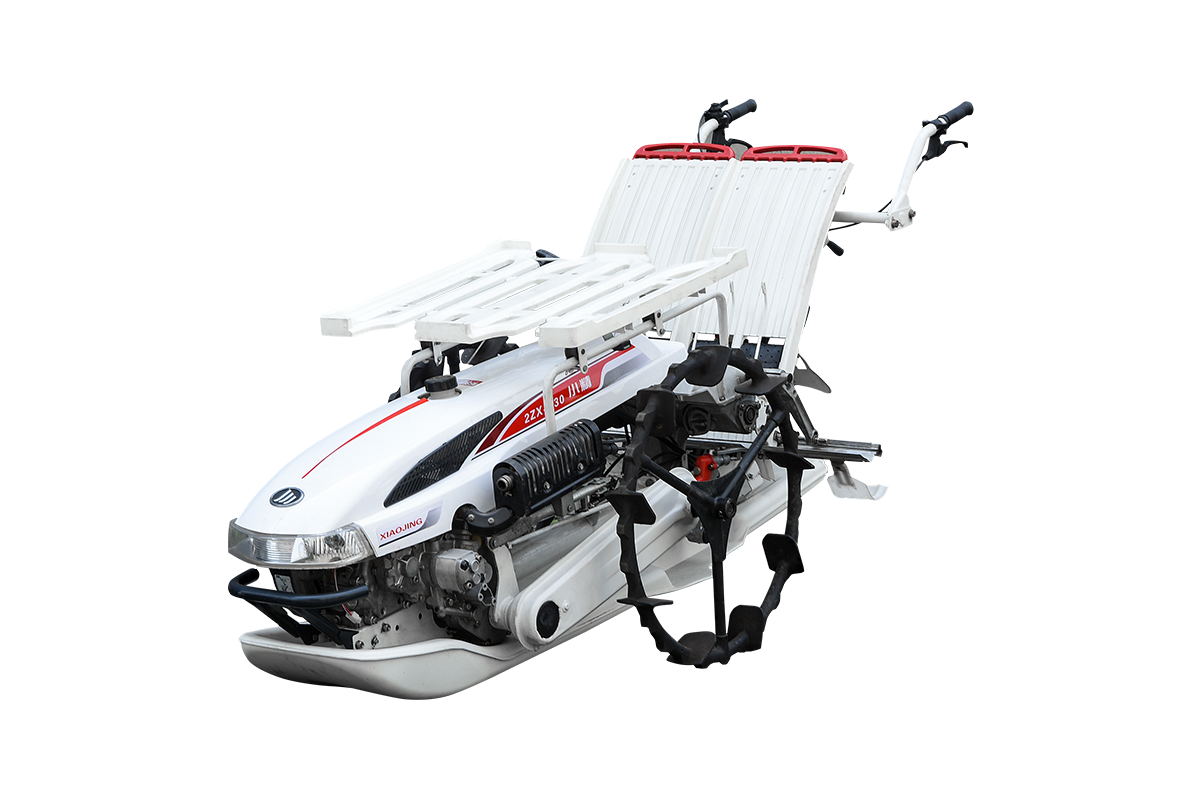
The 2ZX-230 two-row small low-fuel consumption hand-held transplanter is a high-performance machine ...

 2026.03.23
 Industry News
Rice is a staple food for more than half of the world's population, and its cultivation methods are undergoing an unprecedented technological revolution. In traditional agriculture, rice farming often evokes images of farmers bending over in ankle-deep water to transplant seedlings by hand. However, with rising labor costs and the demand for intensified agriculture, this high-intensity, low-efficiency model has become difficult to sustain.
What is the use of rice seeder? Simply put, the Rice Seeder was developed to completely transform the "transplanting" stage. It simplifies the traditional multi-step process (nursery raising, transplanting, and gap-filling) into a one-step "Direct Seeding" method. By using a mechanical device to distribute pre-germinated seeds evenly across a prepared field, it drastically reduces reliance on seasonal labor. Furthermore, by precisely controlling row and hill spacing, it provides a standardized foundation for ventilation, light penetration, and mechanized weed control in later stages.
| Dimension | Manual Transplanting | Direct Seeding via Rice Seeder |
| Labor Intensity | Extremely high (long periods of bending) | Low (driving or walking behind a machine) |
| Labor Required (Person/Acre) | Approx. 10 - 15 man-days | 1 - 2 man-days |
| Operating Speed | Slow, limited by physical strength | Fast, usually 1-2 hours per acre |
| Seed Treatment | Complex nursery tray management | Direct seeding after soaking and sprouting |
| Recovery Period | Yes (5-7 days needed after transplanting) | None (seeds sprout in situ with deeper roots) |
| Initial Cost | High percentage of labor expenditure | High percentage of machinery cost/rental |
1. Precision Seeding: Early broadcasting methods often led to seed clustering or missing patches. Modern Rice Seeder units are equipped with precise seed metering devices that adjust the number of seeds per hill (usually 3-8 grains) according to the variety, ensuring uniform distribution.
2. Standardization of Seeding Depth: The biggest risk in direct seeding is sowing too deep (causing suffocation) or too shallow (leading to lodging). The Rice Seeder, through its furrow openers and depth adjustment wheels, stabilizes seeds at a golden depth of 1-2 cm below the soil surface—a level of consistency impossible to maintain manually.
3. Foundation for Water and Fertilizer Synergy: Because the Rice Seeder achieves regular row spacing, it creates physical channels for later operations such as drone crop protection and mechanical weeders. More importantly, regular rows facilitate the uniform flow of water, reducing yield loss caused by localized waterlogging or drought.
In modern rice farming, the design core of the Rice Seeder is to solve the conflict between "seeding precision" and "terrain adaptability." Whether in muddy paddies or leveled dry land, the mechanical structure must ensure seeds are not crushed and the discharge rate remains constant.
| Machine Type | Power Source | Application | Efficiency (Acre/Hour) | Rows/Hills | Advantages |
| Manual Drum Seeder | Manual | Small paddies, hills | 0.25 - 0.5 | 6 - 8 Rows | Simple structure, low cost, easy maintenance. |
| Power Spreader | Gasoline Engine | Patching, tiny plots | 0.8 - 1.5 | Broadcast/No rows | Extremely flexible, not limited by terrain. |
| Tractor-mounted | Tractor PTO | Large plains, dry seeding | 5 - 10 | 12 - 24 Rows | Extremely efficient; opens, sows, and covers. |
| Integrated Seeder | Diesel/Gasoline | Large professional farms | 3 - 6 | 6 - 10 Rows | The advanced Rice Seeder; sows and fertilizes. |
A standard Rice Seeder generally consists of five core systems that directly affect the seedling establishment rate:
1. Seed Hopper: Usually designed with an internal slope to ensure seeds slide smoothly toward the discharge point without dead zones.
2. Metering Device: The "heart" of the Rice Seeder. Most use a fluted roller or disc structure. It rotates to bring a fixed volume of seeds into the seed tube. By changing the metering disc, it can adapt to long-grain, short-grain, or coated seeds.
3. Seed Tube and Furrow Opener: In dry seeding, the opener cuts the soil, and the tube places the seed precisely at the bottom of the trench, preventing interference from crosswinds.
4. Driving System: The ground wheel is linked to the metering device via a chain. This means if the machine moves faster, it sows faster; if it stops, sowing stops immediately, preventing over-seeding.
5. Covering and Pressing Wheel: Specific to dry-seeding models. It covers the seeds with soil and lightly presses it down, ensuring close contact between seed and soil for moisture absorption.
What is the use of rice seeder? In this context, its use is "spatial management." If sowing is too dense, plants compete for sunlight, resulting in thin bases prone to lodging. If too sparse, land potential is wasted. A high-quality Rice Seeder keeps deviation within plus or minus 3%, far superior to manual broadcasting (where deviation often exceeds 20%).
This is the primary concern for every farm owner. Rice yield is a complex variable, but there are significant differences in yield structure between direct seeding with a Rice Seeder and traditional transplanting.
On average, under conventional cultivation, the rice yield from 1 acre usually ranges between 4,000 lbs and 8,000 lbs. However, in high-yield management zones using precision seeding and scientific nutrition, this figure can exceed 10,000 lbs.
| Yield Component | Manual/Random Management | Precision via Rice Seeder |
| Panicles per sq. m | High fluctuation, uneven | Uniform, usually increased by 10-15% |
| Grains per Panicle | Affected by competition | Stable due to uniform light |
| 1000-grain Weight | Relatively stable | Slightly higher (stronger root system) |
| Lodging Loss Rate | Higher (due to uneven density) | Significantly lower (due to in-situ growth) |
To calculate How much rice can you get from 1 acre, we focus on a core formula where Yield equals the number of plants per area, multiplied by panicles per plant, grains per panicle, grain weight, and harvest efficiency.
The advantage of using a Rice Seeder is that it optimizes the number of plants per area. By setting reasonable row spacing (such as 20cm or 25cm), it ensures each plant receives sufficient carbon dioxide and Photosynthetically Active Radiation (PAR), allowing for more dry matter accumulation and higher tonnage.
The growth cycle of rice is not a fixed value; it is deeply influenced by variety genetics, ambient temperature, and planting methods. For farmers using a Rice Seeder, mastering precise timing is a prerequisite for high yields.
Typically, from germination to harvest, the entire cycle takes between 105 days and 180 days.
| Growth Stage | Biological Activity | Standard Variety (Days) | Early Variety (Days) |
| Germination | Water absorption, sprouting | 10 - 15 | 7 - 10 |
| Vegetative | Stem increase, leaf expansion | 45 - 60 | 35 - 45 |
| Reproductive | Panicle initiation, flowering | 30 - 35 | 25 - 30 |
| Ripening | Grain filling, moisture loss | 30 - 45 | 25 - 35 |
| Total Cycle | Sowing to Mechanical Harvest | 115 - 155 | 92 - 120 |
1. Temperature: Rice is heat-sensitive. If the average daily temperature falls below 20 degrees Celsius, growth slows significantly. In tropical regions, three crops a year are possible because high heat shortens the vegetative phase.
2. Light: Short days often induce rice to enter the reproductive stage earlier. In high-latitude regions, long summer days may delay heading in certain varieties.
3. Planting Method Differences: Rice sown with a Rice Seeder often matures about a week earlier than transplanted rice because it skips the "transplant shock" period (usually 5-7 days). This allows farmers to avoid late-season cold snaps or typhoons.
Owning an efficient Rice Seeder is only half the battle. How you calibrate and use the machine determines how much of the potential you extract from 1 acre.
Do not pour dry seeds directly into the hopper. Soaking and Sprouting: Soak seeds for 24-48 hours until the embryo is about 1-2mm long. Drying: Sprouted seeds are wet and may stick to the metering disc. They should be air-dried until the surface is free of visible moisture and they flow easily before being loaded.
The biggest "enemy" of the Rice Seeder is uneven land. Wet Seeding: The field surface should be "flat as a mirror." Height differences should not exceed 3cm. In low spots, seeds suffocate from lack of oxygen; in high spots, they fail to root due to dryness. Dry Seeding: Soil must be finely tilled to ensure moderate particle size.
| Parameter | Recommended Range | Impact Factor |
| Sowing Depth | 1.0 - 2.5 cm | Too deep weakens seedlings; too shallow causes lodging |
| Row Spacing | 20 cm, 25 cm, or 30 cm | Wide rows improve air; narrow rows cover space |
| Hill Spacing | 12 - 18 cm | Determined by ground wheel gear ratio |
| Seeds per Hill | 3 - 6 Grains | Adjusted based on germination rate |
This is the turning point for direct seeding success. For the first 10 days after sowing, deep flooding is strictly prohibited. Keep the soil moist but without standing water. Once seedlings reach the "two-leaf-one-heart" stage, establish a thin water layer for chemical weed control.
A: This is a key insight. In traditional transplanting, a water layer suppresses weeds. In direct seeding with a Rice Seeder, weeds emerge alongside the rice. Strategy: Use a "seal and kill" approach. Apply a soil sealant immediately after sowing, then use targeted foliar herbicides once rice reaches the 3-leaf stage.
A: The seed rate depends on the germination rate and grain weight. For Hybrid Rice, due to strong tillering, you only need 12 - 18 kg per acre. For Inbred Rice, weaker tillering requires more seedlings, usually 25 - 40 kg per acre. The Rice Seeder can switch between these rates by changing gears or adjusting the depth of the metering holes.
A: Yes, clay can clog seed tubes or cause ground wheels to slip. For heavy soil, choose a Rice Seeder equipped with anti-slip wide wheels and increase the downward pressure of the openers. Ensure the field is "dry but not cracked, moist but not sinking." If footprints are deeper than 2cm, it is too wet for mechanical sowing.
A: Rice follows the "Accumulated Temperature" principle. Persistent rain dropping the average temperature by 3 degrees Celsius can delay harvest by 10-15 days. Extreme heat can cause "forced ripening," shortening the cycle but resulting in unfilled grains, which severely affects How much rice can you get from 1 acre.
A: Exposed seeds are easily taken by birds. Technical Solution: Perform Seed Coating before loading the Rice Seeder. Coated seeds have warning colors (red or bright blue) and taste deterrents for birds. Coatings often include insecticides and fungicides to prevent seedling diseases and soil pests.
 Custom Agricultural Equipment Manufacturers