

 No. 1819, Renmin West Road, Cao'e Street, Shangyu District, Shaoxing City, Zhejiang Province, China

 English
 中文简体
中文简体 русский
 Español
 عربى
عربى
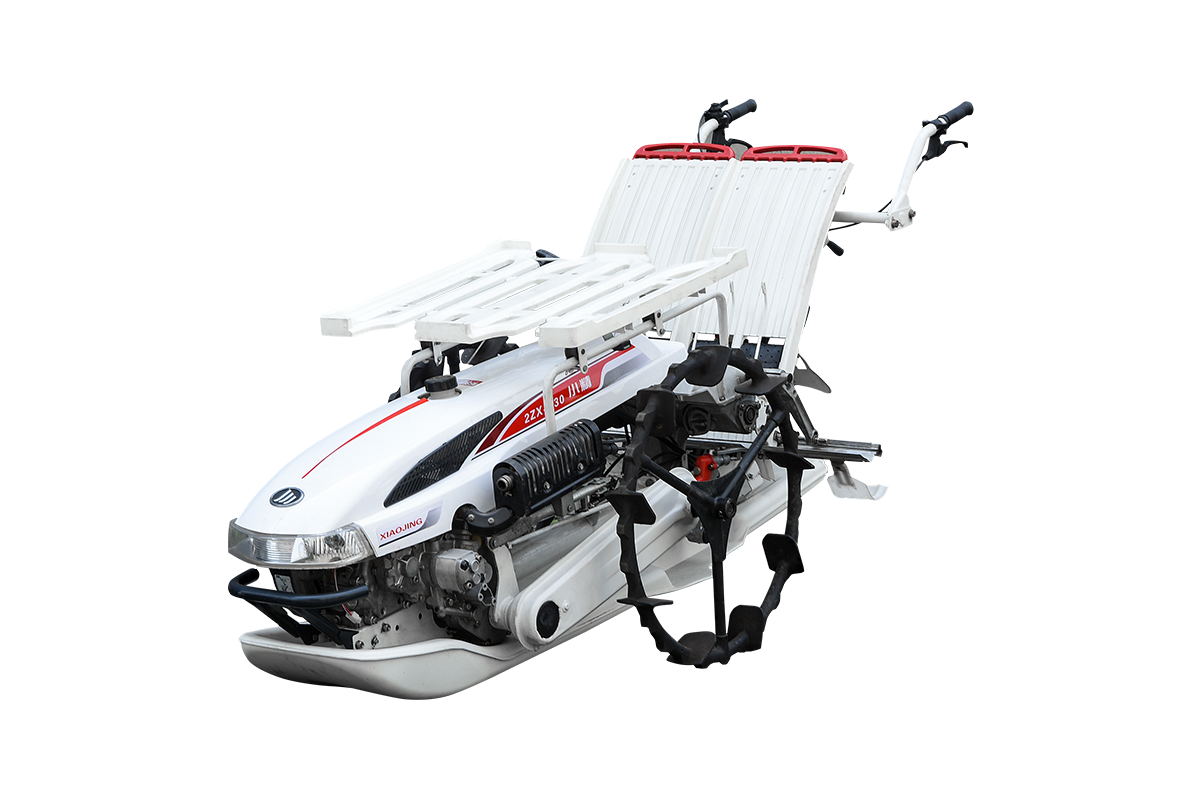
The 2ZX-230 two-row small low-fuel consumption hand-held transplanter is a high-performance machine ...

 2026.03.30
 Industry News
As global attention on sustainable agriculture grows, the rice farming industry is seeking more environmentally friendly and efficient production methods. In this process, the Rice Transplanter Machine plays an increasingly important role as a key technology. Its efficiency, precision, and resource-saving characteristics make it a vital tool in promoting sustainable rice farming.
Rice is a crop that heavily relies on water, and traditional rice cultivation methods often require vast amounts of water. However, with the growing pressure of water shortages due to global climate change, efficient water usage has become a significant challenge in rice farming. The Rice Transplanter Machine helps minimize water evaporation and seepage in paddy fields through precise planting operations. By distributing water evenly and ensuring the rice plants receive optimal water supply, the machine reduces water waste. This not only alleviates the problem of water scarcity but also aligns with the need for water-saving agriculture.
In traditional rice cultivation, farmers often rely heavily on fertilizers and pesticides to improve yields and control pests and diseases. However, excessive use of chemicals damages soil health and harms the environment. The Rice Transplanter Machine reduces the amount of pesticides and fertilizers used by ensuring precise plant spacing and depth during planting. For example, modern transplanters better control the plant spacing and planting depth, preventing over-competition and excessive fertilization, which reduces the waste of fertilizers and the risk of pest infestations. This precision farming technique contributes to the goal of reducing pesticide and fertilizer use, advancing environmentally friendly agricultural practices.
Traditional rice cultivation methods often depend on manual labor, leading to uneven plant distribution and lower land utilization. The Rice Transplanter Machine can accurately control the depth and spacing of seedlings, ensuring optimal land use. This fine-tuned management significantly increases the land utilization rate, allowing more rice to be planted on the same land area while maintaining the land's health. This not only boosts yield but also reduces unnecessary land waste, contributing to sustainable agriculture.
Soil health is crucial for agricultural production, and maintaining it directly impacts crop growth and yield. The Rice Transplanter Machine minimizes soil compaction and disruption during use. Traditional manual planting or mechanized operations often lead to soil degradation, but modern transplanters are designed to minimize this impact. By reducing disturbance to the soil, transplanters help maintain soil aeration and water permeability, fostering biodiversity and organic matter accumulation, which enhances soil fertility in the long term. This reduces the dependency on chemical fertilizers.
Traditional rice planting methods require a lot of manual labor, which is both physically demanding and inefficient. The Rice Transplanter Machine greatly increases planting speed and precision. Modern transplanters use automation and intelligent technology to complete large-scale transplanting quickly while ensuring uniformity in plant positioning, depth, and density. This process not only saves significant labor costs but also boosts productivity, allowing farmers to allocate more resources to farm management and sustainability initiatives.
With the increasing frequency of extreme weather events due to climate change, rice farming faces greater challenges. Floods, droughts, and temperature fluctuations can affect rice growth and yield. The Rice Transplanter Machine ensures rice seedlings are planted under optimal conditions, improving their ability to grow and adapt to extreme weather. Additionally, the use of transplanters enables rice cultivation on limited land, further enhancing production resilience and helping farmers cope with unpredictable climatic conditions.
 Custom Agricultural Equipment Manufacturers