

 No. 1819, Renmin West Road, Cao'e Street, Shangyu District, Shaoxing City, Zhejiang Province, China


 English
 中文简体
 русский
 Español
 عربى

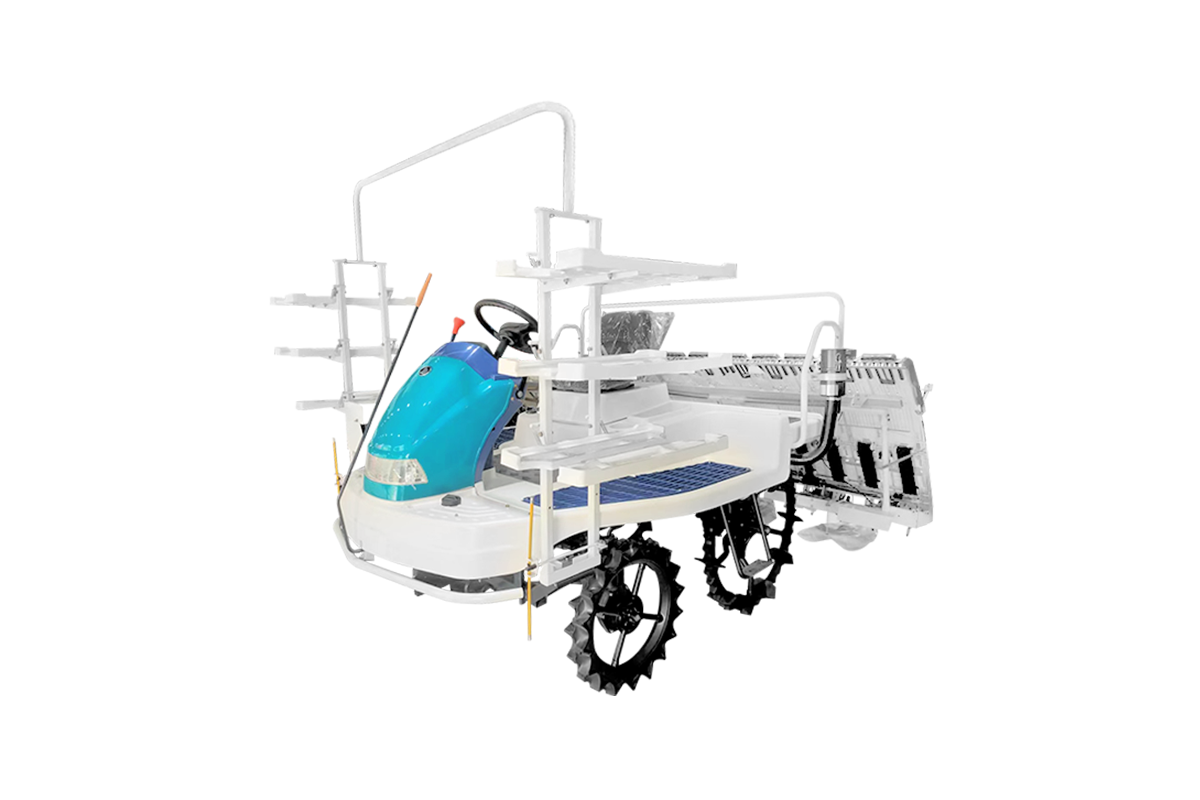
The 2ZX-230 two-row small low-fuel consumption hand-held transplanter is a high-performance machine ...

 2026.11.09
 Industry News
The first useful decision in tea garden mechanization is not whether to buy a machine, but which field operation the machine should replace first. For many growers, that operation is the pruning and harvesting pass that consumes the largest block of seasonal labor. The 4CJ-140 self-propelled bulk tea picking and trimming machine is designed around that exact pressure point: it carries the cutting head, the forward drive, and the operator on one compact platform so that trimming and bulk picking can be completed in fewer passes with fewer people.
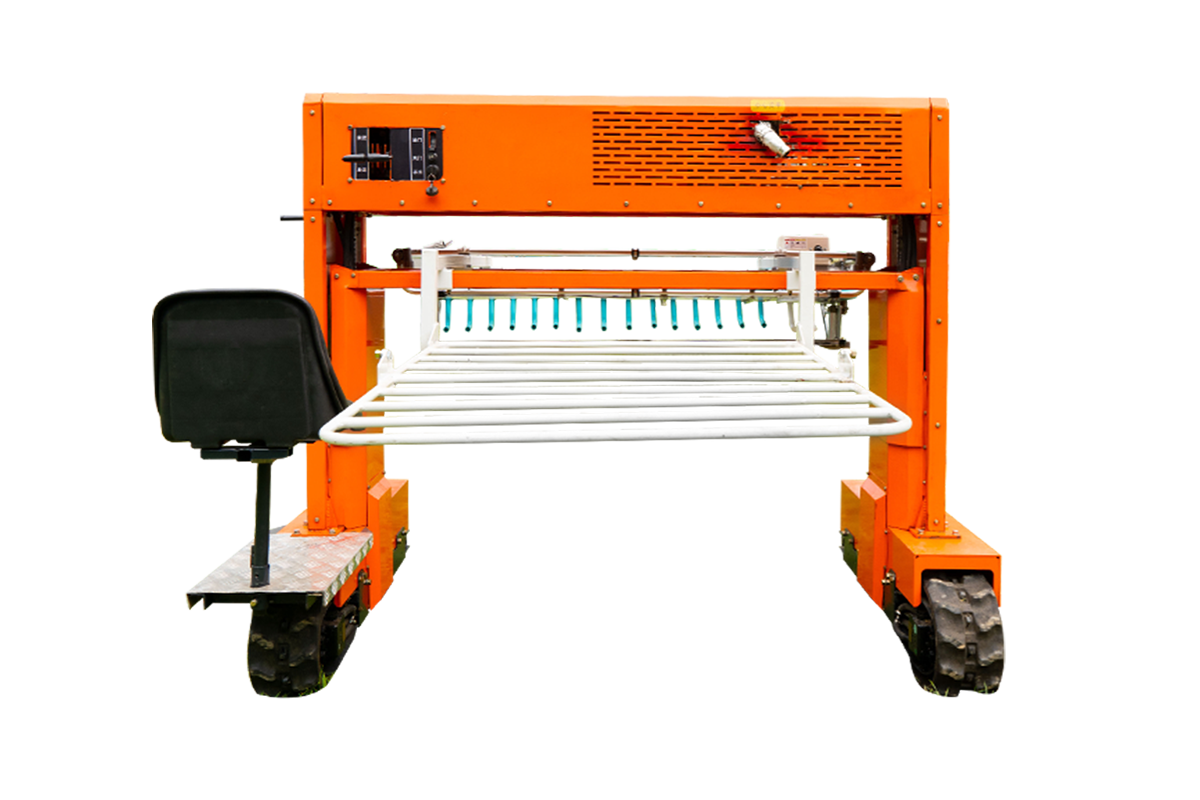 4CJ-140 Self-Propelled Bulk Tea Picking and Trimming MachineA self-propelled tea garden machine for bulk picking and trimming, with a 140 cm working width and operator-controlled drive to reduce seasonal labor.View Product →
This is not a garden trimmer scaled up for field use. It is a self-propelled tea garden machine intended for repeated work in established rows. The practical value comes from three things: the machine sets the cutting height consistently, the operator controls speed and direction from the driving position, and the work is no longer limited by how many trained hands are available on the same morning. For a tea garden manager, those three points translate directly into shorter harvest windows, more predictable labor planning, and less dependence on scarce seasonal workers.
Trimming and bulk picking share the same self-propelled chassis, so the machine earns its keep across more than one operation in the annual tea calendar.
A mechanical head follows the row more evenly than hand tools, which helps keep the recovery surface uniform after pruning.
The work is organized around a machine operator and a support person rather than a large picking crew arriving at the same time.
Self-propelled movement reduces the need to carry or push separate cutting equipment between rows and headlands.
Tea is harvested in repeated rounds. A field that looks calm from the road may require a dozen separate decisions each week: which rows are ready, how many pickers are available, whether the leaf is wet, whether the flush is advancing faster than the crew can follow, and whether the factory can accept the volume on the same day. Manual harvesting compresses all of those decisions into one narrow window. When the crew is late, the leaf matures past the target standard. When the crew is large enough, supervision and transport become the new bottleneck.
The labor problem is therefore not simply a wage problem. It is a coordination problem. A tea garden needs a certain number of skilled hands at a certain moment, and those hands must be organized, moved, fed, and paid within a harvest round that may last only a few days. If rain arrives, the plan resets. If one experienced picker is absent, the row assignment changes. If the factory raises its intake standard, the crew must slow down or sort more carefully. Mechanization changes the shape of that coordination problem by replacing a large, simultaneous labor peak with a smaller, more controllable machine schedule.
This is why tea pruning machines and self-propelled picking platforms are often evaluated together. Pruning sets the geometry of the next harvest. Picking removes the flush. If both operations depend on manual timing, the entire calendar is fragile. A self-propelled unit allows the grower to complete a trimming pass, adjust the row surface, and return for bulk picking without rebuilding a large crew for each step. The result is not only fewer worker-hours on paper. It is a more stable sequence of field operations.
Most comparisons stop at the number of pickers replaced. That is the visible part. In practice, the larger savings often appear in the hidden costs that surround manual work. A hand crew needs transport to the field, drinking water, shade, supervision, row assignment, quality checks, and a collection plan for the leaf. A machine pass needs fuel or energy, a trained operator, blade condition, and a maintenance reserve. The cost profiles are different, and the difference matters more in large fields than in small gardens.
Consider a garden that normally sends twenty pickers into a block. The direct labor cost is easy to calculate. The indirect cost is harder: one supervisor may spend the morning assigning rows, another person may check leaf quality at the collection point, and a vehicle may make two trips to bring leaf to the factory. If the machine can complete the same block with one operator and one support worker, the saving is not twenty minus two. It is the difference between managing a crowd and managing a field operation. That difference becomes clearer when the harvest round collides with pruning, fertilizing, or pest monitoring.
For a closer comparison of mechanical and manual tea picking, see this field note on how a tea leaf picking machine compares to manual harvesting. The key point is that machines do not only replace hands. They replace a sequence of small decisions that must otherwise be made by people under time pressure.
The trade-off is equally real. A machine requires trained operation, routine blade care, and a clear access plan. It also performs best when rows are reasonably uniform. Those conditions should be checked before purchase, not after the first season.
A self-propelled tea pruning and picking machine combines three functions that are usually separate in manual work: movement, cutting, and height control. The operator drives the unit along the row while the cutting head trims or picks the upper canopy. The machine's own weight and drive system provide stability, so the operator does not need to push a heavy head through dense foliage. The cutting height is set before the pass and checked during the pass, which is the basis for a uniform recovery surface.
The practical advantage of self-propulsion is most obvious on repeated passes. A push-type tool depends on the operator's stamina; a self-propelled unit depends on fuel, maintenance, and driving skill. That shift matters in large gardens because the limiting factor moves from human endurance to machine uptime. It also makes the work more repeatable, which is exactly what a pruning program needs.
A machine that is too wide for the row spacing will damage plants and slow the pass. A machine that is too narrow will leave uncut strips and require extra passes. Before choosing a model, measure the actual field conditions rather than relying on a nominal row spacing from an old planting plan. Tea gardens often change over time: rows may shift, headlands may shrink, and drainage channels may cut into turning space.
Measure the clear width between mature bushes at several points in the block, not only at the gate. The narrowest section controls the machine's practical fit.
Turning at the end of a row takes more room than a straight pass. Confirm that the machine can turn without reversing into a drain or damaging the next row.
Wet soil, loose gravel, and steep cross-slopes change traction and stability. Walk the block in the condition in which it will actually be harvested.
Trees, poles, irrigation heads, and fence lines create interrupted passes. Plan whether these areas will be handled by the machine or by hand.
The best layout is not necessarily the one with the widest rows. It is the one that allows the machine to complete a full pass without frequent stops, reverse moves, or manual clearing. In many gardens, a modest amount of headland improvement, drain covering, or obstacle removal produces more productivity than a larger machine. That is why a field walk is more valuable than a brochure comparison.
Pruning and picking are often discussed as if they were the same operation. They are not. Pruning shapes the bush, removes excess growth, and prepares the canopy for the next flush. Picking removes the harvestable leaf. A self-propelled platform can support both, but the settings and the timing are different. The machine's value comes from sharing the chassis, drive system, and operator skill across both tasks.
Pruning is a structural operation. The cutting height should follow the intended canopy profile, and the cut should be clean enough to support even regrowth. A machine pass is most effective when the row is already reasonably uniform and the operator maintains a steady speed. If the row has large gaps or uneven bush height, the machine may need to be supplemented by hand work in those sections. The goal is not to force every bush into one shape. The goal is to reduce the number of irregular surfaces that would otherwise slow the next harvest.
Bulk picking removes a larger volume of leaf and places more demand on the cutting head and the collection system. The operator must balance forward speed against cut quality. Too fast, and the leaf is bruised or torn; too slow, and the daily output falls below the labor saving that justified the machine. A practical approach is to establish a standard speed for each block, record it, and use that standard for training and quality checks.
Sharing one platform between the two jobs reduces the capital burden of mechanization. It also creates a training advantage: the operator learns one machine, one steering response, and one maintenance routine. That familiarity is worth more than a long list of theoretical functions, especially in gardens where machine operators also supervise field crews.
The economics should be built around a realistic field capacity, not a laboratory maximum. A machine may be capable of a high instantaneous output, but the effective output depends on row length, turning time, blade changes, operator fatigue, and the condition of the leaf. The table below gives illustrative planning ranges for comparison. It is not a guaranteed performance specification, but it shows the variables that should be measured during a field trial.
| Cost or performance factor | Manual operation | Self-propelled machine | What to measure in a trial |
|---|---|---|---|
| Workers per pass | Several pickers or pruners spread across the block | One operator plus one support worker in many layouts | Actual crew size needed for the same block and quality standard |
| Peak labor risk | High: weather and absenteeism can delay the whole round | Lower: the schedule depends on one trained operator and machine readiness | Number of days lost to crew shortages or rain during the last season |
| Cut uniformity | Depends on individual skill and fatigue | Depends on height setting, blade condition, and forward speed | Percentage of row length within the target height band |
| Hidden coordination | Transport, supervision, water, shade, row assignment, quality checks | Fuel, blade care, operator training, spare parts, access planning | Supervisor hours and support cost per block |
| Weather window | Large crews are difficult to move quickly when a dry window opens | Small team can enter and finish a block faster | Hours between rain events and the time needed to complete one pass |
| Quality risk | Bruising from handling and uneven cuts from hand tools | Bruising from dull blades or excessive speed | Leaf damage score at the collection point |
| Maintenance reserve | Hand tool replacement and sharpening | Blades, belts, fasteners, filters, and seasonal service | Parts cost and downtime hours per 100 operating hours |
The cost comparison becomes clearer when it is converted into a per-block budget. Add the direct labor, supervision, transport, and quality-check time for a manual pass. Then add fuel, operator time, support time, maintenance reserve, and depreciation for a machine pass. The machine does not need to win on every line. It needs to win on the lines that constrain the business: peak labor availability, harvest timing, and consistent quality.
Mechanical pruning is only useful if the bush recovers evenly. A clean cut, made at the right height and at the right time, gives the plant a better chance to produce uniform new shoots. A ragged cut, made with dull blades or at the wrong speed, creates a worse surface and may increase the risk of disease or uneven flushing. The machine does not remove the need for agronomic judgment. It makes that judgment more visible because the result is consistent across the whole row.
Several practical rules matter. First, do not prune when the canopy is wet if the machine tends to tear rather than cut. Second, check blade sharpness before each major block. Third, avoid working during a frost window or immediately before a period of severe stress. Fourth, keep the cutting height within the range recommended for the local variety and the intended flush. Fifth, inspect the cut surface after the first few rows and adjust the machine before continuing. These are simple checks, but they are the difference between a mechanized program that improves the garden and one that creates extra work.
Stop after the first pass and inspect ten random points along the row. Look for crushed stems, torn leaves, and variation in cutting height. If the cut is not clean, check blade condition and forward speed before changing the height setting.
Recovery also depends on the timing of the next operation. A machine that finishes pruning early may allow the garden to return to picking sooner, but only if the new shoots have reached the right stage. The machine shortens the labor peak; it does not shorten the plant's biological cycle. Good scheduling keeps those two timelines separate.
Self-propelled machines are most productive on regular rows with firm access and adequate turning space. They can work on slopes, but slope changes the safe speed, the operator's workload, and the risk of instability. A field that is easy to walk may still be difficult to drive. Before a trial, inspect the block in the condition in which it will be harvested, not in the dry season when the soil is firm and the canopy is short.
Best fit: level or gently sloping rows with firm soil, clear headlands, and consistent row spacing.
Higher risk: traction and steering change, and the machine may compact or slip. Plan passes after drainage improves.
Requires careful assessment: reduce speed, avoid sharp turns, and confirm that the machine's stability is suitable for the actual gradient.
Mixed fit: trees, poles, and drains break the pass. Hand work may still be needed in those sections.
The practical rule is to match the machine to the block, not the block to the brochure. If a garden has a large, regular block and a few awkward corners, the machine can handle the regular block and the corners can be managed separately. If the whole garden is fragmented, the labor saving may be smaller because the machine spends more time turning and less time cutting. That is a layout question, and it should be answered before the purchase order.
A pruning machine earns money only when it is working. Uptime planning is therefore part of the labor-saving calculation, not an afterthought. The most common causes of lost time are dull blades, loose fasteners, blocked cutting areas, contaminated fuel, and delayed spare parts. None of these are exotic failures, and most can be prevented with a simple daily and weekly routine.
Keep a small stock of wear parts: blades, belts, filters, and commonly replaced fasteners. Record the operating hours for each block so that service intervals are based on real use rather than memory. Train at least two people to operate and inspect the machine. A single trained operator is a single point of failure, especially during a short harvest window.
Spare parts planning should start with the supplier conversation. Ask which parts are expected to wear, how quickly they can be shipped, and what routine service can be done in the field. The answers matter more than a long list of optional accessories. A machine that is easy to maintain and supported by a clear parts plan will deliver more value than a more complex machine that sits idle waiting for a component.
A purchase decision should be based on a field trial, not a showroom demonstration. The trial should use the actual block, the actual row spacing, and the actual quality standard. Bring the people who will operate and maintain the machine. Ask them what slows them down, what feels unstable, and what will be difficult to clean at the end of the day. Those answers are more useful than a headline output figure.
For a broader view of the manufacturer's agricultural machinery range, visit the main product page. The important point is to compare machines on the same field trial protocol. A machine that looks strong in a demonstration may be a poor fit if it cannot turn in the headland or if the blade change takes too long in the middle of a harvest window.
A useful field trial produces numbers, not impressions. Five measurements are enough to compare a self-propelled machine with the current manual method. First, measure the time required to complete one representative row, including turning and clearing. Second, measure the number of people required for the same row at the same quality standard. Third, measure the percentage of row length within the target cutting height. Fourth, measure the time lost to blade checks, blockage, or other interruptions. Fifth, measure the leaf damage or cut quality score at the collection point.
Minutes per row, including turns and stops. This exposes the real field capacity.
Workers per pass, including the operator, support person, and any hand-work crew.
Percentage of the row within the target band. This is the best simple indicator of uniformity.
Interruptions per row. Frequent stops usually point to layout, blade, or speed problems.
Cut quality and leaf damage score. A fast pass with poor quality is not a labor saving.
Run the trial in the same block, on the same day, with the same quality standard for both methods if possible. If that is not practical, use adjacent blocks with similar canopy and terrain. Record the conditions: wet or dry, morning or afternoon, and the experience level of the operator. These details explain why two gardens can report very different results from the same machine model.
The saving depends on the block and the current manual method. In many cases the largest gain is not a simple headcount reduction but a reduction in peak labor, supervision, and schedule risk. A timed field trial is the only reliable way to estimate the change for a specific garden.
Yes, a self-propelled platform can support both operations when it is set up correctly. The cutting height, forward speed, and blade condition should be adjusted for each job. Training should cover both passes because the quality risks are different.
There is no single answer. Measure the clear width between mature bushes at the narrowest point in the block and compare it with the machine's actual working envelope. Headland space and turning radius are just as important as row width.
A clean cut at the correct height and time is the goal. Damage usually comes from dull blades, excessive speed, wet conditions, or an incorrect height setting. Inspect the cut surface early in the pass and adjust before continuing.
Check blades before each major block and inspect them during the pass if cut quality changes. Keep a spare set and a simple sharpening or replacement routine. Blade condition is one of the most direct influences on leaf quality.
Buying on a demonstration instead of a field trial. A machine that performs well on a flat, clean show plot may struggle in a wet, irregular garden. Test it in the real block with the real operators and measure time, people, height uniformity, stops, and quality.
It can be, but the economics are tighter when the machine cannot be used across enough area or enough operations. Shared ownership, contractor use, or a seasonal rental arrangement may make more sense for very small or fragmented gardens.
Training should cover height setting, forward speed, turning, blade inspection, daily cleaning, blockage response, and the quality checks used at the collection point. At least two people should be trained so that one absence does not stop the harvest.
 Custom Agricultural Equipment Manufacturers