

 No. 1819, Renmin West Road, Cao'e Street, Shangyu District, Shaoxing City, Zhejiang Province, China

 English
 中文简体
中文简体 русский
 Español
 عربى
عربى
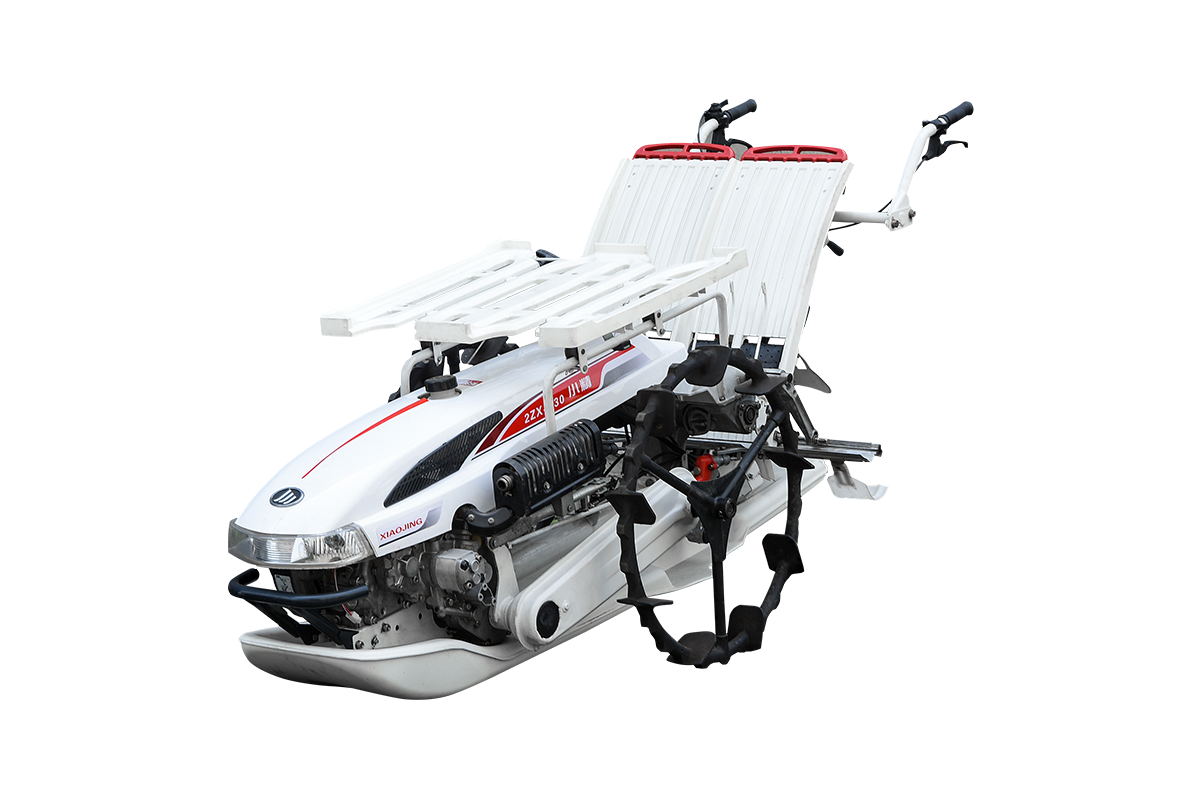
The 2ZX-230 two-row small low-fuel consumption hand-held transplanter is a high-performance machine ...

 2026.07.27
 Industry News
Every Vegetable Transplanter Machine that leaves a production line carries the sum of dozens of manufacturing decisions made long before it ever touches a field. From raw steel selection to final calibration, the way a transplanter is built directly determines how it performs once it reaches a customer's farm. This section takes a closer look at the manufacturing side of transplanting equipment, the engineering choices behind different configurations, and the practical factors that growers and equipment buyers should understand when evaluating a machine for their own operation.
Factory Insight: A well-built Vegetable Transplanter Machine is not defined by a single component, but by how the frame, seedling tray interface, hydraulic system, and ground wheels are calibrated to work together under continuous field vibration and load.
The chassis of a transplanting machine bears the full mechanical load of repeated planting cycles, uneven terrain, and constant vibration from tractor coupling. Manufacturing facilities that specialize in agricultural machinery typically use high-strength carbon steel for the main frame, reinforced at stress points such as the three-point hitch connection, the seat mounting bracket, and the transmission housing. Welding quality at these junctions has a direct impact on the operational lifespan of the unit, since poor welds are the most common cause of frame fatigue after several planting seasons.
Surface treatment also plays a role that is often overlooked by buyers focused only on price. Anti-corrosion coating, whether through hot-dip galvanization or industrial powder coating, protects exposed metal parts from moisture, fertilizer residue, and soil acidity. In regions with high humidity or frequent rainfall, this treatment can extend the working life of a transplanter by several years compared to untreated frames.
Main beams manufactured from Q235 or higher-grade carbon steel provide the load-bearing strength needed for continuous field operation without frame deformation.
Critical joints undergo double-pass welding at the hitch and transmission housing to reduce the risk of cracking under repeated vibration stress.
Powder-coated or galvanized surfaces resist rust formation caused by fertilizer exposure, irrigation moisture, and soil chemical residue.
Bolt-on planting units allow individual rows to be removed and serviced without dismantling the entire machine frame.
One of the most frequent questions raised by growers evaluating a transplanting machine concerns tray compatibility. Seedling trays vary widely by region, crop type, and nursery practice, so a transplanter that only accepts one tray format has limited practical value. Manufacturers address this by designing adjustable tray guides and interchangeable feed rails that accommodate multiple hole configurations without requiring a full mechanical overhaul.
Precision in tray handling also affects how gently seedlings are removed from their cells. A transplanting mechanism that grips too aggressively can crush stems or damage root balls, while a mechanism that grips too loosely risks dropping seedlings before they reach the planting furrow. Factories that invest in adjustable clamping tension, combined with cushioned contact surfaces on the picking arms, tend to produce machines with noticeably higher seedling survival rates in field trials.
| Tray Type | Cell Count Range | Recommended Crop Category |
| Rigid Plastic Tray | 50–128 cells | Cabbage, pepper, tomato, eggplant |
| Soft Foam Tray | 72–200 cells | Lettuce, spinach, leafy greens |
| Paper Pot Tray | 128–288 cells | Fine-root nursery seedlings |
| Deep Cell Tray | 32–72 cells | Broccoli, cauliflower, large-frame plants |
Buyers sourcing transplanting equipment often need to choose between tractor-mounted units and self-propelled configurations, and the decision usually comes down to farm scale, terrain, and existing equipment inventory. Tractor-mounted transplanters rely on the PTO shaft or hydraulic output of a compatible tractor, which reduces upfront cost but ties the transplanter's performance to the horsepower and hydraulic capacity of the towing vehicle. Self-propelled units carry their own engine and drivetrain, offering independence from external equipment but requiring a larger initial investment.
Connects via three-point hitch and PTO shaft. Suitable for farms already operating a mid-horsepower tractor. Lower equipment cost, shared power source with other implements.
Independent diesel or gasoline engine with dedicated drivetrain. Suitable for operations without a compatible tractor, or where multiple planting tasks run in parallel across separate fields.
Compact single or double-row units designed for small plots, greenhouse rows, or terraced fields where larger machinery cannot maneuver effectively.
The table below outlines how different transplanter configurations are typically matched to farm size and operational requirements based on production data collected across multiple planting seasons.
| Configuration | Typical Row Count | Engine/Power Range | Approximate Weight | Best Suited Field Size |
| Walk-Behind Unit | 1–2 rows | 4–8 HP | 120–220 kg | Under 5 acres |
| Tractor-Mounted (Light) | 2–4 rows | 25–45 HP tractor | 350–650 kg | 5–30 acres |
| Tractor-Mounted (Heavy) | 4–8 rows | 50–90 HP tractor | 800–1500 kg | 30–150 acres |
| Self-Propelled Unit | 6–12 rows | 35–70 HP engine | 1600–2800 kg | 150+ acres |
Before any Vegetable Transplanter Machine leaves the production facility, it typically passes through a series of inspection stages designed to catch mechanical and calibration issues before they reach the field. These stages generally include a static structural check, a dynamic run test under load simulation, and a final calibration of planting depth and spacing mechanisms.
Incoming steel, hydraulic hoses, and electronic sensors are checked against specification sheets before entering the production line.
Welded joints are inspected for consistency, and frame alignment is measured to confirm the chassis sits level under load.
Hydraulic lines are pressure-tested, and the transmission is run through a full planting cycle simulation to check for slippage or leakage.
Each planting unit is individually calibrated to confirm consistent depth and spacing accuracy across all rows before packaging.
A completed unit is run under simulated field load for an extended period to identify any irregular vibration, noise, or mechanical drift.
No two farms operate under identical conditions, and manufacturing facilities that work directly with growers understand that a standard configuration rarely fits every application. Soil type, row spacing preferences, crop variety, and even regional climate can influence how a machine should be configured before it ships. Sandy soils require different furrow-opening blade angles compared to heavier clay soils, and greenhouse operations often need narrower frame widths to fit within fixed bed spacing.
Fertilizer application attachments represent one of the more common customization requests, allowing the transplanter to deposit a measured amount of fertilizer into the furrow at the same time seedlings are placed. Similarly, irrigation attachments that release a controlled water dose at each planting point can significantly improve seedling establishment rates in dry or sandy field conditions, reducing the need for immediate follow-up irrigation after transplanting.
Planting units can be repositioned along the toolbar to match specific crop spacing requirements, from narrow leafy green beds to wider fruiting vegetable rows.
Optional fertilizer boxes and delivery tubes place granular or liquid nutrients directly into the furrow alongside each seedling.
Water delivery lines release a controlled dose at each planting point, supporting faster root establishment in low-moisture soil conditions.
Certain configurations are designed to plant directly through pre-laid plastic mulch film, punching and planting in a single pass.
Open-field vegetable operations, protected greenhouse systems, and raised-bed nurseries each present distinct mechanical demands. In open-field conditions, ground clearance and wheel traction become more important, particularly on sloped or uneven terrain. Machines intended for hillside or terraced farming are often built with a lower center of gravity and wider wheelbase to maintain stability during operation.
Greenhouse and tunnel farming environments introduce a different set of constraints. Limited overhead clearance and narrow walkways mean that compact walk-behind or small tractor-mounted units are generally more practical than large multi-row machines. These environments also tend to use finer, more controlled soil beds, which allows for tighter depth tolerances during calibration.
Raised-bed nursery operations, common in intensive vegetable production regions, often require transplanters with narrower frame widths and precise bed-following wheels that keep the machine centered on the raised bed without disturbing the shoulders of the bed structure. This level of application-specific configuration is one of the reasons why factory-direct communication about field conditions tends to produce better long-term equipment performance than choosing a generic off-the-shelf configuration.
Application Note: A Vegetable Transplanter Machine configured for open-field row cropping will generally underperform in a raised-bed nursery setting unless the wheel track and frame width are specifically adjusted to match bed geometry.
Long-term equipment reliability depends heavily on the availability of replacement components once a machine is in active field use. Wear parts such as furrow-opening blades, seedling clamps, drive chains, and ground-contact wheels experience the highest turnover rate and typically need replacement on a seasonal or annual basis depending on usage intensity and soil abrasiveness.
Facilities that maintain in-house parts production, rather than relying entirely on outsourced components, are generally able to respond faster to replacement part requests. This becomes particularly relevant during peak planting season, when equipment downtime directly translates into lost planting windows and delayed harvest schedules.
| Component | Typical Replacement Interval | Primary Wear Cause |
| Furrow-Opening Blades | 1–2 seasons | Soil abrasion, rocky field conditions |
| Seedling Clamp Jaws | 2–3 seasons | Repeated mechanical gripping cycles |
| Drive Chain | 2–4 seasons | Tension fatigue, insufficient lubrication |
| Ground Drive Wheels | 3–5 seasons | Surface wear from continuous ground contact |
| Hydraulic Seals | 2–3 seasons | Pressure cycling, temperature fluctuation |
Even a well-manufactured transplanting machine will underperform if operators are not properly trained on calibration and daily maintenance procedures. Manufacturing facilities that provide structured installation guidance and operator walkthroughs tend to see fewer early-stage mechanical issues, since many field problems stem from incorrect initial setup rather than actual component failure.
Key training areas typically include correct hitch alignment for tractor-mounted units, hydraulic pressure settings, seedling tray loading technique, and the proper sequence for adjusting row spacing and planting depth. Operators who understand how each adjustment affects planting outcomes are better equipped to fine-tune the machine for changing field conditions throughout the growing season, rather than running it at a fixed default setting regardless of soil moisture or seedling condition.
Verify hydraulic fluid levels, chain tension, blade sharpness, and clamp alignment before the first planting run of the season.
Confirm seedling tray seating, check for soil buildup on furrow blades, and monitor planting depth consistency across all rows.
Clean soil residue from all contact surfaces, apply protective lubricant to exposed metal components, and store under cover to limit corrosion.
Additional rows increase the area covered per pass, but actual field speed also depends on tractor horsepower, seedling handling accuracy, and soil surface conditions. A higher row count does not automatically translate into proportionally faster planting if the supporting tractor lacks sufficient hydraulic flow.
Yes, provided the tray guides, clamp tension, and furrow depth settings are adjustable. Machines built with modular planting units offer more flexibility across varying stem thickness and root ball sizes compared to fixed-configuration models.
Moderately moist soil generally produces the best furrow closure and root-to-soil contact. Excessively dry soil can cause furrows to collapse loosely around the root ball, while overly saturated soil can lead to compaction around the planting point.
Certain configurations are specifically built with a punching mechanism that penetrates plastic film before seedling placement, allowing mulch and transplanting operations to be completed in a single field pass.
Selecting the right transplanting configuration is rarely a matter of choosing the highest row count or the largest engine available. Field conditions, crop variety, tray format, and long-term parts availability all factor into which configuration will actually perform well on a specific piece of land. Working directly with the facility that engineers and assembles the equipment allows growers to communicate specific field measurements, soil characteristics, and crop rotation plans before a machine configuration is finalized, rather than adapting field practices around a fixed, generic product specification after purchase.
This level of configuration accuracy tends to matter most for operations working across mixed soil types or transitioning between multiple vegetable varieties within the same growing season, where a flexible, properly calibrated Vegetable Transplanter Machine can significantly reduce the labor and time required compared to manual transplanting methods.
 Custom Agricultural Equipment Manufacturers