

 No. 1819, Renmin West Road, Cao'e Street, Shangyu District, Shaoxing City, Zhejiang Province, China

 English
 中文简体
中文简体 русский
 Español
 عربى
عربى
The 2ZX-230 two-row small low-fuel consumption hand-held transplanter is a high-performance machine ...

 2026.09.07
 Industry News
When the transplanting window opens, every hour counts. A farm of two hectares that used to require 16 to 20 workers bending over flooded fields for a full day can now be planted by one operator in about five hours with a four-row walking transplanter. We have seen this shift happen across farms in Zhejiang and Jiangsu, and the same pattern is now repeating in Vietnam, Indonesia, Nigeria, and Peru as labor costs climb. This is why understanding how a rice transplanter works is not just a mechanical curiosity — it is a practical starting point for choosing equipment, training operators, and planning a smoother planting season.
A rice transplanter performs three actions at the same time: it picks up a small cluster of seedlings from a nursery mat, pushes that cluster into the puddled soil at a set depth, and moves forward so the next cluster lands at a consistent interval. The entire machine — engine, transmission, float, feed chain, and planting forks — is designed around these three movements.
Because depth and spacing are controlled mechanically, the result is far more uniform than hand planting. Uniform depth means the root zone stays at the same temperature and oxygen level across the field. Uniform spacing means each hill receives the same amount of sunlight, water, and nutrients. That consistency is what drives higher tiller counts, more even maturation, and a simpler harvest.
Knowing what each component does helps you evaluate a machine before you purchase it and troubleshoot during the season. These are the parts that do the real work.
The nursery mat sits flat on a stainless tray. A feed chain with small lugs advances the mat toward the planting area in timed steps. The step distance determines the hill-to-hill spacing — usually 12, 14, or 16 cm — and it is adjusted by changing the feed gear.
Two or four curved forks are mounted on a rotating shaft. Each rotation scoops three to eight seedlings from the edge of the mat and presses them into the soil. Fork shape and spring tension are factory-set, but the operator can adjust them as the parts wear during the season.
The float is the flat plate that rides on the mud surface. It follows the micro-contours of the paddy, which keeps planting depth stable even when one corner of the field is softer than the rest. A narrow skid in the center also helps the machine track straight on loose soil.
A linkage between the float and the planting unit raises or lowers the entire fork mechanism. Most transplanters offer depth settings from 1 cm to 5 cm. The correct setting depends on seedling height and soil hardness, so it should be tested in each field before full operation.
Row spacing is fixed by the distance between planting units, typically 25 cm or 30 cm. Six-row and eight-row machines allow the outer units to fold upward for transport. Some eight-row models let you shift row width by moving the side units outward.
Walking transplanters use a 3 to 6 hp air-cooled gasoline engine with a mechanical gearbox. Riding transplanters use 8 to 20 hp diesel or gasoline engines with hydraulic lifts and power steering. The transmission keeps ground speed and planting speed synchronized, so every hill lands exactly where it should.
Here is the sequence from the moment the machine enters the field to the moment a row is finished.
Every row is planted simultaneously on all units. A six-row riding machine plants six rows in one pass, which is why its effective output is several times higher than manual transplanting.
Around 60 percent of the machines we ship overseas are walking types, but riding models are growing quickly in popularity. The decision mostly comes down to field area, operator availability, and budget.
| Feature | Walking Type | Riding Type |
|---|---|---|
| Rows per pass | 4, 6, or 8 | 6, 8, or 10 |
| Guidance | Manual steering | Hydraulic power steering |
| Suitable field size | 0.3 to 2 ha per day | 2 to 10 ha per day |
| Engine power | 3 to 6 hp | 8 to 20 hp |
| Working speed | 0.4 to 0.8 m/s | 0.6 to 1.2 m/s |
| Operator position | Walking behind or standing platform | Seated |
| Purchase cost | Lower | Higher |
If your plots are scattered and narrow, a four-row walking machine is easier to move between fields and simpler to maintain. If you operate contiguous fields of two hectares or more per day, a riding six-row unit will save more labor over the season.
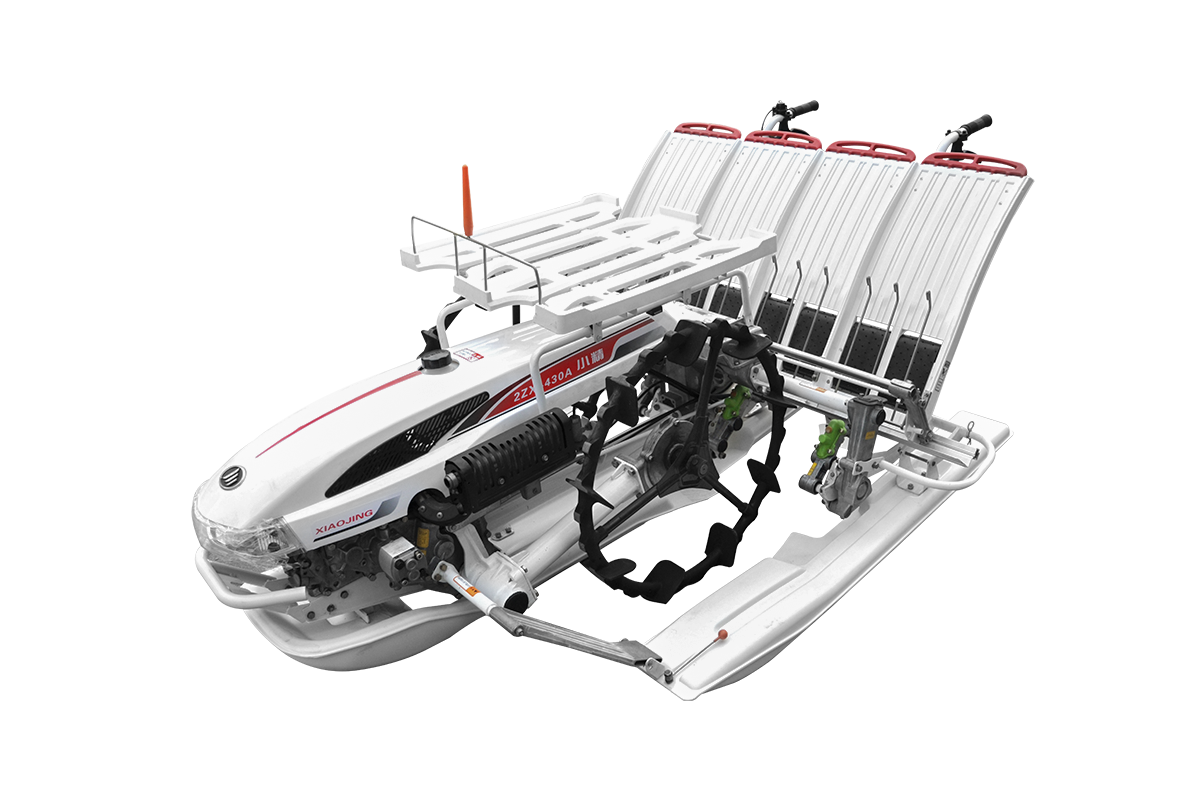 Four-Row Walking Rice Transplanter for Uniform PlantingThis four-row walking transplanter is ideal for scattered, narrow plots. It maintains consistent planting depth and hill spacing, which leads to even crop growth and easier grain filling management in smallholder fields.View Product →
Field trials from multiple smallholder regions show that the biggest gain from machine transplanting is not just speed — it is consistency. When planting depth and hill spacing are uniform across the field, the crop grows evenly, and the grain filling stage becomes easier to manage.
Share of hills planted at consistent depth and spacing (field trial observation):
The practical impact of this difference shows up later in the season. Fields with uniform spacing have fewer skips, less competition between hills, and more predictable water use. For a rice buyer or a cooperative that grades fields by uniformity, these factors also affect the price of the crop.
20 to 25 person-days, with planting depth varying by 2 to 3 cm across the field.
1 operator for about 5 hours. Depth variation stays within 1 cm on most field types.
1 operator for about 2 hours. Hydraulic depth control handles uneven paddies well.
Three models give a practical overview of how transplanter specifications scale with farm size. These are among the most common setups we ship to Southeast Asia, Africa, and South America.
| Specification | 2ZX-430A | 2ZG-630 | 2ZG-820 |
|---|---|---|---|
| Type | Walking, 4-row | Riding, 6-row | Riding, 8-row |
| Row spacing | 30 cm | 30 cm | 30 cm (25 cm optional) |
| Hill spacing | 12 to 20 cm | 12 to 22 cm | 12 to 22 cm |
| Engine power | 4.0 hp gasoline | 8.0 hp diesel | 10 hp diesel |
| Working output | 0.1 to 0.2 ha/h | 0.3 to 0.5 ha/h | 0.5 to 0.7 ha/h |
| Operator | 1 person, walking | 1 person, seated | 1 person, seated |
Actual output depends on soil condition, seedling quality, and operator skill. Compare the row and hill spacing options against the planting pattern your local agronomist recommends.
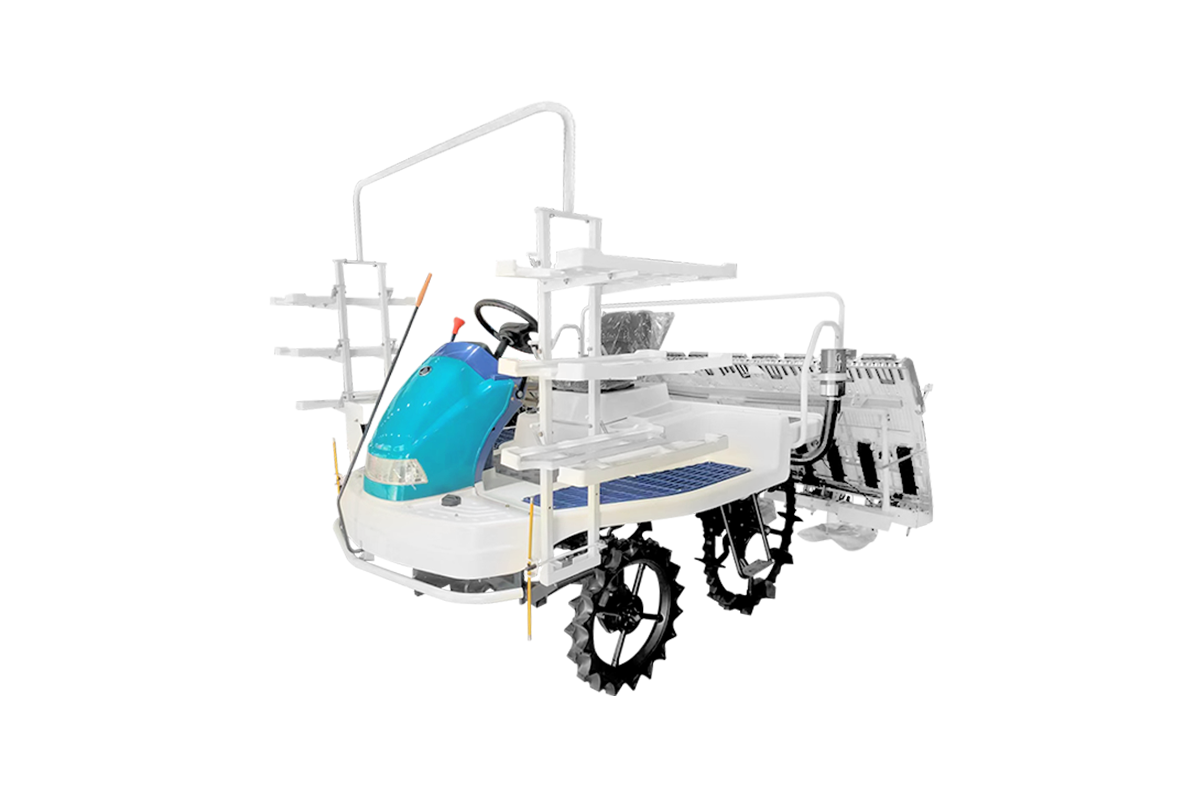
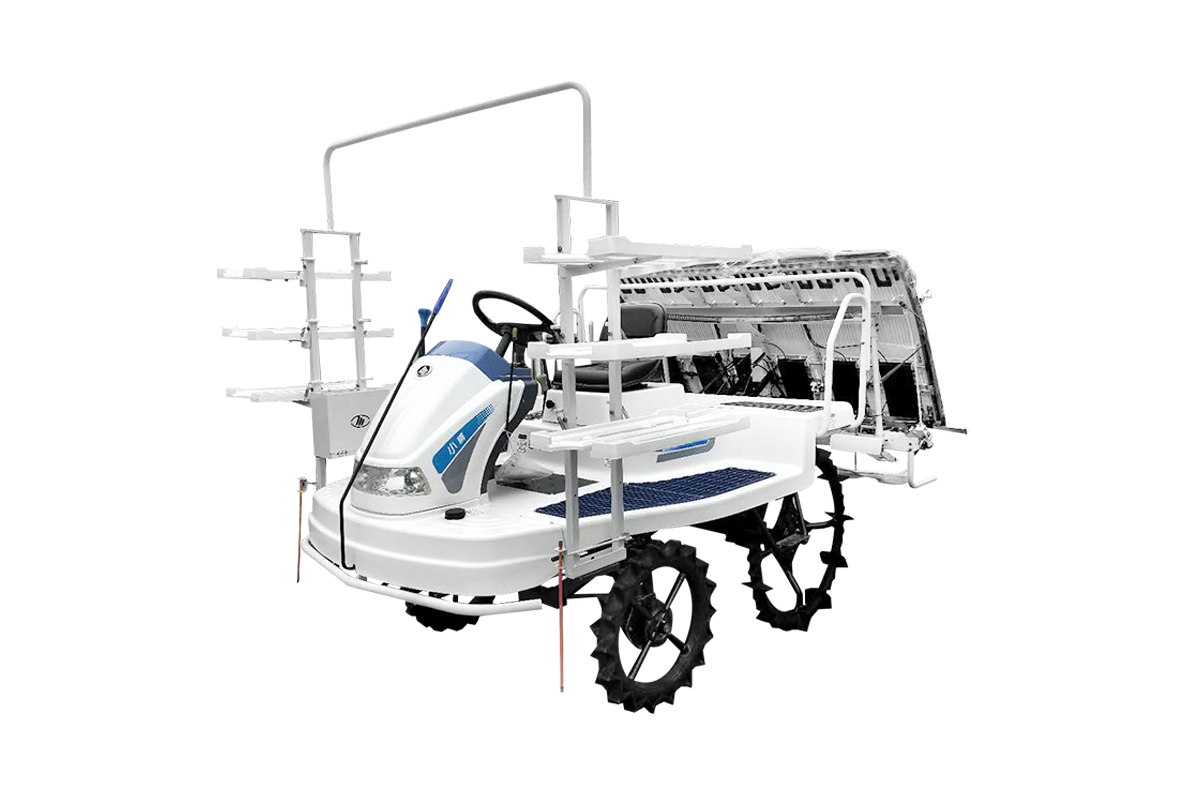 Six-Row Riding Rice Transplanter with Hydraulic SteeringA six-row riding model suited for contiguous fields. Its V-type twin-cylinder engine and Eaton hydraulic power assist provide flexible steering and stable performance, helping operators match row spacing to agronomic recommendations.View Product →
Several factors separate a smooth planting season from a frustrating one, and most of them are not about the machine alone. Pay attention to these before the machine enters the field.
If you are still deciding between row widths and configurations, see our guide to choosing the right rice transplanter machine for a more detailed comparison of field sizes, seedling types, and operating costs.
A: Most operators become comfortable after two to three days of practice. The key skills are guiding straight row passes, adjusting depth settings, and handling turns at the end of each row. A trainer or experienced operator should supervise the first full day.
A: Yes. Seedlings should be grown in standard nursery trays as a mat with roots that hold together. The ideal seedling height is 12 to 20 cm, with a stem thickness of 2 to 3 mm. Mat age at transplanting is usually 15 to 25 days, depending on local temperature.
A: The field should be puddled and leveled, with water depth kept at 1 to 3 cm during planting. If the soil is too hard, the forks cannot push the seedlings in fully. If it is too soft, the float sinks and the depth setting becomes unstable.
A: Fork springs and tines usually last 300 to 500 operating hours under normal conditions. Inspect them every 50 hours for bending or cracked springs. Replace the set when the fork no longer holds the seedling cluster firmly through the full rotation.
A: First check the feed chain for slipped lugs or jammed mat pieces. Then check the fork springs for weak tension. Finally, verify that the hill spacing gear matches the intended setting. Skipping is rarely an engine problem; it is almost always in the feed or planting mechanism.
The machine size should follow the field pattern, not the other way around. If most of your plots are smaller than half a hectare, four-row walking models are easier to transport and cheaper to maintain. For farms above five hectares, an eight-row riding transplanter reduces the labor requirement per hectare to less than 10 percent of manual planting.
At Xiaojing Agricultural Machinery, we manufacture transplanters from two-row handheld units to ten-row riding models, all with factory-direct spare parts support. Browse the full lineup of hand-operated transplanters to compare specifications side by side. Whatever the field size, the working principle remains the same — precise depth, consistent spacing, and repeatable performance, pass after pass.
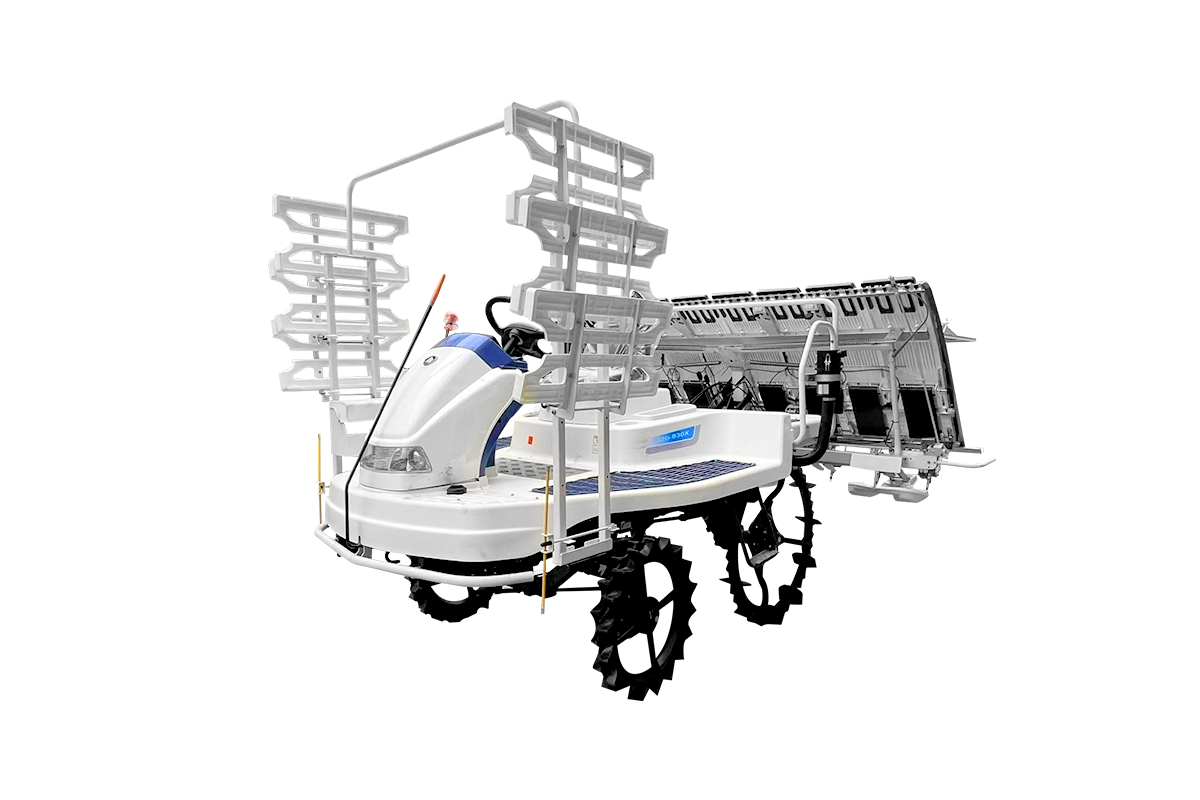
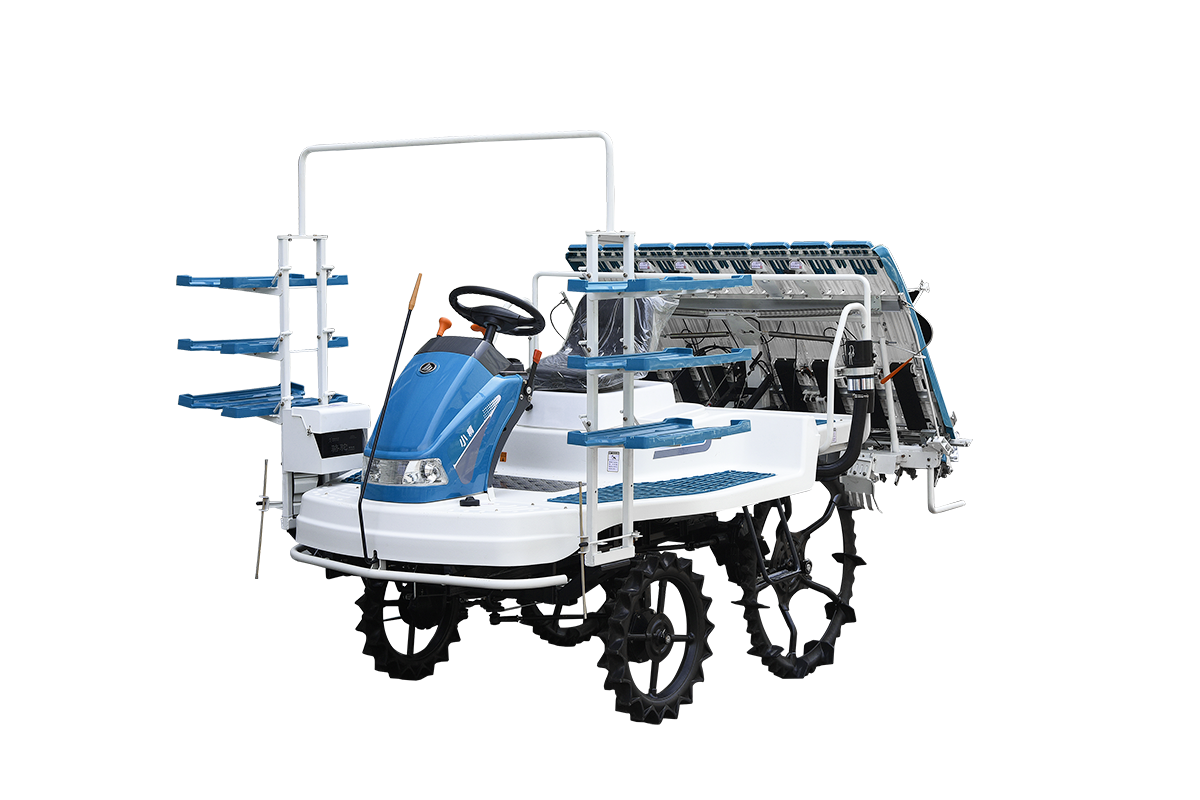 Eight-Row Riding Rice Transplanter with High-Speed PrecisionThis eight-row riding transplanter features four-wheel drive, hydraulic power steering, and an automatic seedling box leveling system. It delivers fast, consistent transplanting with minimal seedling damage across varied terrains.View Product →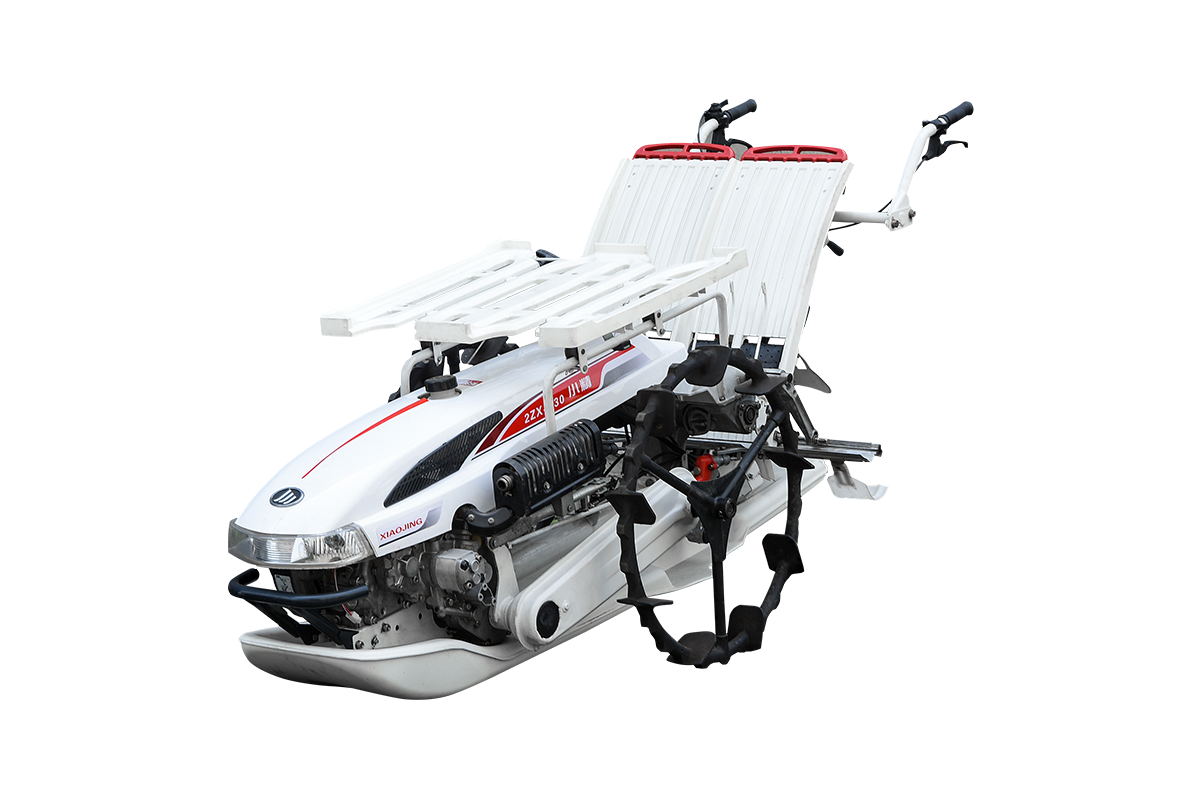

 Custom Agricultural Equipment Manufacturers