

 No. 1819, Renmin West Road, Cao'e Street, Shangyu District, Shaoxing City, Zhejiang Province, China

 English
 中文简体
中文简体 русский
 Español
 عربى
عربى
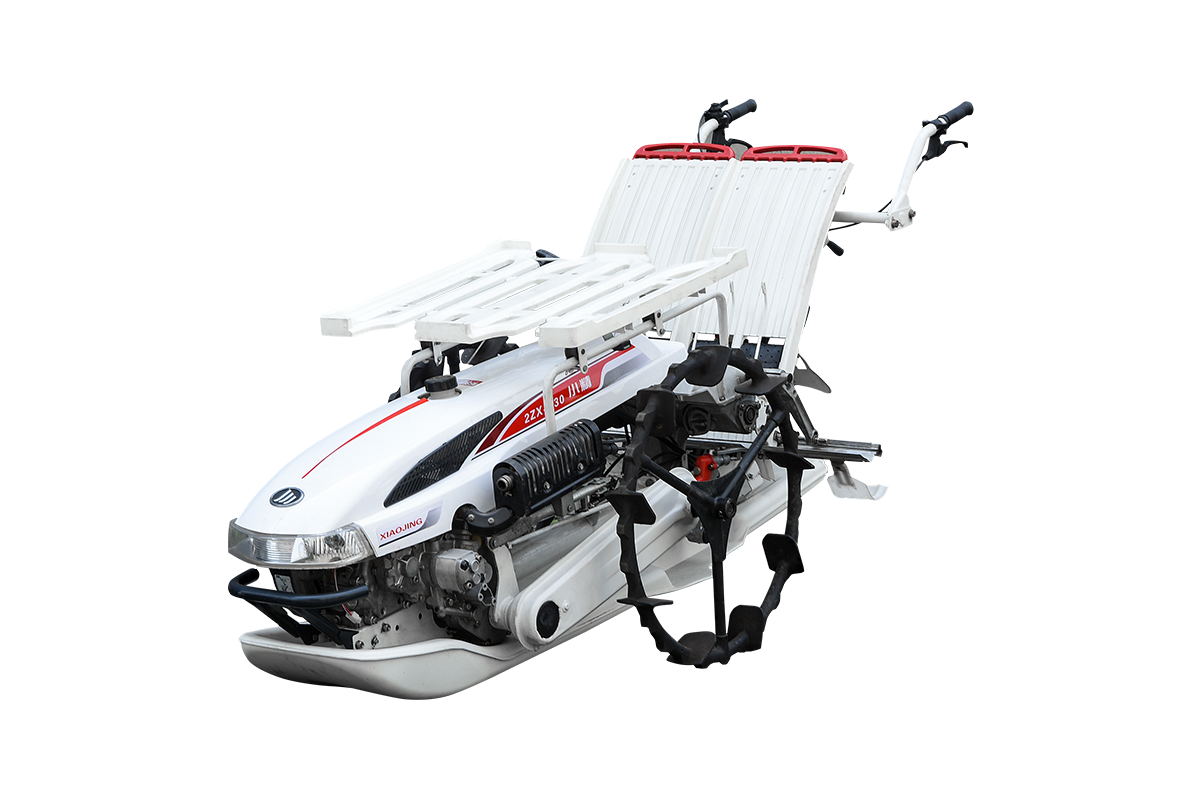
The 2ZX-230 two-row small low-fuel consumption hand-held transplanter is a high-performance machine ...

 2026.02.16
 Industry News
The core of agricultural modernization lies in controllability. Historically, farmers relied on manual broadcasting to scatter seeds across fields. While simple, this method suffered from uneven distribution, lack of depth control, and vulnerability to wind or birds.
Modern planting machinery, particularly the Rice Seeder, has transformed this process into a science. Through mechanical structures, it ensures every seed enters the soil at a predetermined spacing and depth. This precision reduces competition for nutrients between plants and maximizes the utilization of water, light, and fertilizer.
Based on operational modes and crop requirements, planting machinery is generally classified into several categories, where the Rice Seeder holds a highly specialized position:
Rice growth is extremely sensitive to population density. If planting is too dense, poor ventilation and light penetration can trigger pests and diseases. If too sparse, land utilization drops, leading to lower yields. The core value of a Rice Seeder is its ability to strictly control hill and row spacing through physical or pneumatic mechanisms to build a perfect crop canopy.
A Rice Seeder is more than a simple seed dropper; it is the carrier of precise direct-seeding technology. Traditional rice farming involves a three-stage process: nursery, pulling seedlings, and transplanting. Using a Rice Seeder allows seeds to be sown directly into the main field, a process known as Direct Seeded Rice (DSR).
The design goal of a Rice Seeder is to bypass the nursery phase. It is equipped with specialized metering plates for rice seeds. Because rice seeds flow differently than wheat, the metering mechanism of a Rice Seeder must feature high anti-clogging and anti-damage capabilities.
A standard high-efficiency Rice Seeder typically consists of the following key parts:
| Metric | Manual Transplanting | Rice Seeder (DSR) | Difference |
| Labor Intensity | Extremely high (prolonged bending) | Low (mechanized) | 60-80% labor cost saving |
| Efficiency (Ha/Hour) | 0.02 - 0.05 | 0.5 - 1.2 | Over 10x improvement |
| Water Usage | Extremely high | Significantly lower | 20-30% water saving |
| Depth Precision | High fluctuation | +/- 0.5 cm | Improved consistency |
| Seed Control | Difficult to control | Adjustable (1-2 seeds/hill) | 15-20% seed saving |
| Maturity Cycle | Longer (recovery phase) | Shorter (no recovery phase) | 7-10 days earlier harvest |
This is the most basic and cost-effective Rice Seeder. It consists of a drum made of plastic or light metal with discharge holes on the drum wall. Seeds drop via gravity as the drum rotates. It is lightweight, which prevents sinking in soft mud.
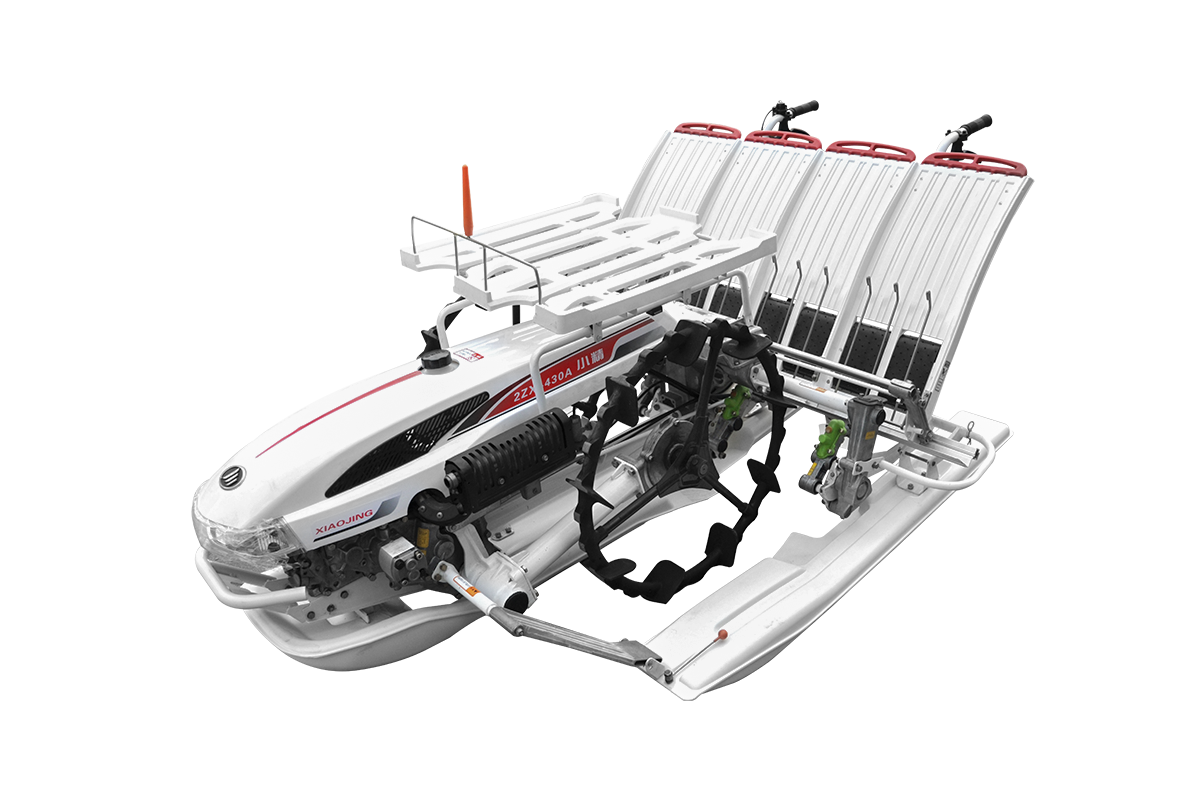
Equipped with a small gasoline or diesel engine, the operator walks behind to control the direction. It usually features floats or wide iron wheels for wet paddies and is capable of simultaneous fertilization and seeding.
The workhorse of industrial rice production, connected via a three-point hitch to tractors. It completes furrowing, seeding, covering, and pressing in one pass with a large working width.
Represents the pinnacle of Rice Seeder technology. It uses airflow to push seeds precisely into the tubes, achieving single-grain precision and maintaining accuracy even at high speeds.
| Feature | Manual Drum | Self-Propelled | Tractor-Mounted | Pneumatic |
| Power Required | Manual | 4-8 HP Engine | 35-60 HP Tractor | 60+ HP Tractor |
| Number of Rows | 6 - 8 | 8 - 10 | 12 - 24 | 16 - 32 |
| Operating Speed | 1.0-1.5 km/h | 2.0-3.5 km/h | 5.0-8.0 km/h | 8.0-12.0 km/h |
| Precision (Error) | +/- 15% | +/- 5% | +/- 3% | Less than 1% |
| Daily Capacity | 0.5 - 1.0 Ha | 2 - 4 Ha | 8 - 15 Ha | 20+ Ha |
In traditional rice farming, nursery work and transplanting account for over 40% of total labor costs. A Rice Seeder merges these into a single operation. A tractor-mounted unit can finish in one day what once required 100 people.
Since a Rice Seeder can operate in dry or semi-dry fields, farmers do not need to maintain deep water layers initially. This reduces irrigation water by approximately 25% and helps lower methane emissions.
Precision seeding ensures uniform distribution, avoiding the waste of traditional broadcasting. Calibration allows for a 15-20% reduction in the total seed rate used in the Rice Seeder.
Rice planted via a Rice Seeder skips the transplanting shock period. Traditional seedlings take 7-10 days to recover from root damage. Direct-seeded rice roots grow in place, developing deeper and stronger for earlier maturity.
For Dry DSR, soil must be finely tilled and moisture maintained at 70-80%. For Wet DSR, the mud should settle for 1-2 days until it reaches a consistency where a finger press leaves a mark without the mud collapsing. This is the optimal time for a Rice Seeder to operate.
Before entering the field, the Rice Seeder must be calibrated for the specific variety. Ensure the actual discharge rate matches the target, typically 30-90 kg/ha, with an error margin below 3%.
The ideal depth for a Rice Seeder is 2.0-3.0 cm. Depths exceeding 4 cm hinder emergence, while depths less than 1 cm expose seeds to birds or drying.
Regular maintenance is mandatory. Clean and oil the machine after every season. While the frame of a Rice Seeder is durable, wearing parts like metering plates and openers should be replaced every 2-3 years.
| Issue | Potential Causes | Solutions |
| Uneven Spacing | Wheel slippage; loose chain | Add wheel weight; tighten chain |
| Seed Damage | Metering gap too small | Adjust plate gap; replace parts |
| Opener Clogging | Soil too wet | Wait for better soil; follow rules |
| Missing Hills | Seed bridging; debris | Keep seeds dry; remove debris |
Q: My field is very soft; will a large Rice Seeder get stuck?
A: For extremely soft mud, choose a lightweight self-propelled model equipped with wide floats or ultra-wide iron wheels.
Q: Do seeds need treatment before sowing?
A: Yes. Seed coating is recommended to prevent pests, and seeds must be surface-dry to prevent sticking within the Rice Seeder mechanism.
Q: Why is rice planted with a Rice Seeder more resistant to lodging?
A: Because the roots grow in place, allowing for deeper vertical penetration and stronger anchoring compared to transplanted seedlings.
Q: How is weed management handled after using a Rice Seeder?
A: Since there is no initial water layer to suppress weeds, it is necessary to use pre-emergence herbicides immediately after sowing with the Rice Seeder.
Q: What is the efficiency of a Rice Seeder?
A: It varies by model; manual types cover about 0.5-1.0 hectare per day, while large tractor-mounted units can exceed 15 hectares daily.
 Custom Agricultural Equipment Manufacturers