

 No. 1819, Renmin West Road, Cao'e Street, Shangyu District, Shaoxing City, Zhejiang Province, China

 English
 中文简体
中文简体 русский
 Español
 عربى
عربى
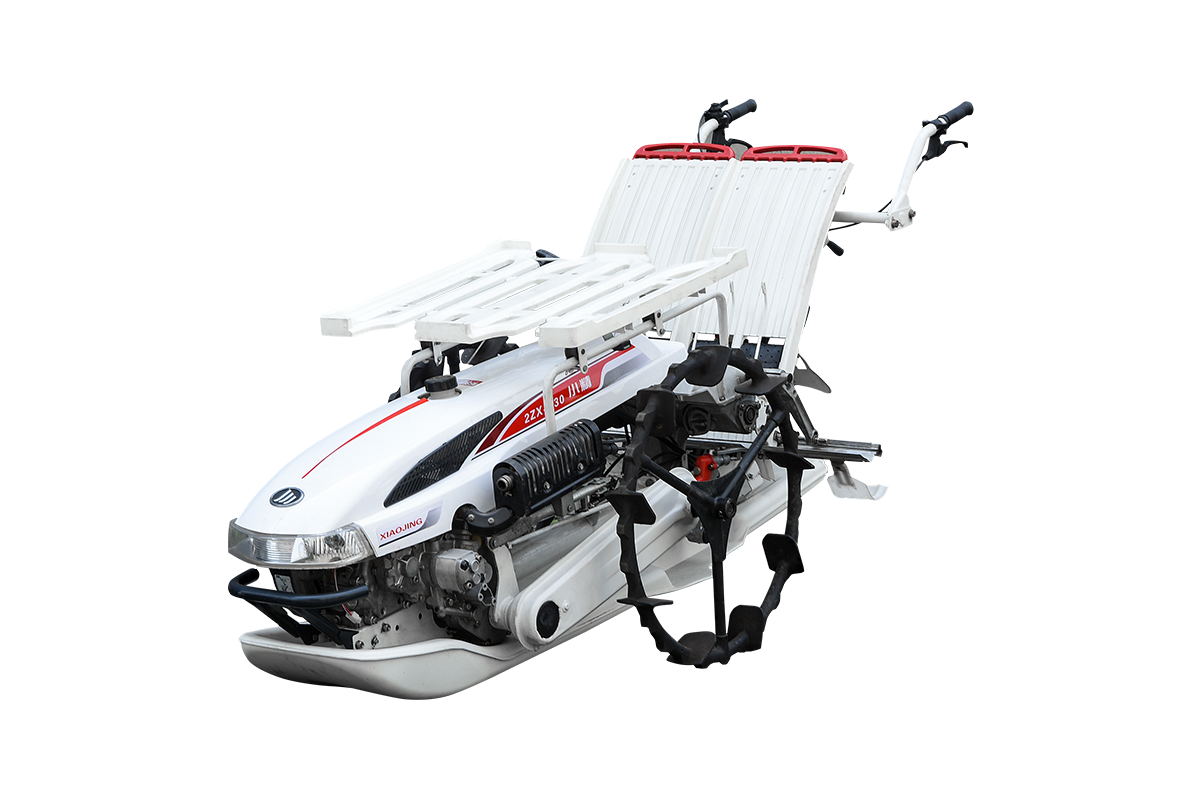
The 2ZX-230 two-row small low-fuel consumption hand-held transplanter is a high-performance machine ...

 2026.01.19
 Industry News
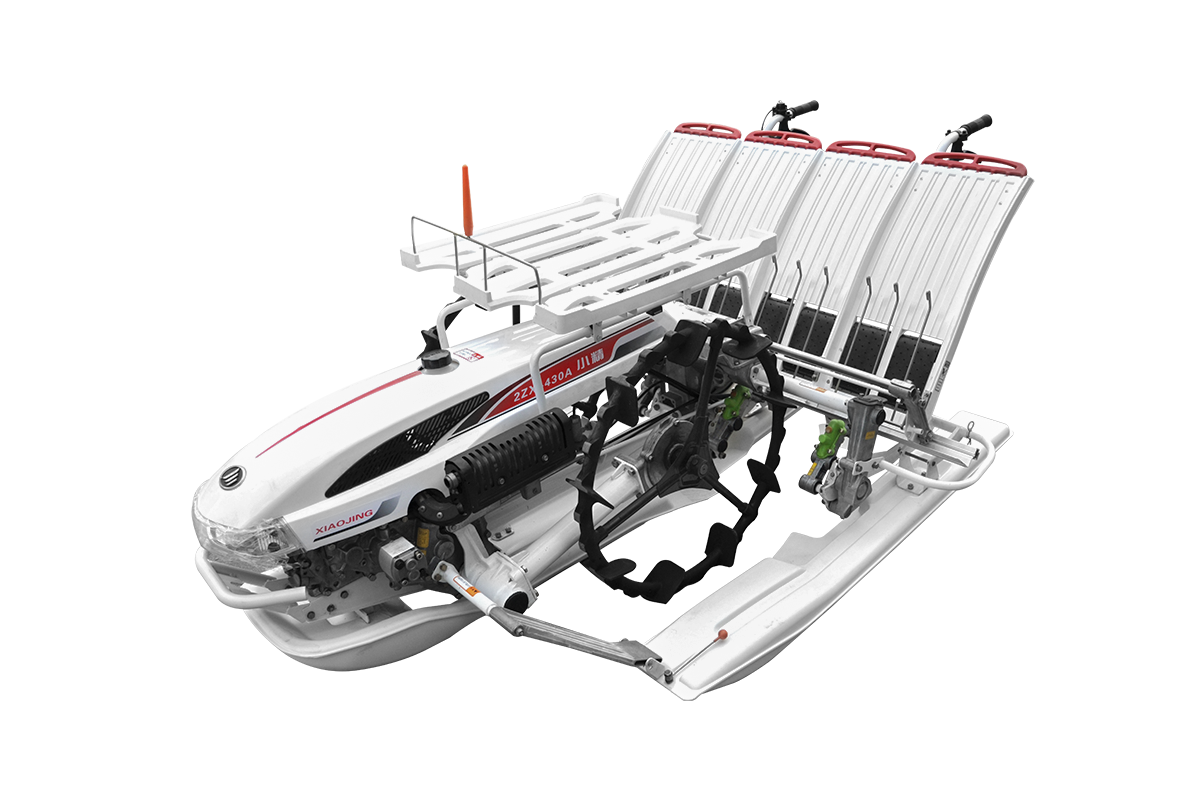
In the field of mechanized rice cultivation, the Four-row Walking Rice Transplanter has become the preferred choice for farmers and small landowners due to its compact structure, flexible operation, and high cost-effectiveness. However, during actual operation, operators are strictly advised to control the seedling height between 12-25cm. This is not an arbitrary range but a technical baseline based on multidimensional factors including mechanical kinematics, agronomical physiology, and fluid dynamics.
The core of the Four-row Walking Rice Transplanter lies in its Planting Section. This mechanism typically utilizes a rotary or linkage structure where the Planting Claw follows a precisely calculated closed-loop trajectory in space.
When the seedling height exceeds 25cm, the excessively long leaves cause severe mechanical interference during the rotation of the planting claw. Since the space between the Seedling Tray and the planting claws is limited, overgrown seedlings tend to tangle around the drive shaft or the pusher. More critically, long seedlings lead to instability in the center of gravity when entering the guide groove, causing "hooking," where the claw drags adjacent seedlings along, leading to an increased Missing Hill rate or overlapping. Conversely, if seedlings are shorter than 12cm, the claw struggles to accurately capture enough of the basal stem during high-speed cutting, causing seedlings to slip out and resulting in empty hills.
From the perspective of material mechanics, seedlings with a height of 12-25cm reach the optimal balance of lignification and flexibility in their basal stems for mechanical handling.
During the forced feeding process of the Four-row Walking Rice Transplanter, the planting claw performs longitudinal and transverse cutting of the seedling block. Seedlings below 12cm are often in the "milky" stage, where the root system integration is insufficient, making the Seedling Mat extremely fragile and prone to crumbling. Seedlings exceeding 25cm possess excessive above-ground biomass, increasing wind resistance and gravitational moments. During High-speed Planting, tall seedlings vibrate significantly in the air, causing the center of gravity to shift at the moment of soil penetration, leading to Tipping or deep burial, which severely impacts the recovery speed of the plant.
The paddy field environment is complex, and the fluidity of mud has a significant impact on the performance of the walking transplanter. As the Four-row Walking Rice Transplanter moves forward, the Seedling Guard generates physical turbulence in the water and mud.
Seedlings within the 12-25cm range maintain a ratio of center-of-gravity height to Planting Depth that conforms to stability principles. If seedlings are too tall, they are susceptible to "floating" caused by surface mud and waves generated by the machine's movement. This occurs because the lateral Hydraulic Pressure on a tall seedling far exceeds the anchoring force of its young root system. Data indicates that for every 10cm increase in seedling height, the lateral overturning moment increases exponentially. Staying within the recommended height ensures seedlings stand upright immediately after insertion, improving the green-up rate.
Current Seedling Tray standards are designed for blanket-shaped seedlings. The Feeding Amount of a Four-row Walking Rice Transplanter is usually set between 8-12mm per stroke.
When seedling height is controlled at 12-25cm, the root density and thickness (usually 2-2.5cm) form the optimal friction coefficient with the feeding belt or wheel. Seedlings that are too tall usually indicate an excessive growth period, resulting in roots that are too thick or have penetrated the bottom of the tray, increasing the load on the feeding system and potentially damaging drive belts. The 12-25cm age group ensures the roots form a dense mat at the bottom that can withstand the shear force of mechanical cutting while maintaining high water absorption efficiency after soil entry.
 Custom Agricultural Equipment Manufacturers