

 No. 1819, Renmin West Road, Cao'e Street, Shangyu District, Shaoxing City, Zhejiang Province, China


 English
 中文简体
 русский
 Español
 عربى

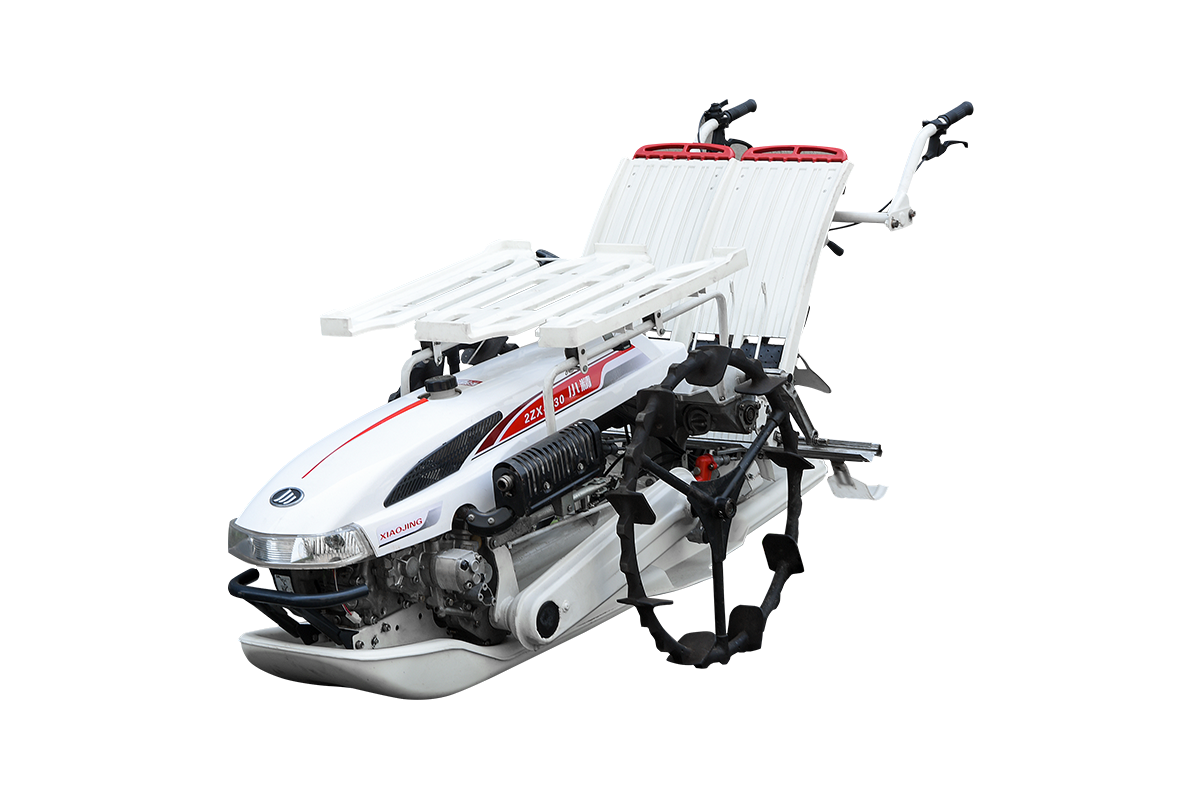
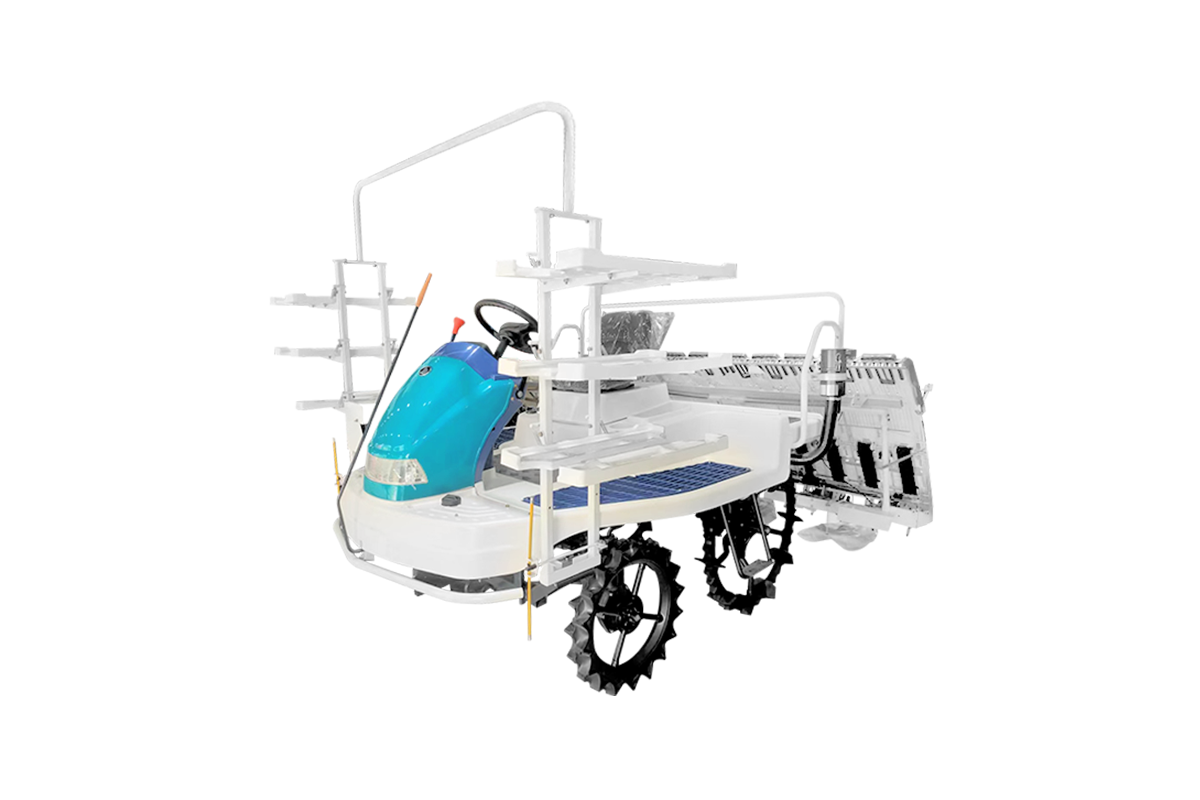
The 2ZX-230 two-row small low-fuel consumption hand-held transplanter is a high-performance machine ...

 2026.11.16
 Industry News
A mower advertised for 1,600 m² can still leave uncut strips on a lawn that looks flat from the kitchen window. The usual reason is not the blade or the battery. It is the match between navigation, boundary definition and slope. A 1,200 m² lawn with two tree islands, a 14° bank and a 90 cm gate is a different buying problem from a 1,200 m² rectangle with no obstacles. Treat the lawn as the specification and the mower as the component that must fit it.
This guide is written for buyers who are comparing boundary-wire, GPS/RTK and wire-free robotic mowers, and who need a decision they can defend after the first month. The focus is on what changes performance in real gardens: wire layout, satellite correction, slope traction, coverage shape and maintenance access. The aim is to reduce the chance of paying for navigation features that never get used, or saving money on a platform that cannot hold a line on the bank behind the house.
Measure the actual cuttable area, not the property size. A 2,000 m² plot may have 1,250 m² of lawn once the house, drive, beds and shed are removed. Robotic mowers are usually rated by area under ideal conditions, so the useful comparison is effective area after obstacles, narrow passages and slope exclusions. If the mower must cross a gravel path, a lawn edge or a narrow side gate, include that in the measurement. A platform that cannot reach the back lawn reliably will not deliver its rated coverage.
Slope needs two numbers: angle and grade. A 20% grade is not 20°. It is about 11.3°. The formula is rise divided by run, multiplied by 100. A 1 m rise over 5 m run is a 20% grade. Many manuals publish slope as a percentage, while buyers often estimate in degrees. Mixing the two is one of the most common buying errors. If a dealer says “up to 25 degrees” and the manual says “maximum 25%”, the difference is not small: 25° is about 47%, which is a very different traction and tipping risk.
Subtract beds, buildings, ponds and paths. Keep a 10–15% margin so the mower is not running at its published limit every day.
Measure the steepest working bank, not the average garden slope. Check wet traction and the direction of travel across the slope.
Count trees, poles, taps, swings and flower borders. Complex islands change the value of wire versus wire-free navigation.
Tall fescue and wet spring growth need more cutting height and more frequent passes than a fine lawn in dry weather.
Confirm where the charging station can sit. Shade, distance from the lawn edge and cable routing matter as much as mower features.
Measure gates and paths. A mower that fits the main lawn but not the side gate leaves a separate cutting job.
A simple lawn audit takes 20 minutes and prevents most returns. Walk the perimeter, mark the steepest section, photograph the narrowest gate and note where grass grows fastest. That record is more useful than a feature list because it shows which compromises are acceptable. A buyer who needs a low-maintenance perimeter may accept a lower-tech navigation system; a buyer with a changing garden layout may value virtual boundaries more than a lower purchase price.
A boundary-wire mower follows a physical loop laid around the lawn. The loop defines the edge, and optional inner loops keep the mower out of beds or ponds. The system is mature, easy to diagnose and usually less expensive at the hardware level. Its weakness is installation. Wire must be staked or buried, protected at corners and repaired when a spade, rabbit or strimmer cuts it. On a simple rectangle, that work is modest. On a garden with many islands and narrow strips, it becomes a layout project.
Wire systems are strong where the lawn shape is stable and the owner wants predictable edge behaviour. The mower follows a known offset from the wire, so the cut line is repeatable. The trade-off is that the wire must be placed with care: too close to a wall and the mower scuffs it; too far from a bed and a strip remains uncut. Most manuals specify a distance from the edge, often 20–30 cm depending on the model, and a separate distance for slopes and corners. Those numbers are not suggestions. They determine whether the mower can turn safely and whether the perimeter looks finished.
| Factor | Boundary wire | GPS/RTK or wire-free |
|---|---|---|
| Setup | Physical loop, stakes or burial, inner islands. | Virtual map, app setup, base station or vision calibration. |
| Edge behaviour | Predictable wire offset; good repeatability. | Map and sensor dependent; may need a perimeter cut. |
| Cost pattern | Lower hardware cost, higher installation labour. | Higher hardware cost, lower wire labour. |
| Slope performance | Traction and wire position limit the safe bank. | Mapping does not create traction; tyres and weight still matter. |
| Repairs | Wire breaks are common and usually traceable. | Firmware, base station and sensor calibration are the weak points. |
| Best fit | Regular shapes, stable layout, budget-sensitive buyers. | Complex shapes, changing layouts, large open areas. |
The hidden cost of wire is not the wire itself. It is the afternoon spent finding a break after the lawn was aerated, or the edge strip that never looks clean because the loop was laid too far from a curved border. If you choose wire, budget for a proper installation and keep a simple wire locator. If you choose wire-free, budget for map setup and a learning period. Neither system removes the need to plan the lawn.
GPS alone is not enough for a mower that must stay inside a flower bed. Standard GPS can drift by several metres under trees or near buildings. RTK, or real-time kinematic positioning, uses a base station and a correction signal to bring accuracy down to centimetre level. That is why RTK models can create a virtual boundary without a wire. The base station position matters: it needs a clear view of the sky, a stable power supply and a sensible height. If the base is under a roof overhang or beside a metal fence, the correction quality can fall.
A wire-free mower still needs a perimeter plan. The owner must walk the boundary, define no-go zones and confirm that the mower can see enough satellites on the far side of the house. Tree canopy, tall hedges and reflective windows can create multipath errors. In practice, the first week is a mapping and correction week, not a fully automatic week. Buyers who expect the mower to learn a complex garden without guidance are often disappointed. Buyers who treat the map as a project and adjust it after the first few cuts get better results.
Navigation also affects how the mower handles narrow passages. A GPS/RTK system may know where it is, but it still needs a safe turning radius and a clear path. A 70 cm gap between a wall and a hedge can be a problem even when the map says the area is open. For a deeper explanation of the control stack, see how hybrid mower navigation and positioning work. The practical question is not “GPS or wire?” but “which navigation method matches the geometry, tree cover and maintenance routine of this lawn?”
Slope is the most common reason a robotic mower underperforms after purchase. The manual may list a maximum slope, but that figure is usually measured under controlled conditions: dry grass, a straight approach, correct tyre pressure and a fully charged battery. Wet grass, moss, loose soil and a turn at the top of the bank reduce the real limit. A mower that climbs a 20° slope in a straight line may lose traction when it turns, or slide when the grass is damp. The safe buying decision is to leave a margin, not to buy exactly at the published limit.
There is also a difference between the slope the mower can cut and the slope the boundary wire can safely follow. Many manuals set a lower limit for wire placement on banks, often around 10% in the wire zone, because the mower must approach and turn near the wire. If the wire runs across a steep bank, the mower may lose the signal or slide into the wire. On wire-free models, the map may allow a steeper zone, but traction remains a physical limit. Software cannot add grip.
| Slope angle | Approx. grade | What it usually means | Buying action |
|---|---|---|---|
| 0–10° | 0–18% | Low risk for most residential mowers. | Check tyre pattern and wet-weather behaviour. |
| 10–15° | 18–27% | Traction and edge control start to matter. | Confirm the model’s slope rating and test on damp grass. |
| 15–20° | 27–36% | At or near the limit of many standard models. | Ask for a slope demonstration and check turning stability. |
| 20–25° | 36–47% | Specialist territory; traction and weight distribution are critical. | Require a low centre of gravity, wide tyres and a crawl mode. |
| 25–30° | 47–58% | High risk for residential platforms. | Use a professional site survey or keep the bank outside the cut zone. |
For a hybrid platform used on residential lawns, the buying check should include the tyre tread, the centre of gravity, the maximum slope in the manual and the behaviour when the mower turns across the slope. A machine designed for a flat lawn should not be pushed onto a bank just because the map allows it. If the bank is unavoidable, reduce the cut height, keep the grass dry and plan a test run before the return window closes.
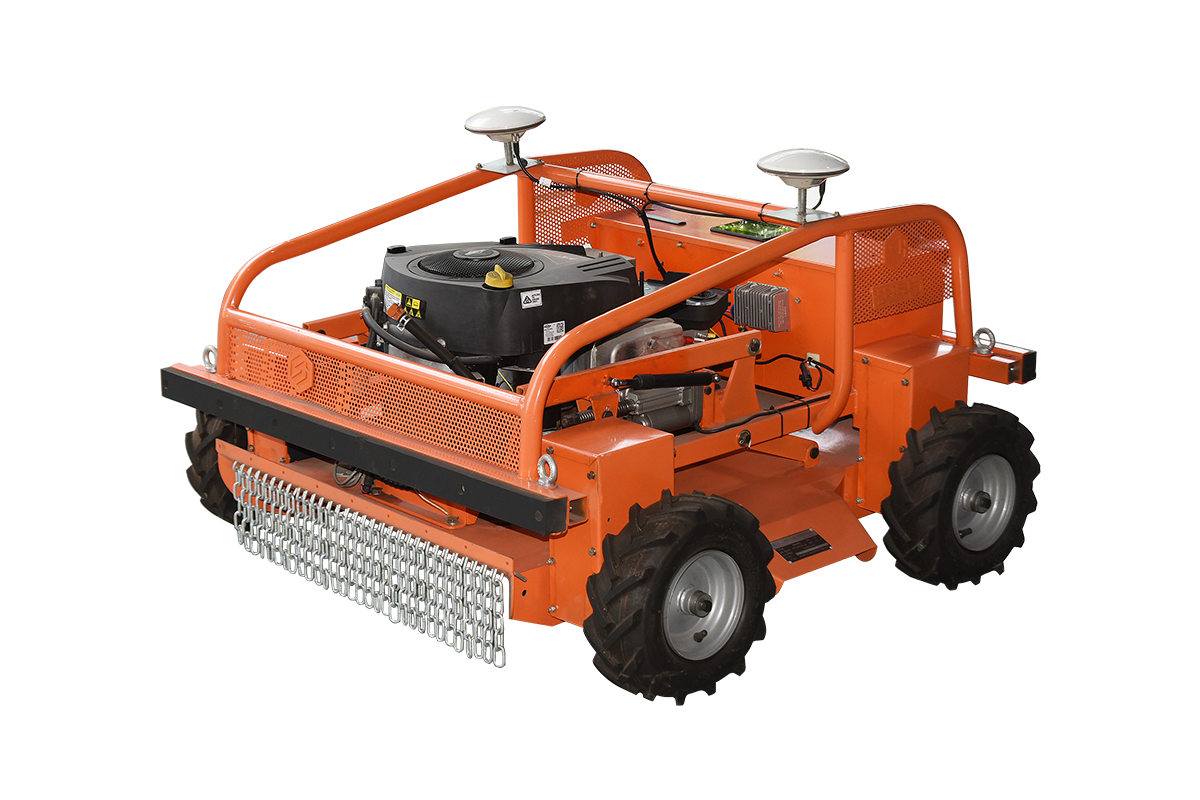 G33 Hybrid Four-Wheel-Drive Robotic MowerA narrow 1.15 m hybrid EV mower for orchards and greenhouses, with dual-blade cutting and app monitoring; check slope limits and real coverage.View Product →
Manufacturers quote area under favourable conditions. Real coverage falls when the mower must turn around islands, pass through narrow gates or skip steep banks. A 1,000 m² rating does not mean 1,000 m² of clean finish on a garden with four beds and a narrow side lawn. The chart below is illustrative: it shows how effective coverage can fall as geometry becomes more complex. Use it to challenge a sales claim, not as a specification for any one model.
Narrow strips are a separate test. A mower may fit through a 90 cm gate, but it also needs room to turn and align with the cutting path. If the strip is narrower than the mower’s turning circle, the machine may enter but struggle to leave cleanly. The same applies to borders: a mower that cannot cut close to the edge leaves a strip for the strimmer, which reduces the labour saving that justified the purchase. Check the published cutting width, the distance from the edge and the real turning radius.
Shape also affects scheduling. A simple lawn can be cut in one session. A complex lawn may need two zones, a perimeter pass and a separate edge routine. That is not a defect, but it is part of the ownership cost. Buyers should ask how many zones the app supports, whether the mower can move between zones without manual carrying, and what happens when the battery runs out in a remote zone. A machine that stops in the far corner and waits for rescue is not delivering the promised convenience.
Edge behaviour separates a good demonstration from a good ownership experience. A boundary-wire mower can follow a fixed offset, but it may still leave a few centimetres near walls and beds. A wire-free mower can map a virtual boundary, but the cutting deck may not reach the same line. Buyers should look at three zones: a straight wall, an outside corner and a curved bed. These are the places where the mower either looks precise or leaves a ragged strip. A short perimeter cut function is useful, but it adds time and should not be the only answer.
Obstacles need a clear policy. Some mowers bump and turn; others use sensors or vision to slow down and route around. Bump behaviour is simple and reliable, but it can scuff young trees or repeated hit thin poles. Sensor-based avoidance is gentler, but it may be cautious around overhanging branches or tall grass. The buying question is not which technology sounds more advanced. It is whether the mower can handle the specific obstacles on the lawn without constant rescue. A garden with a children’s swing, a trampoline and a dog run needs more no-go planning than an open lawn.
No-go zones should be easy to edit. Gardens change: a new flower bed appears, a vegetable patch moves, a temporary pool goes up. A system that requires a dealer visit to change a zone is less useful than one the owner can adjust in the app. For wire systems, that may mean a separate loop or a switched zone. For wire-free systems, it means a map edit. Either way, confirm that the change is within the owner’s control. The best navigation system is the one that stays correct after the garden changes.
Power choice affects noise, runtime and the amount of maintenance. A battery platform is quiet and simple, but runtime falls in tall grass or on slopes. A hybrid platform may combine a small combustion engine with electric drive, or use a battery-assisted system to manage load. The details matter: ask for runtime at the actual cutting height and slope, not the best-case figure on a brochure. A mower that runs for 60 minutes on a flat lawn may run for 35 minutes on a wet bank. If the lawn is larger than one charge, confirm whether the mower returns to the station automatically and resumes the same zone.
Noise is a practical issue near bedrooms, neighbours and home offices. Battery mowers are generally quieter, but the blade and drive system still produce sound. Hybrid systems can reduce fuel use and noise compared with a traditional petrol mower, but they are not silent. Ask for a sound level at the operator position and compare it with the time of day the mower will run. A machine that is quiet enough for an afternoon may still be unsuitable for a 6 a.m. schedule. For more on this, see how hybrid lawn mowers achieve low noise.
Running costs include blades, batteries, filters, wire repairs and firmware time. A cheap mower with frequent wire breaks can cost more over three seasons than a better-built model with a stable perimeter. Battery life is another factor: a battery that loses capacity after two years changes the effective lawn size. Ask about replacement battery availability, blade part numbers and service intervals. The lowest purchase price is not the lowest ownership cost if the mower spends a week waiting for a part.
 G40/G40Li Hybrid Robotic Mower for SlopesA 1016 mm-cut hybrid mower for large gardens and parks, with navigation for contours and obstacles; consider battery, blade and service costs.View Product →
Most robotic mowers cut best when the grass is dry. Wet grass clumps, reduces traction and can block the deck. In a wet spring, a mower that performs well in July may struggle in April. Buyers should ask whether the model has a rain sensor, a wet-cut mode or a recommended cutting height for damp conditions. A rain sensor that delays every cut can be useful, but it can also leave the lawn long during a wet week. The better approach is to adjust the schedule and cutting height rather than expect the mower to handle any condition.
Seasonality also changes the slope risk. A bank that is firm in summer can become soft in winter. Tyres that grip dry grass may spin on wet moss. If the lawn has a steep section that is only wet for part of the year, the safe maximum slope should be based on the worst month, not the best. This is why a demonstration on a dry day is useful but not conclusive. Ask the dealer what happens in wet conditions and whether the mower has a traction control or slope mode.
Wire-free mowers add a firmware dimension. Map updates, satellite corrections and app changes can improve performance, but they can also introduce new behaviour. A buyer should confirm the update policy, whether updates are automatic, and how to roll back if a new version causes problems. Boundary-wire systems are less dependent on software, but they still have control boards and sensors. Neither system is maintenance-free. The realistic expectation is a seasonal check, a blade change, a clean charging station and a periodic review of the map or wire.
Boundary wire is often staked above ground for the first few weeks so the layout can be adjusted. After the mower has learned the perimeter, the wire can be buried 2–5 cm deep or left neatly staked. Corners need a gentle radius, not a sharp bend. Wire near trees and beds needs extra stakes or conduit. If the lawn is aerated or scarified, mark the wire route first. A cut wire is not a disaster, but it is a job. Keep a spare connector, a wire locator and a simple map of the loop.
Wire-free systems need a different maintenance routine. The base station must stay powered and clear of obstruction. The map should be reviewed after garden changes. The mower’s sensors and camera windows need cleaning. Firmware updates should be checked before the cutting season, not in the middle of a wet week. If the mower uses vision, low sun and long shadows can affect navigation. If it uses RTK, the base station’s sky view is critical. These are not reasons to avoid wire-free mowers, but they are reasons to plan the installation properly.
| Task | Frequency | Why it matters |
|---|---|---|
| Clean charging contacts | Monthly | Poor contact causes failed charges and missed cuts. |
| Check blades | Every 20–30 hours | Dull blades tear grass and increase disease risk. |
| Inspect boundary wire | Monthly in growing season | Strimmer cuts and animal damage are common. |
| Review map or zones | After garden changes | New beds and paths can confuse navigation. |
| Check tyre condition | Seasonally | Worn tyres reduce slope traction. |
| Update firmware | Before the season | Stable software is easier to manage than mid-season changes. |
The fastest way to narrow the market is to score each candidate against the lawn audit, not against the brochure. Use the same criteria for every model so the comparison is fair. A model that wins on price but fails the slope test should be removed early. A model that wins on navigation but cannot reach the back gate should also be removed. The goal is a shortlist of two or three machines that can actually do the job, then a demonstration on the buyer’s lawn or a similar site.
Use tolerances rather than exact promises. A mower rated for 1,200 m² should not be asked to cut 1,200 m² of complex lawn every week. A slope rating of 20° should not be treated as a guarantee on wet grass. A wire-free map should not be expected to solve a narrow gate that is physically too tight. Buyers who build in a margin get better reliability, longer blade life and less frustration. Buyers who buy at the limit get a machine that works only in perfect weather.
Ask for the manual before you pay. The manual contains the slope limit, the wire distance, the cutting height range and the maintenance schedule. If the sales team cannot provide it, treat that as a warning. Ask how the mower behaves when the boundary wire breaks, or when the GPS correction is lost. Ask what happens if the mower cannot reach the charging station. Ask whether the app supports multiple zones and whether zone changes are owner-editable.
A good dealer will answer these questions with the manual open, not with a generic sales sheet. A good manufacturer will publish the limits clearly because returns are expensive for everyone. The buyer’s job is to match the machine to the site, and the seller’s job is to make that match transparent. If either side is vague about slope, edge distance or runtime, the risk sits with the buyer after installation.
No. A boundary-wire mower is often more predictable on a simple lawn and costs less at the hardware level. A GPS/RTK mower is more flexible when the layout changes or when burying wire is impractical. The better choice depends on lawn geometry, tree cover and the owner’s willingness to manage installation or mapping.
Some specialist models may claim a high slope rating, but residential platforms usually stop well below 30°. A 30° slope is about 58% grade and carries real tipping and traction risk. Check the manual, the tyre type and the wet-weather behaviour. If the bank is essential, ask for a site survey rather than relying on a brochure figure.
RTK needs a clear view of satellites and a good correction signal. Dense canopy, tall buildings and reflective surfaces can reduce accuracy. A base station in an open position helps, but it cannot remove every obstruction. Buyers with heavy tree cover should test the mower in the actual garden or choose a system with a backup sensor strategy.
There is no fixed replacement interval. The wire usually lasts until it is cut, stretched or damaged by soil movement. Keep spare connectors and a locator, and inspect the route after aerating or edging. A well-installed wire can last many seasons; a poorly buried wire may fail in the first year.
Many wire-free mowers still benefit from a perimeter or edge pass because the cutting deck cannot reach every wall or bed. The map defines where the mower can go, but it does not change the physical deck width. Ask how the model handles edges and whether a separate edge routine is recommended.
Slope rating is often the harder limit. A mower with a generous area rating but a low slope limit will fail on a bank every week. Area rating matters, but it should be checked after the slope, gate width and obstacle plan. A smaller mower that fits the site is more useful than a larger one that cannot climb the garden.
Most mowers can cut damp grass for a short time, but wet conditions reduce traction and can clog the deck. Use a higher cutting height, clean the deck and avoid slopes when the grass is wet. A rain sensor helps, but it is not a substitute for sensible scheduling.
Convert everything to the same unit. Degrees and percent are not interchangeable. Use the formula rise divided by run times 100 for percent, and a calculator for degrees. Then compare the figures with the same conditions: dry grass, straight approach and a fully charged battery. If the seller cannot state the unit, ask again before ordering.
 Custom Agricultural Equipment Manufacturers