Mechanics Defined: Planter vs. Seeder
In the field of agricultural engineering, the choice of sowing equipment often determines the initial growth trend and final yield of crops. While "sowing" is a general concept, in professional terminology, Planter and Seeder represent two distinct seed metering logics and mechanical structures. Understanding the difference between these two is the prerequisite for an in-depth discussion on the technical advantages of the Rice Seeder.
The Precision of Planters
Planters are often referred to as precision seeders, and their core capability lies in Singulation. They use vacuum suction, mechanical fingers, or pressure meters to accurately grab a single seed from the hopper and place it into the soil at a constant interval.
- Target Crops: Primarily large-seed crops with strict requirements for spacing and row distance, such as corn, soybeans, and cotton.
- Advantages: Maximizes the reduction of seed waste and ensures each plant has identical growth space and light conditions.
- Limitations: The mechanical structure is exceptionally complex and expensive. Operating speeds are relatively slow because the meter must accurately grab single seeds even under high-speed rotation.
Volumetric Distribution of Seeders
Unlike planters that pursue "absolute precision," seeders (or drills) focus on Volumetric Metering. They distribute seeds in a continuous "flow" into the furrows through fluted rollers or pneumatic delivery systems.
- Target Crops: Small-seed crops such as wheat, oats, alfalfa, and rice planted via direct seeding.
- Advantages: The structure is relatively simple with a low failure rate, enabling high operating speeds and wide working widths.
- Core Logic: The goal is to ensure the total seeding rate per unit area meets the standard, rather than the specific distance between individual seeds.
Rice Seeder: A Cross-over Technical Integration
When looking at the Rice Seeder, it has absorbed the strengths of both worlds during its evolution. Rice cultivation is highly demanding due to geographical environments (paddy vs. upland) and variety characteristics (long grain vs. short grain). Early Rice Seeder models mostly used simple gravity-fed drill principles, but modern Rice Seeder technology has evolved to a level where it can control precise seeding volumes. It ensures high-efficiency coverage of large paddy areas like a traditional seeder, while utilizing improved metering plates to achieve uniform distribution similar to a planter, avoiding the "crowded clustering" common in manual direct seeding.
Key Parameter Comparison: Planter vs. Seeder vs. Rice Seeder
| Technical Indicators |
Planter |
Seeder/Drill |
Rice Seeder |
| Metering Mode |
Absolute Singulation |
Continuous Flow |
Precision Drill or Hill Seeding |
| Spacing Control |
Very High (CM precision) |
Low (Row only) |
Medium-High (Adjustable flow) |
| Typical Speed |
6 - 12 km/h |
10 - 18 km/h |
3 - 8 km/h |
| Seed Damage Rate |
Extremely Low |
Lower |
Extremely Low (Seed protection) |
| Soil Adaptability |
Dry, Level, Low-residue |
Various Rough Terrains |
High (Muddy, Wet, or Dry) |
| Depth Precision |
Extremely High |
General |
High |
Special Considerations for Rice Seeder: The Challenge of Pre-germinated Seeds
Unlike corn or wheat, farmers using a Rice Seeder often use pre-germinated seeds that have already sprouted. This poses major challenges:
- Fluidity: Sprouted seeds are moist and have small buds, making them prone to sticking and clogging standard meters.
- Fragility: Excessive pressure from mechanical components can break the buds, leading to a significant drop in emergence rates.
The Evolution of Sowing: From Manual Broadcasting to Modern Rice Seeder
The history of rice sowing is a struggle for efficiency and reduced labor intensity. From original manual broadcasting to transplanting, and now to the Direct Seeded Rice (DSR) revolution led by the Rice Seeder, every leap has significantly enhanced land output potential.
The Historical Leap from Hand to Machine
- Manual Broadcasting: Seeds are randomly scattered; emergence is uneven and weeding is difficult.
- Manual Transplanting: Became mainstream in the 19th and early 20th centuries, increasing yields but creating labor bottlenecks.
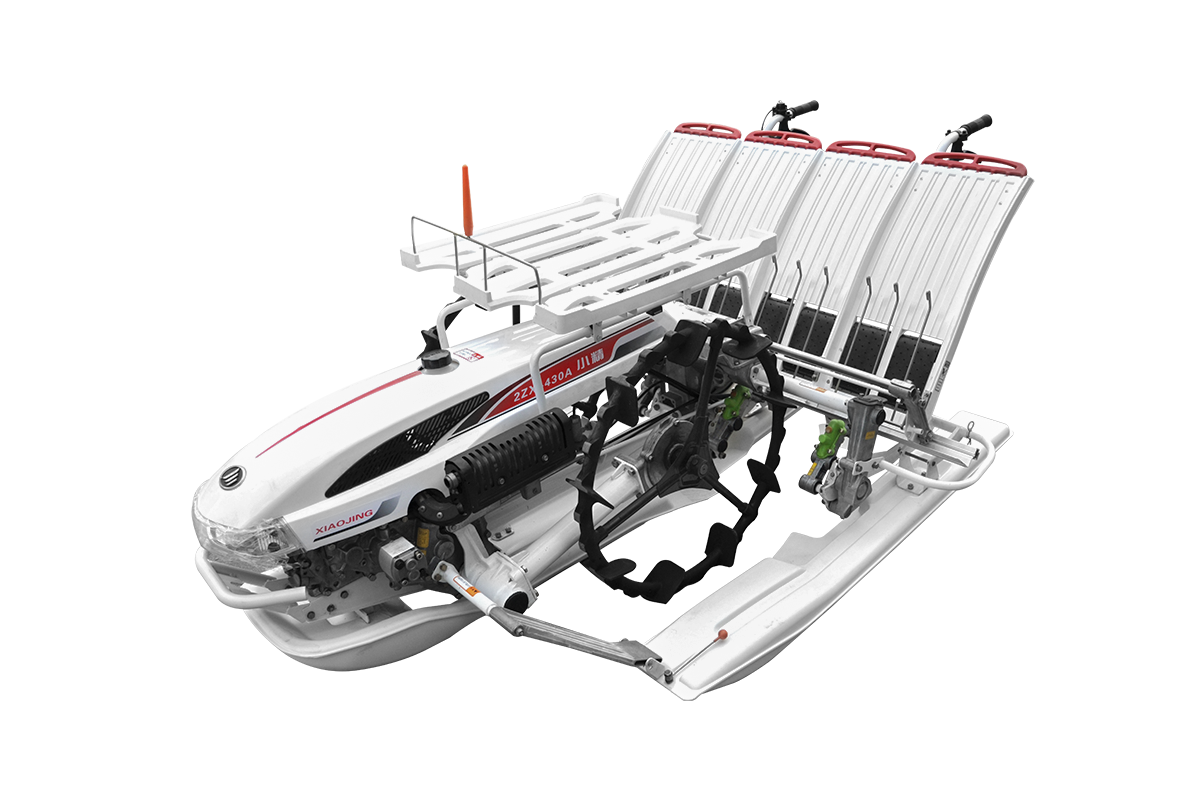
- Early Mechanization: Walk-behind transplanters in the 1960s marked the start of the mechanized era.
- Rice Seeder Direct Seeding Era: As labor costs rose, the Rice Seeder, capable of skipping the nursery stage and placing seeds directly in the soil, emerged.
Efficiency Revolution: Manual vs. Mechanized Rice Seeder
| Evaluation Dimension |
Manual Sowing/Transplant |
Modern Rice Seeder |
Efficiency Gain/Loss |
| Labor (Man-hours/Ha) |
Approx. 250 - 300 |
Approx. 1.5 - 3 |
Reduced > 95% |
| Uniformity |
Random/Uneven |
Very High (Adjustable) |
Significant Increase |
| Seed Usage (kg/Ha) |
120 - 150 kg |
60 - 90 kg |
Saved approx. 40% |
| Work Rate (Ha/Day) |
Approx. 0.1 - 0.2 |
4 - 8 |
Increased 40x+ |
| Maturity Period |
Uneven |
Uniform (7-10 days earlier) |
Optimized Growth Cycle |
Rice Seeder Technical Divide: Dry vs. Wet Seeding
- Dry Seeder: Similar to a wheat drill, it opens furrows, sows, and covers in dry field conditions. Ideal for large plains, requires no pre-soaking, and has excellent water-saving performance. Core parameter: Sowing depth is usually controlled at 2 to 3 cm.
- Wet Seeder/Drum Seeder: Operates on leveled mud. Modern Rice Seeder units are equipped with buoyant floats and special metering drums. Core parameter: Operating speed is usually maintained at 0.5 to 1.2 m/s.
Anatomy of the Rice Seeder: The Art of Precision Mechanics
Seed Hopper and Metering System
The seed hopper is usually designed with an inverted cone shape and equipped with vibration or agitation devices.
- Fluted Roller: Suitable for dry seeding; adjusts seed volume by changing the length of the roller extending into the hopper.
- Drum Type: Common for wet seeding; holes on the drum precisely control the number of seeds discharged per hill.
- Pneumatic: High-end Rice Seeder models use negative pressure to adsorb seeds onto a plate, causing almost no damage to buds.
Furrow Openers and Seed Tubes
- Shoe Type: Simple structure, suitable for paddies with thick mud.
- Disc Type: Strong soil-cutting ability, suitable for dry fields with high weeds and residue.
- Seed Tube: The tubes on a Rice Seeder are usually short and straight to ensure seeds do not get stuck during descent.
Depth Control and Covering Devices
- Gauge Wheel: Linked with the opener to ensure a constant depth between 10 mm and 30 mm.
- Covering System: In dry seeding, press wheels firm the soil; in wet seeding, a leveling board gently smooths the mud.
Technical Detail: Structural Differences by Power Source
| Component/Indicator |
Manual Drum Seeder |
Tractor-mounted Seeder |
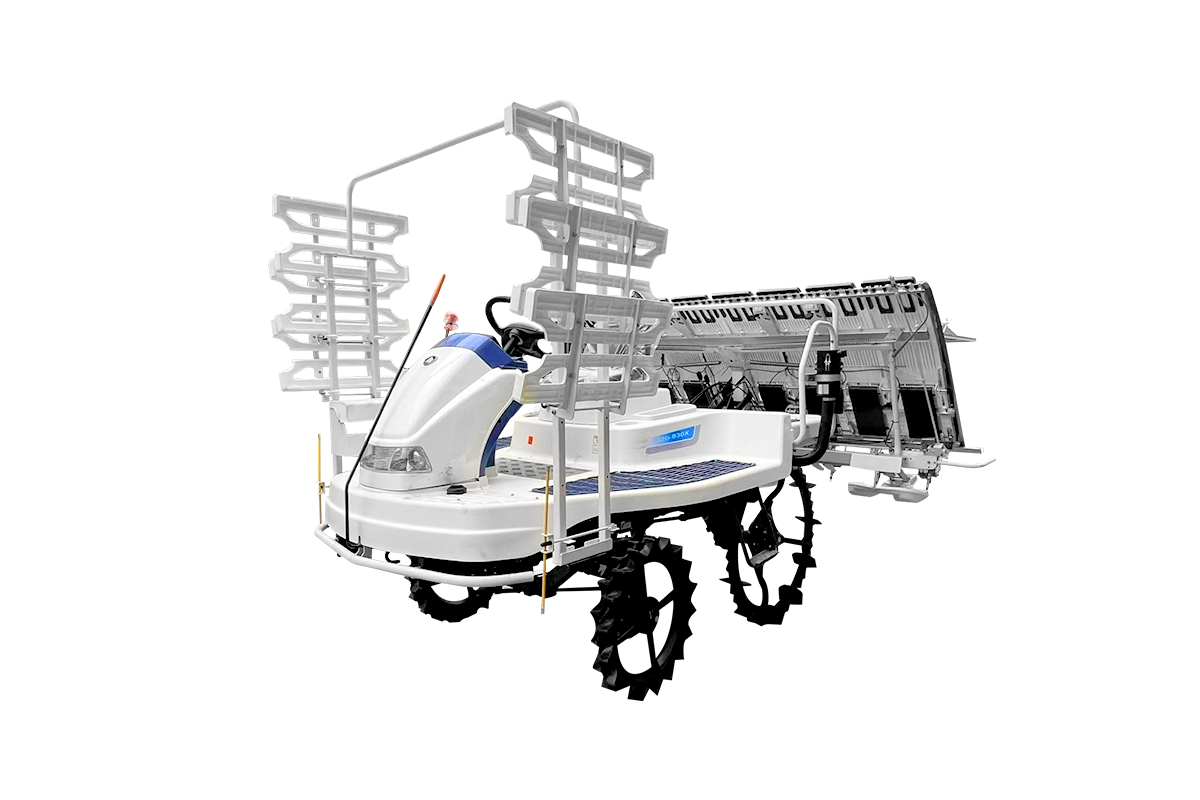
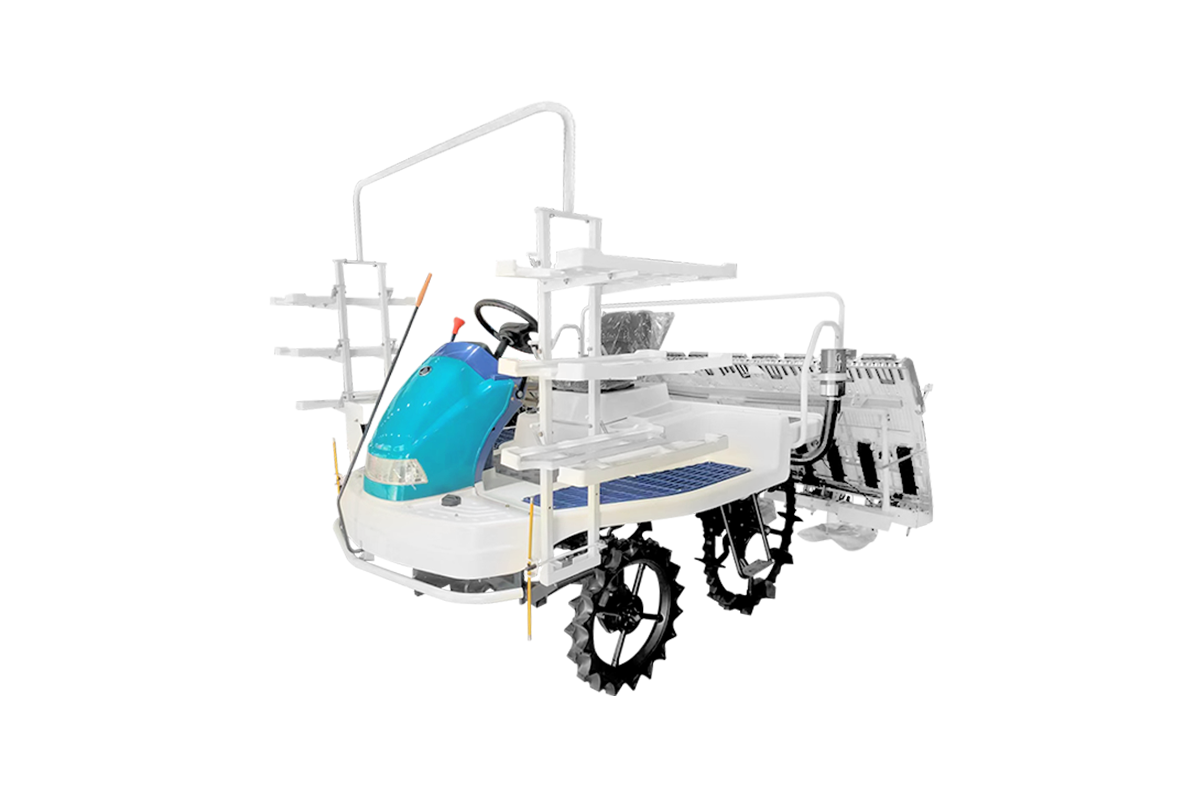
Riding Precision Seeder |
| Rows |
4 - 8 |
12 - 24 |
8 - 12 |
| Meter Type |
Gravity/Drum |
Mechanical Fluted |
Pneumatic/Vibratory |
| Power Source |
Manual Push |
30 - 80 hp Tractor |
20 - 40 hp Engine |
| Efficiency (Ha/h) |
0.2 - 0.4 |
1.5 - 3.5 |
0.8 - 1.2 |
| Precision Error |
< 10% |
< 5% |
< 2% |
Key Physical Parameters of Rice Seeder
- Speed Matching: The formula usually follows Meter Speed = K x Machine Speed.
- Contact Pressure: Ground pressure is usually controlled between 15 and 25 kPa to prevent sinking.
- Vacuum Level: For pneumatic types, pressure is kept at 2.5 to 4.5 kPa.
Direct Seeding vs. Transplanting: How Rice Seeder Reshapes Economics
Substantial Differences in Resource Input
- Water Consumption: Rice Seeder direct seeding (especially dry) eliminates concentrated water use during the nursery stage.
- Labor Structure: Rice Seeder simplifies steps into a single mechanized sowing pass.
- Chemical Input: After using a Rice Seeder, the demand for herbicides and precision management is often higher than in transplanted fields.
Quantitative Comparison: Direct Seeding (Rice Seeder) vs. Transplanting
| Evaluation Index |
Traditional Transplant (TPR) |
Rice Seeder Direct (DSR) |
Difference Rate |
| Total Growth (Days) |
140 - 155 days |
125 - 140 days |
Shortened 10-15 days |
| Labor (Hours/Ha) |
110 - 120 |
50 - 65 |
Reduced approx. 50% |
| Irrigation (mm) |
1100 - 1300 |
750 - 950 |
Saved 25% - 35% |
| Fuel Usage (L/Ha) |
Higher |
Lower |
Reduced 40% - 60% |
| Cost (USD/kg) |
$0.22 - $0.25 |
$0.18 - $0.21 |
Cost reduced approx. 15% |
Soil Requirements and Field Prep: The Foundation of Rice Seeder Success
Land Leveling: The Lifeline of Direct Seeding
When using a Rice Seeder, Laser Land Leveling is almost mandatory.
- Water Uniformity: Ensures irrigation water covers the entire field quickly and evenly.
- Weed Efficiency: Allows water depth to be kept at an ideal 2 to 3 cm, reducing weeds by over 40%.
Matching Soil Type to Mechanical Performance
- Clay Soils: Rice Seeder requires anti-stick openers (e.g., Teflon coating).
- Sandy Loam: Soil dries quickly after sowing; usually requires increased compaction/pressing force.
Parameter Comparison: Field Prep Requirements for Rice Seeder
| Prep Indicator |
Dry Seeding Mode |
Wet Seeding Mode |
| Leveling Error |
Within +/- 2 cm |
Within +/- 1.5 cm |
| Moisture (MC) |
18% - 24% |
Saturated (Mud) |
| Tillage Depth |
15 - 20 cm |
10 - 15 cm |
| Surface Residue |
< 15% coverage |
Must be fully buried |
FAQ
Troubleshooting: Why is my Rice Seeder sowing unevenly?
| Phenomenon |
Possible Cause |
Key Parameter |
Solution |
| Skips |
Foreign object clog |
Plate empty rate > 5% |
Clear debris |
| Doubles |
Vacuum too high |
Vacuum > 4.5 kPa |
Lower pressure |
| Uneven Spacing |
Loose chain |
Chain sag > 15 mm |
Tighten chain; keep speed steady |
The "Golden Rules" of Rice Seeder Maintenance
- Daily Cleaning: Focus on the metering plate and openers.
- Lubrication: Grease chains and bearings weekly.
- Anti-corrosion: Spray rust-inhibiting oil on exposed metal before storage, as seed coatings can be corrosive.
Science Fact: Why can't Rice Seeder depth exceed 3 cm?
- Hypoxia Risk: Oxygen diffusion speed drops exponentially for every 1 cm of depth in wet soil.
- Energy Depletion: Buds will exhaust their nutrients before breaking through the soil surface if buried too deep.
- Ideal Parameter: The scientific ideal sowing depth is 10 to 25 mm.
Calibration Tip for Sowing Volume
Formula: Actual Rate = [Total Seed Weight (kg) / (Distance (m) x Machine Width (m))] x 666.7 (for local area units).
Safe Operation Standards
- No Reversing: Never reverse while the Rice Seeder is in the ground; mud will backflow into the seed tubes.
- Load Limit: Do not fill the seed hopper beyond 80% to prevent a high center of gravity in muddy fields.


 No. 1819, Renmin West Road, Cao'e Street, Shangyu District, Shaoxing City, Zhejiang Province, China

 English
 中文简体
中文简体 русский
 Español
 عربى
عربى

 2026.02.23
 Industry News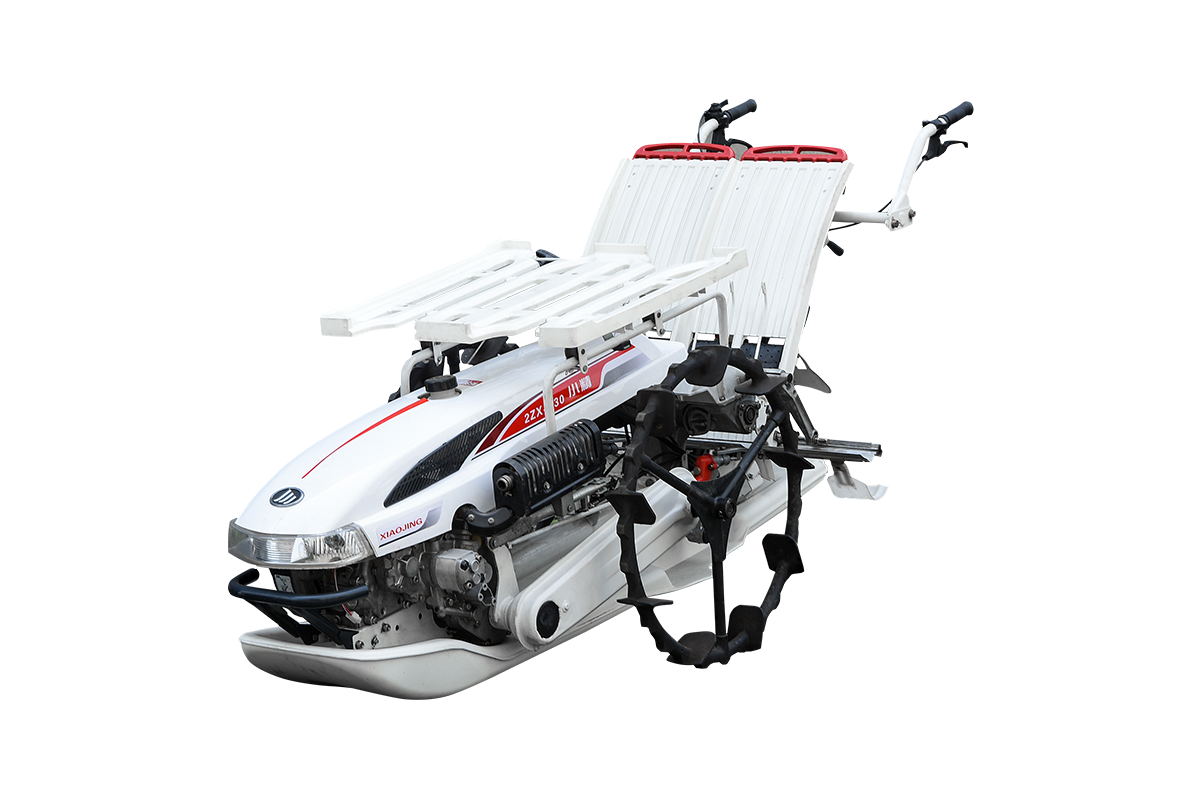
 Custom Agricultural Equipment Manufacturers