

 No. 1819, Renmin West Road, Cao'e Street, Shangyu District, Shaoxing City, Zhejiang Province, China

 English
 中文简体
中文简体 русский
 Español
 عربى
عربى
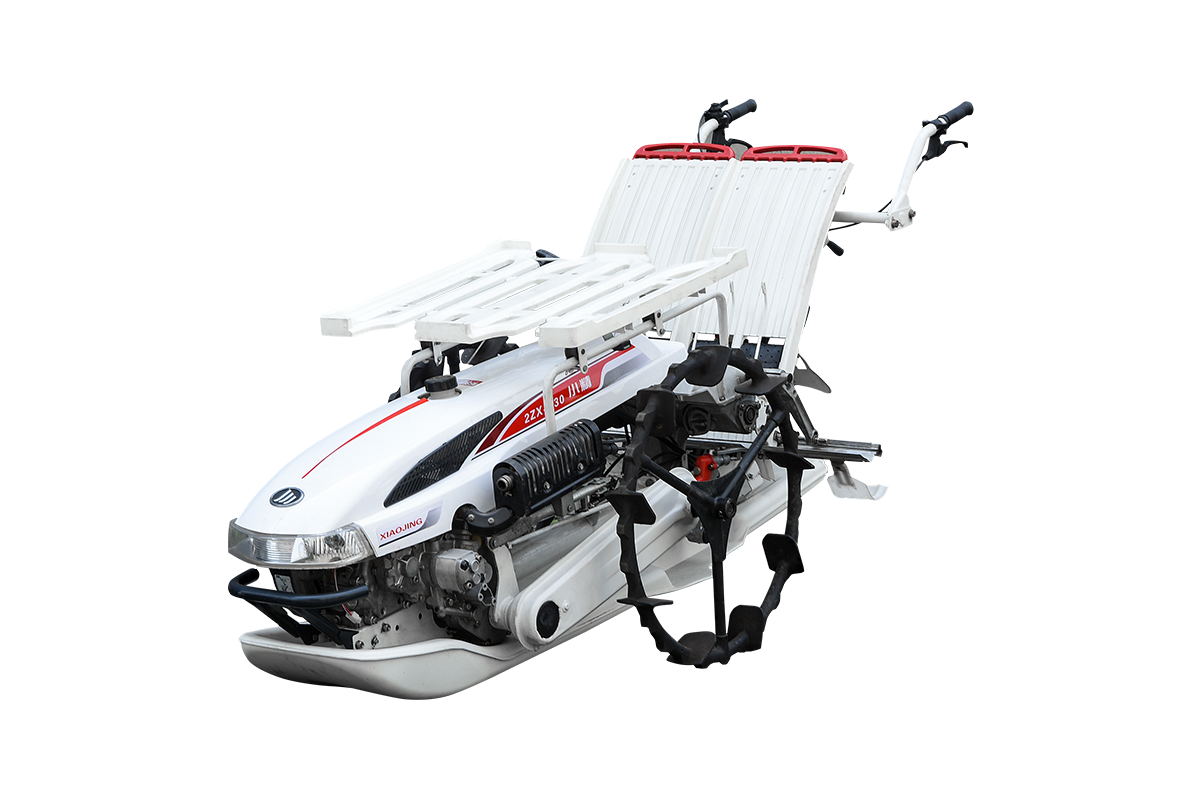
The 2ZX-230 two-row small low-fuel consumption hand-held transplanter is a high-performance machine ...

 2025.12.29
 Industry News
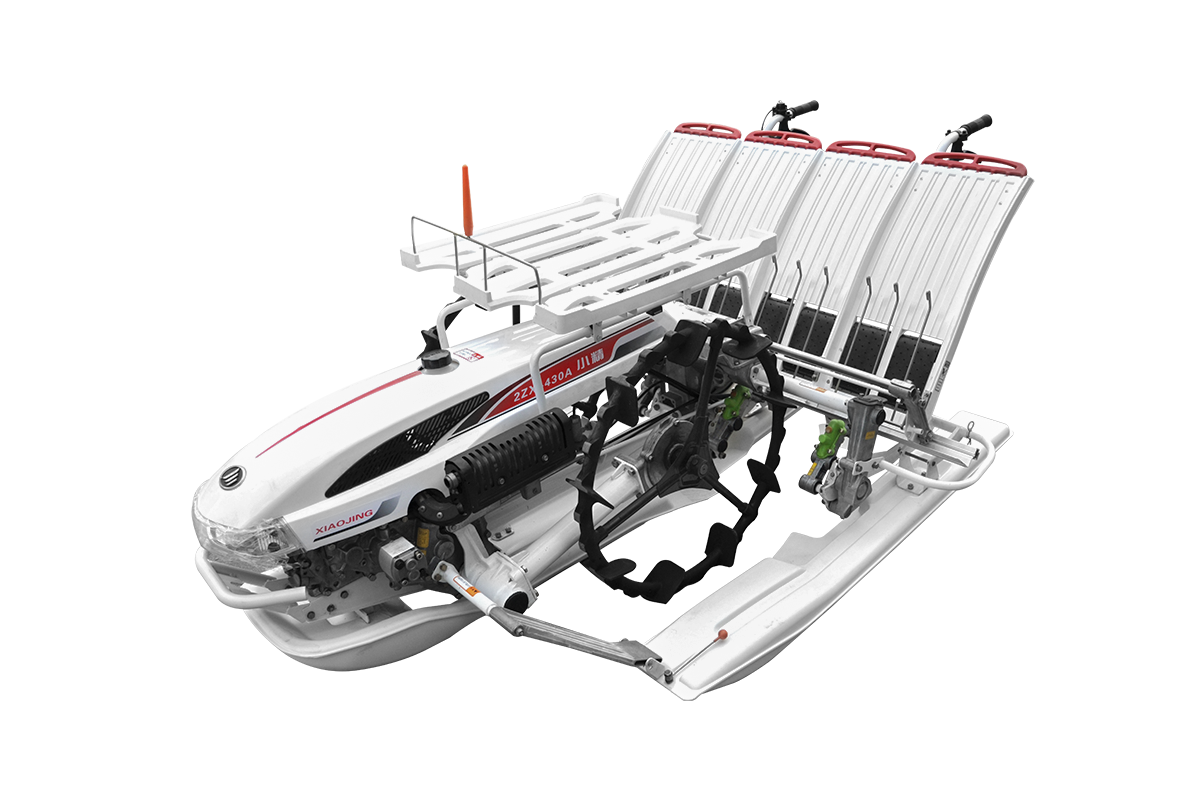
Six-row walking rice transplanters are key machinery in modern rice cultivation, designed for efficient and precise transplanting of rice seedlings across large fields. Mechanized transplanting significantly reduces labor intensity while improving productivity. Field soil conditions vary widely, including soft mud, clay, silt, and light sandy soil. Each soil type presents unique challenges for machine operations. Six-row walking rice transplanters are engineered to adapt to these variations, ensuring stable and efficient performance in diverse environments.
Soft mud and silt soils contain high water content, exhibit strong adhesion, and offer low traction resistance while being prone to wheel sinking. Six-row rice transplanters often use wide tires or track-type walking mechanisms, increasing ground contact area and reducing pressure to prevent sinking. Mechanical transmission combined with hydraulic assistance enables smooth startup and consistent operation, avoiding machine vibrations that could compromise seedling alignment.
The seedling planting mechanism requires adjustment of insertion depth and clamping force in soft mud to ensure intact root systems and proper soil embedding. Hydraulic control systems allow real-time adjustment of planting depth, enabling precise and uniform seedling placement. Enhanced chassis rigidity and low-speed, high-torque engine configurations improve operational stability under these conditions.
Clay and heavy loam soils are dense and poorly drained, increasing operational resistance. Six-row rice transplanters require high traction and robust power transmission systems in these conditions. Gear and chain-based mechanical transmissions deliver high torque to overcome soil resistance. Walking wheels feature anti-slip tread patterns or tracks to maximize grip.
Clay soils tend to adhere to seedling clamps or planting wheels, affecting efficiency. Optimized seedling conveyor chains and gap designs minimize soil buildup, enabling continuous planting operations. Mechanical and hydraulic hybrid control adjusts plant spacing dynamically according to soil compaction, maintaining uniform seedling rows for easier water management and field maintenance.
Light sandy and loose soils are well-drained but can cause slippage or uneven wheel tracks. Adaptability in these conditions relies on the walking mechanism and power regulation. Mechanical transmission combined with hydraulic speed control ensures low-speed stable movement and precise seedling planting, preventing tilting or seedling loss.
Adjustable clamping force ensures seedlings are securely planted in loose soils without excessive soil disturbance. Some models feature adjustable tire pressure, further improving adaptability and operational flexibility in varying loose soil conditions.
Irregular field shapes, embankments, and gentle slopes challenge machine stability. Reinforced chassis design enhances balance, while hydraulic control allows fine-tuning of walking speed and planting depth, maintaining stability on uneven terrain. Differential drives with hydraulic adjustment compensate for wheel speed differences during turns and slope operation, preventing misaligned seedling rows.
Six-row rice transplanters combine stable traction, precise planting, and durable construction to achieve consistent performance across diverse soil types. Mechanical transmission ensures high-power, reliable output. Hydraulic systems provide flexible adjustments for soil conditions. Wide tires or tracks improve soft soil adaptability, anti-slip wheels and differential drives enhance performance in heavy or uneven soils. Optimized planting mechanisms and hydraulic adjustments guarantee uniform seedling placement, offering a high-efficiency, stable, and controllable solution for modern rice cultivation.
 Custom Agricultural Equipment Manufacturers