

 No. 1819, Renmin West Road, Cao'e Street, Shangyu District, Shaoxing City, Zhejiang Province, China

 English
 中文简体
中文简体 русский
 Español
 عربى
عربى
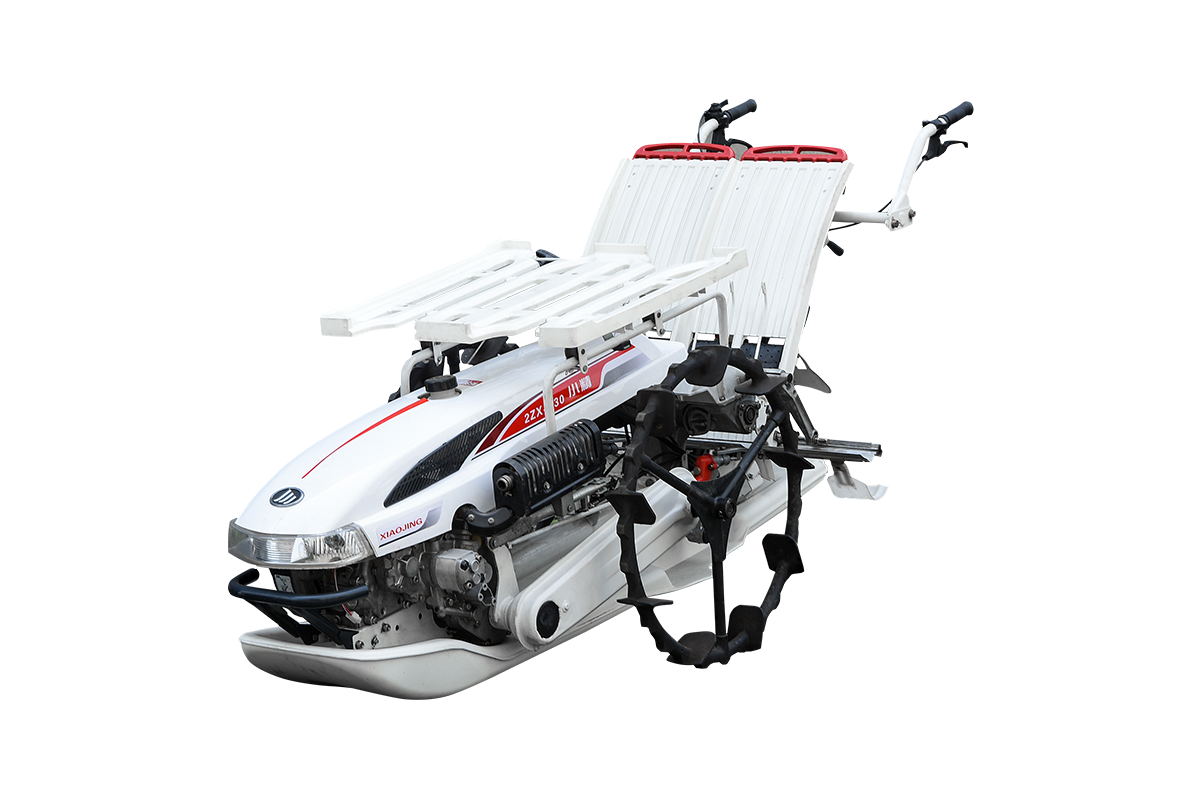
The 2ZX-230 two-row small low-fuel consumption hand-held transplanter is a high-performance machine ...

 2026.06.22
 Industry News
In modern agricultural production, the level of mechanization in rice cultivation directly determines crop yields and operational costs. Choosing a high-efficiency, high-precision rice transplanter is the core link in improving field operation quality. With the iteration of planting technology, from traditional rice planting machine to highly integrated automated equipment, the range of choices for planting solutions is increasingly wide.
For different scales of cultivated land, the row count configuration of the equipment is the primary factor determining work efficiency. The following is a comparative analysis based on common model specifications:
| Specification Model | Application Scenario | Operating Width (mm) | Planting Density (Row Spacing mm) | Power Demand |
| 2 row rice transplanter | Small area, irregular land | 500 - 600 | 250 - 300 | Manual/Small Engine |
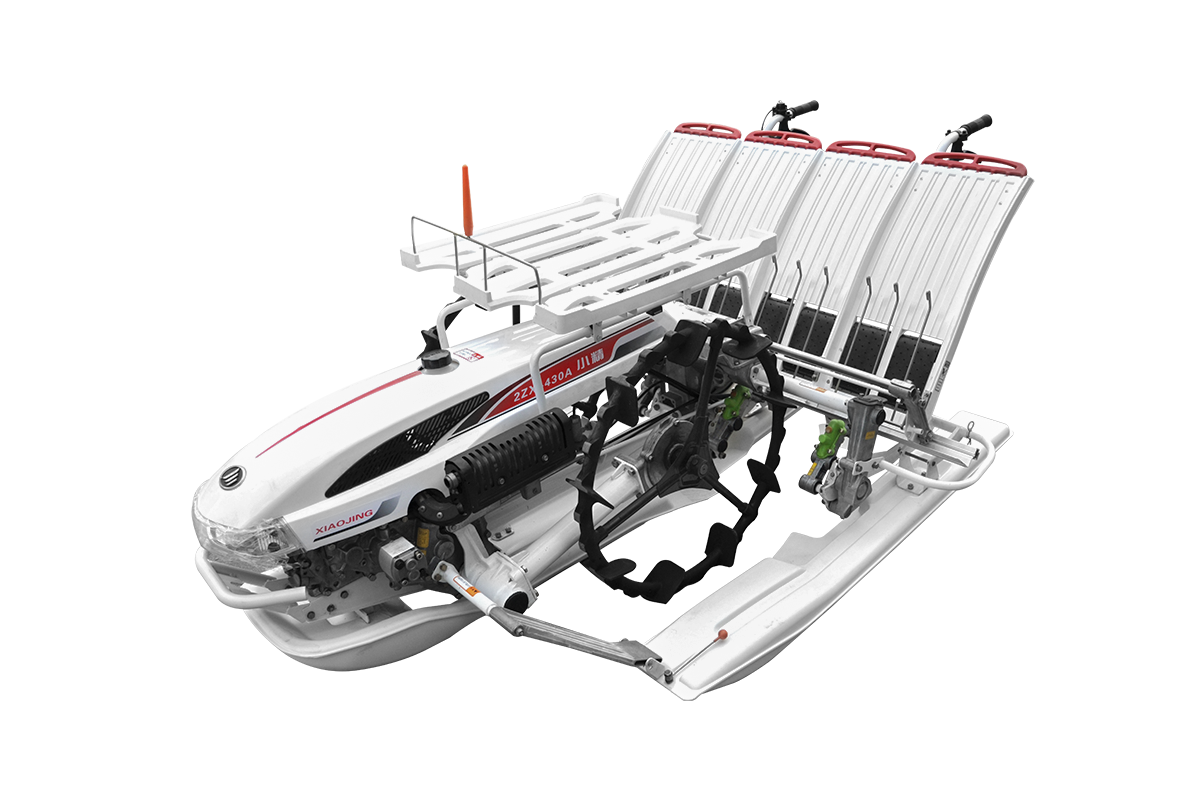
| 4 row rice transplanter | Medium-scale land, conventional operations | 1200 - 1600 | 300 | Medium Gasoline Engine |
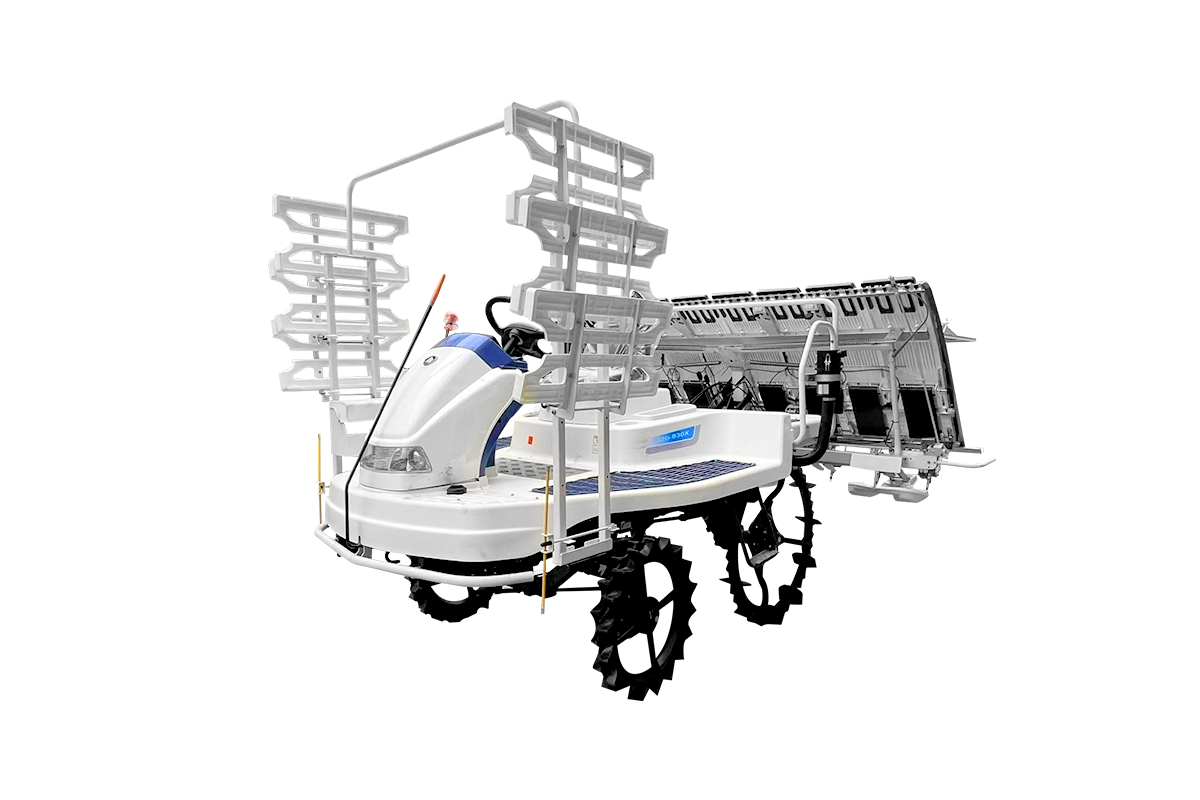
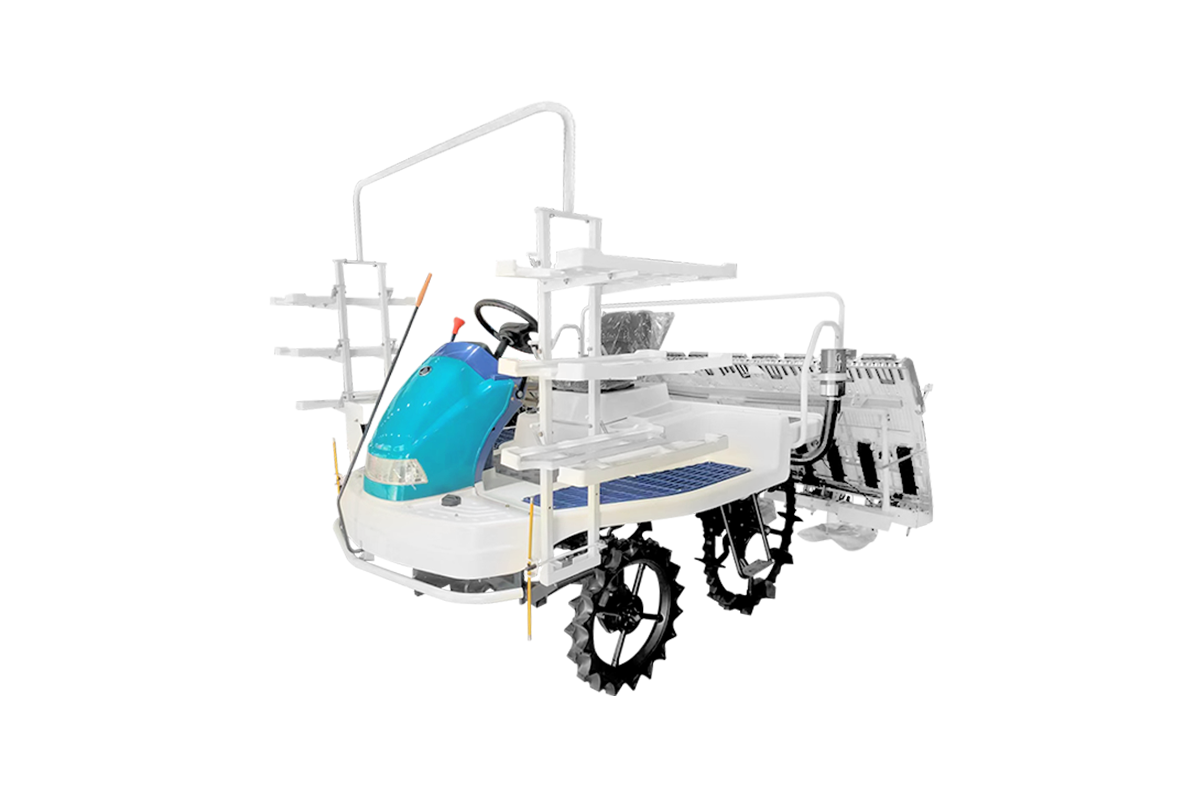
| 6 row rice transplanter | Large-scale commercial cultivation | 1800 - 2100 | 300 | Diesel Engine |
| 8 row rice transplanter | Ultra-large farms, high-intensity operations | 2400 - 3000 | 238 - 300 | High-power Diesel Engine |
For areas with complex terrain or small plots, the 2 row rice transplanter and 4 row rice transplanter demonstrate extremely high maneuverability. This type of rice planter is usually light in structure, simple to operate, and can effectively reduce space waste when turning in the field, while for plots with low soil bearing capacity, its lower self-weight can effectively avoid sinking into the mud.
For production environments pursuing ultimate efficiency, the 6 row rice transplanter and 8 row rice transplanter are the mainstream choices. These machines usually adopt a hydraulic profiling system that can dynamically adjust the planting depth according to the undulations of the field surface. Its precision-designed seedling picking mechanism can reduce damage to the root system of the seedlings and ensure vertical entry into the soil, thereby increasing the survival rate and recovery speed of the seedlings.
When operating a rice transplanter machine, to ensure maximum output per hectare, the following technical parameters must be precisely adjusted:
Using a rice transplanter to replace traditional manual planting is essentially achieving the standardization of agricultural production. Manual transplantation is often limited by the fatigue and experience of operators, making it difficult to ensure absolute consistency in row spacing. In contrast, professional equipment ensures:
 Custom Agricultural Equipment Manufacturers